
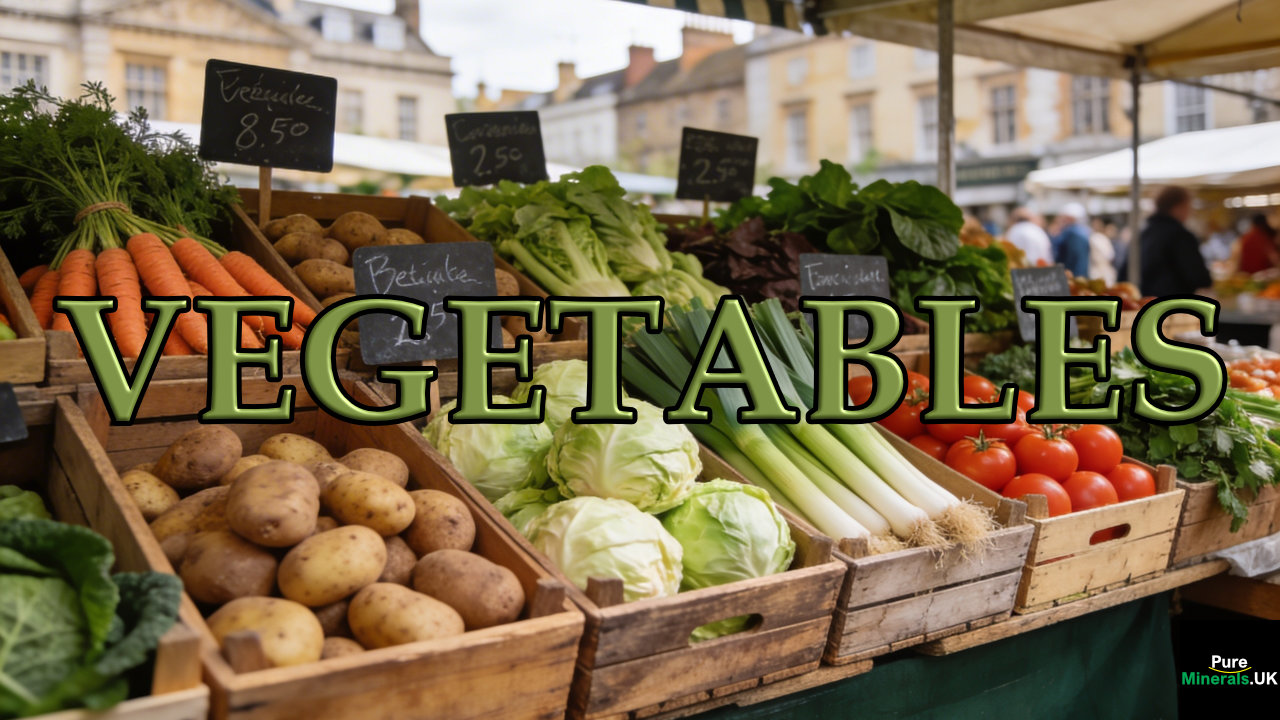
VEGETABLES GUIDE
What are Vegetables?
Broadly speaking, a vegetable is any part of a plant that we can eat. However, the definition changes depending on whether you are talking to a gardener, a chef, or a scientist.
In the kitchen, "vegetable" is a functional category based on flavor and usage. Vegetables are usually savory rather than sweet. They are typically served as a main dish, a side dish, or in soups and salads. This category is "the big tent." It includes things that are technically fruits (like tomatoes), seeds (like peas), and even fungi (like mushrooms), simply because we cook them like vegetables.
To a botanist, the word "vegetable" doesn't actually have a formal scientific definition. Instead, scientists classify plant parts by their specific biological function:
| Plant Part | Examples |
| Roots | Carrots, beets, parsnips |
| Tubers | Potatoes, yams |
| Bulbs | Onions, garlic |
| Stems | Asparagus, celery |
| Leaves | Spinach, kale, lettuce |
| Flowers | Broccoli, cauliflower, artichokes |
Sometimes, the definition is even determined by law. In the famous 1893 U.S. Supreme Court case Nix v. Hedden, the court ruled that the tomato should be classified as a vegetable rather than a fruit for tax purposes, because people eat them with dinner and not dessert.
Nutritionally, vegetables are defined by their levels of vitamins, minerals, and fiber, and they are usually categorized by their starch content (e.g., "starchy" potatoes vs. "non-starchy" leafy greens).
Since "vegetable" is a culinary term and "fruit" is a botanical one, a tomato is both. It is a botanical fruit that is a culinary vegetable.
As "vegetable" is a catch-all term, it’s helpful to look at them through a nutritional lens. Nutritionists group them by their macronutrient profile (how much starch/sugar they contain) and their micronutrient density.
Starchy vs. Non-Starchy Vegetables
This is the most significant divide in terms of caloric density and how your body processes the energy.
Starchy vegetables, such as potatoes, corn, peas, and parsnips, are high in complex carbohydrates and fiber. They provide more calories per gram, making them excellent for physical activity.
Non-Starchy vegetables such as leafy greens, broccoli, peppers, and cucumbers) are high in water and fiber, but very low in calories. Large volumes of these can be eaten with minimal impact on blood sugar.
Nutrient Density by Color
Different colors often signal the presence of specific phytonutrients (natural compounds that support health):
| Color Group | Key Nutrients | Health Focus |
| Dark Greens | Vitamin K, Folate, Iron | Bone health & blood clotting |
| Red & Orange | Beta-carotene, Vitamin A | Eye health & immune function |
| Cruciferous | Sulforaphane, Fiber | Metabolic health & detoxification |
| Purple/Blue | Anthocyanins | Heart health & antioxidants |
The "Fruit-Vegetable" Advantage
The botanical fruits we treat as vegetables (tomatoes, peppers, squash) are unique because they are often incredibly high in Vitamin C and specific antioxidants such as lycopene. Because they are technically the "womb" of the plant, they are designed to be nutrient-dense to protect the seeds.
Bioavailability
Interestingly, these "vegetables" are prepared changes their nutrition. While some vitamins (like Vitamin C) are lost during cooking, others (like the lycopene in tomatoes or the beta-carotene in carrots) actually become more absorbable by the body once heated or paired with a small amount of fat.
A good rule of thumb is to treat starchy vegetables like a grain (the fuel) and non-starchy ones like the filler (the vitamins).
Raw vs. Cooked Veg
It’s a bit of a nutritional tug-of-war: cooking can destroy some vitamins while unlocking others. The heat breaks down tough plant cell walls, making certain nutrients easier for your gut to absorb, but it can also leach water-soluble vitamins right into the steamer water. Here is the breakdown of which vegetables prefer the heat and which are better off eaten raw.
Cooking the following vegetables increases the bioavailability of specific antioxidants and minerals:
- Tomatoes: Heating increases lycopene (an antioxidant linked to heart health) by breaking down the plant's cell walls.
- Carrots: Cooking increases beta-carotene, which the body converts to Vitamin A.
- Spinach: While raw spinach is great, cooking it reduces oxalic acid (which can block calcium absorption) and shrinks the volume, so you get more fiber and iron per bite.
- Asparagus: Cooking breaks down the fibrous exterior, making its vitamins A, C, and E more accessible.
- Mushrooms: Technically fungi, but always better cooked; heat neutralizes small amounts of toxins and makes their potassium more available.
The following vegetables contain enzymes and vitamins that are easily damaged by high temperatures.
- Broccoli: Contains an enzyme called myrosinase that creates sulforaphane (a potent health compound). Heat kills this enzyme. If you must cook it, light steaming is better than boiling.
- Onions & Garlic: Raw onions contain sulfur compounds that act as natural antiplatelet agents (good for the heart). These dissipate quickly when fried or boiled.
- Bell Peppers: They are absolute goldmines for Vitamin C, which is very unstable and breaks down rapidly when exposed to heat.
- Beets: They lose much of their folate (Vitamin B9) when cooked for long periods.
Preparation Cheat Sheet
| Method | Effect on Nutrients |
| Boiling | The "Nutrient Thief." Vitamins B and C leach into the water and are often poured down the drain. |
| Steaming | The Middle Ground. Keeps most nutrients intact while softening the fibers. |
| Sautéing/Roasting | Great for fat-soluble vitamins (A, D, E, K) if using a healthy oil, as fat helps absorption. |
| Microwaving | Surprisingly good. Because it's fast and uses little water, it preserves more nutrients than boiling. |
The "best" way to eat a vegetable is whichever way ensures you actually eat it! If you hate raw carrots but love them roasted, the roasted ones are infinitely more nutritious than the raw ones left in the fridge.
See also: How to cook broccoli.
- Plant Minerals Guide — Essential mineral elements required for human physiology, cellular function, and metabolic balance.
- Vitamins Guide — Comprehensive reference covering all major vitamins, their biological roles, and natural food sources.
- Vitamin-Associated Nutrients — Critical supporting compounds that interact with vitamins, including cofactors, enzymes, and synergistic nutrients.
- Fruits Guide — Nutrient-dense fruits with detailed analysis of their mineral content, phytochemicals, and health benefits.
- Superfoods Guide — Exceptional whole foods recognised for their concentrated nutrient density and therapeutic potential.
- Healthy Seeds Guide — Edible plant seeds packed with dietary fiber, plant protein, essential fatty acids, vitamins, minerals, and natural antioxidants.
- Herbs and Spices Guide — Medicinal and culinary plants rich in trace minerals, antioxidants, and bioactive compounds.
- Vegetables Guide — nutrient-dense edible plant parts vital for a healthy diet, providing fiber, vitamins, and minerals.
- Glossary of Terms — Complete alphabetical index of all topics, nutrients, foods, and technical terminology across the entire Pure Minerals system.
About | Our Videos | Copyright 2023 - Privacy Policy | Affiliate Disclaimer | Legal Disclaimer | Editorial Disclaimer