

Published: 27 December 2025
Last Updated: 7 May 2026
This article is periodically reviewed and updated to reflect current scientific understanding by Vic George.
Fact-Checked: 1 other authoritative medical/scientific reference. See our Editorial Policy.

What Is Asparagus and Why Is This Traditional Food-Herb Used for Digestive Health, Detoxification, and Nutrient Support?
Asparagus is a highly nutritious vegetable that has been used for centuries in traditional and natural medicine. Its health benefits are well-documented, and it has been recognized for its role in supporting detoxification, promoting digestive health, and even aiding in cancer prevention. Asparagus is rich in essential vitamins, minerals, and phytonutrients, making it a valuable addition to a natural health-focused diet.
Asparagus is a traditional food-herb widely valued for supporting digestion, natural detoxification processes, and overall nutrient intake. Although best known as a culinary vegetable, asparagus has a long history of use in traditional medicine for its gentle diuretic properties and its role in supporting liver and kidney function. It is consumed both as a whole food and, less commonly, as concentrated extracts.
Definition:
Asparagus is a perennial plant whose young shoots are consumed as a nutrient-dense food and traditional herbal support. The most commonly used species is Asparagus officinalis. It provides fibre, vitamins, minerals, and bioactive compounds that contribute to digestive efficiency and metabolic balance.
Extended Definition:
Asparagus supports digestive health primarily through its fibre content and its role as a natural prebiotic, helping nourish beneficial gut bacteria. It contains inulin, a fermentable fibre that supports gut microbiota balance and bowel regularity. Asparagus is also traditionally recognised for supporting the body’s natural detoxification pathways by promoting fluid balance and assisting the kidneys in waste elimination.
Nutritionally, asparagus supplies folate, vitamin K, vitamin C, and a range of antioxidants, including flavonoids and sulphur-containing compounds. These nutrients contribute to cellular protection, methylation processes, and general metabolic function. Historically, asparagus was used as both food and remedy, valued for its gentle, supportive effects rather than acute stimulation. Benefits are most closely associated with regular dietary inclusion rather than short-term use.
Key Facts:
- Herb name: Asparagus
- Botanical name: Asparagus officinalis
- Herb type: Traditional food-herb
- Key compounds: Inulin, flavonoids, sulphur-containing compounds
- Primary uses: Digestive support, prebiotic fibre intake, natural detoxification support
- Systems supported: Digestive, renal, metabolic
- Common forms: Fresh shoots (food), powders, extracts
- Use considerations: Generally well tolerated; characteristic urine odour is harmless and temporary
- Typical pairing: Often paired with other fibre-rich foods, leafy greens, or liver-supportive herbs
Key Takeaways
- Asparagus is packed with essential nutrients, including folate, potassium, vitamins A, C, K, and B6, while being low in calories, making it excellent for weight management.
- The vegetable contains powerful antioxidants like glutathione that protect cells from damage and reduce inflammation throughout the body.
- Asparagus acts as a natural diuretic that helps flush excess water and toxins from the body, reducing bloating and supporting kidney function.
- The prebiotic fiber inulin in asparagus promotes healthy gut bacteria growth, improving digestive health and supporting your immune system.
- Regular consumption of asparagus may help maintain healthy blood pressure and cholesterol levels, supporting overall heart health.
Historical and Traditional Uses
Historically, asparagus has been used in traditional medicine to treat a variety of ailments. Ancient Greeks and Romans valued asparagus for its diuretic properties and used it to alleviate pain associated with rheumatism and toothaches. Traditional Chinese medicine also incorporates asparagus for its cooling properties, which are believed to balance the body’s internal energy. These historical uses underscore the vegetable’s longstanding reputation as a natural remedy.
Asparagus does more than just add flavor and elegance to your plate. This vibrant green vegetable packs a serious nutritional punch that can transform your health from the inside out. As a natural diuretic that helps flush toxins while delivering essential nutrients, asparagus stands out as one of nature’s most effective functional foods. Organic asparagus extract in a daily superfood blend makes it easier to incorporate these benefits into your routine, even when fresh asparagus isn’t in season.
When spring arrives, and those tender green spears appear in markets, your body has much to gain from this versatile vegetable. Asparagus has been valued for its medicinal properties for over 2,500 years, with ancient civilizations recognizing its potential long before modern science could explain why it works. Today, nutritional research confirms what traditional healers knew instinctively—few vegetables offer such comprehensive support for overall wellness.
Why Asparagus Is Nature’s Nutritional Powerhouse
Nutritional Profile of Asparagus
Asparagus is a powerhouse of nutrients, including vitamins A, C, E, and K, as well as folate, iron, and potassium. These nutrients play crucial roles in supporting immune function, enhancing skin health, and maintaining proper cellular function. Asparagus is also a significant source of dietary fiber, which aids in digestion and promotes gut health. Studies have shown that the fiber in asparagus supports the growth of beneficial gut bacteria, which are essential for overall well-being. Additionally, asparagus contains glutathione, a potent antioxidant that helps neutralize free radicals and reduce oxidative stress, thereby protecting cells from damage.
Asparagus stands tall among vegetables with its impressive nutritional profile. Just one cup of cooked asparagus contains only 40 calories while providing 4 grams of fiber, 4 grams of protein, and nearly 70% of your daily vitamin K needs. What makes asparagus truly exceptional is its remarkably balanced nutrient density—delivering substantial vitamins and minerals with minimal calories.
The folate content in asparagus deserves special attention, with one cup providing about 60% of your daily requirement. This B vitamin plays a crucial role in DNA synthesis and repair, making it particularly important during periods of rapid growth such as pregnancy and childhood development. For adults, adequate folate helps prevent homocysteine buildup in the bloodstream, reducing risk factors associated with heart disease.
Asparagus Nutritional Snapshot (1 cup cooked)
Calories: 40
Protein: 4g
Fiber: 4g
Vitamin K: 70% of DV
Folate: 60% of DV
Vitamin A: 20% of DV
Vitamin C: 12% of DV
Potassium: 270mg
Beyond these core nutrients, asparagus contains significant levels of vitamins A, C, E, and several B vitamins. It also provides essential minerals, including iron, phosphorus, copper, and potassium. This comprehensive nutrient profile makes asparagus particularly effective at supporting multiple body systems simultaneously, from immune function to cellular energy production.
9 Impressive Health Benefits of Asparagus
The health-promoting effects of asparagus extend far beyond basic nutrition. Research continues to uncover the many ways this vegetable supports optimal function throughout the body. From cellular protection to digestive support, asparagus offers comprehensive benefits that few other foods can match. For instance, you might explore the benefits of other nutrient-rich foods like artichoke, which also supports digestive health.
1. Packed With Essential Vitamins and Minerals
Asparagus delivers an exceptional array of micronutrients your body needs to thrive. Its vitamin K content supports bone health by assisting with calcium absorption and bone mineralization. The significant folate levels help with cell division and DNA synthesis, which is particularly important during pregnancy for preventing neural tube defects. Vitamin A in asparagus promotes healthy vision, skin integrity, and immune function, while vitamin C boosts collagen production and enhances iron absorption from plant foods.
2. Contains Powerful Antioxidants That Fight Disease
The antioxidant profile of asparagus is impressive and diverse. It contains flavonoids like quercetin, isorhamnetin, and kaempferol that have been studied for their anti-inflammatory and anti-cancer properties. These compounds help neutralize harmful free radicals before they can damage cells and DNA. Particularly notable is asparagus’s glutathione content—often called the “master antioxidant”—which plays a critical role in detoxification processes and immune system function.
Research has linked these antioxidants to reduced oxidative stress in the body, potentially lowering risk factors for chronic conditions, including heart disease, diabetes, and certain cancers. The phenolic compounds in asparagus have demonstrated the ability to reduce inflammation at the cellular level, addressing a root cause of many chronic health issues.
3. Supports Digestive Health Through Prebiotic Fiber
Asparagus contains inulin, a type of prebiotic fiber that fuels beneficial gut bacteria. When these good bacteria thrive, they produce short-chain fatty acids that nourish colon cells and help maintain intestinal barrier function. Studies show that adequate prebiotic intake can reduce inflammation in the digestive tract and may help prevent colon cancer.
The fiber in asparagus also supports regular bowel movements by adding bulk to stool and speeding transit time. Many people notice improved digestive comfort after adding asparagus to their diet, with less constipation and more consistent elimination patterns. This gentle regulation helps prevent the buildup of toxins in the digestive tract.
4. Natural Diuretic That Flushes Toxins
One of the most unique properties of asparagus is its natural diuretic effect. The amino acid asparagine, along with other compounds in asparagus, increases urine production, helping to flush excess fluid and sodium from the body. This quality makes asparagus particularly beneficial for people who struggle with bloating, mild edema, or premenstrual water retention.
The diuretic properties of asparagus also support kidney function by preventing urinary tract infections. By increasing urination, asparagus helps wash away bacteria before they can attach to the urinary tract walls and cause infection. Regular consumption may reduce the frequency of UTIs in susceptible individuals while supporting overall kidney health.
5. Promotes Heart Health and Lowers Blood Pressure
The heart-protective benefits of asparagus come from multiple nutrient pathways. Its high potassium content helps balance sodium levels in the body, naturally lowering blood pressure by relaxing blood vessel walls. The B vitamins in asparagus, particularly folate, help regulate homocysteine levels—an amino acid that, when elevated, increases risk of heart disease.
Additionally, the antioxidants in asparagus protect LDL cholesterol from oxidation, a critical step in preventing atherosclerosis. Research suggests that regular consumption of vegetables like spirulina can significantly reduce markers of cardiovascular inflammation and improve overall heart health metrics.
How Asparagus Improves Your Gut Health
The relationship between asparagus and digestive wellness deserves special attention. Gut health influences everything from immune function to mental health, making asparagus’s digestive benefits particularly valuable for overall wellness.
The Prebiotic Effect of Inulin in Asparagus
Inulin belongs to a category of carbohydrates known as fructans that humans cannot digest, but beneficial gut bacteria can ferment and thrive on. Asparagus contains significant amounts of this prebiotic fiber, which selectively feeds Bifidobacteria and other beneficial microbes in the large intestine. As these bacteria metabolize inulin, they produce compounds that reduce inflammation and strengthen the gut barrier, preventing leaky gut syndrome.
Regular consumption of inulin-rich foods like asparagus has been linked to improved microbiome diversity—a key marker of gut health. Greater diversity means more balanced gut function, better nutrient absorption, and stronger immune regulation, all of which support long-term health outcomes.
Fiber Content That Supports Regular Digestion
Each cup of asparagus provides about 3-4 grams of fiber, combining both soluble and insoluble types. The soluble fiber forms a gel-like substance that slows digestion, improves nutrient absorption, and helps regulate blood sugar. Insoluble fiber adds bulk to stool and speeds transit time through the digestive tract, preventing constipation and reducing exposure to potential carcinogens.
This balanced fiber profile makes asparagus particularly effective for maintaining regular bowel movements without causing digestive discomfort. Unlike some high-fiber foods that can cause gas or bloating, asparagus tends to be well-tolerated even by those with sensitive digestive systems. For those interested in additional digestive aids, exploring Simply Seaweed may provide further benefits.
How Asparagus Helps Prevent Bloating
Despite containing fiber that benefits digestion, asparagus actually helps reduce bloating rather than cause it. Its natural diuretic properties help eliminate excess fluid that contributes to that uncomfortable distended feeling. The asparagusic acid and other sulfur compounds in asparagus stimulate kidney function, increasing urine output and reducing water retention.
For those who experience regular bloating due to hormonal fluctuations, diet, or digestive issues, adding asparagus to meals several times a week can provide noticeable relief. The vegetable’s balanced approach—providing fiber for healthy elimination while reducing water retention—makes it uniquely effective for overall digestive comfort.
Antioxidant Properties That Protect Your Cells
Asparagus contains an impressive arsenal of antioxidants that work together to neutralize harmful free radicals in your body. These unstable molecules can damage cells, accelerate aging, and increase disease risk when left unchecked. By incorporating asparagus into your diet, you’re providing your body with specialized compounds that combat oxidative stress at the cellular level, similar to the benefits found in green tea.
Glutathione: The Master Antioxidant in Asparagus
Among asparagus’s most valuable compounds is glutathione, often referred to as the body’s master antioxidant. This powerful molecule plays a critical role in detoxification pathways and immune function. Unlike many antioxidants that work only in certain body tissues, glutathione operates throughout the body, protecting virtually all cell types from oxidative damage. Asparagus is one of the few vegetables with significant amounts of glutathione in a form your body can effectively use.
Research suggests that maintaining optimal glutathione levels may help prevent neurodegenerative conditions, support liver health, and even slow aspects of the aging process. The glutathione in asparagus works synergistically with vitamin C and vitamin E to regenerate these antioxidants after they’ve neutralized free radicals, extending their protective effects.
Anti-Inflammatory Compounds That Reduce Chronic Disease Risk
The flavonoids and saponins in asparagus possess potent anti-inflammatory properties that may help prevent chronic diseases. Chronic inflammation lies at the root of many health conditions, including heart disease, diabetes, arthritis, and certain cancers. Regular consumption of anti-inflammatory foods like asparagus and holy basil helps maintain appropriate inflammatory responses without the side effects associated with medications.
Studies have shown that asparagus extract can inhibit the production of inflammatory markers and enzymes that contribute to pain and tissue damage. This effect may be particularly beneficial for individuals with inflammatory conditions who seek natural approaches to symptom management alongside conventional treatment.
Protection Against Free Radical Damage
The comprehensive antioxidant profile of asparagus offers protection against multiple forms of oxidative stress. Rutin, another antioxidant found in asparagus, strengthens blood vessels and has been studied for its potential to reduce the risk of blood clots. Meanwhile, the vitamin E content helps protect cell membranes, particularly in nerve and brain tissue, from oxidative damage.
This multifaceted protection is especially valuable in our modern environment, where exposure to pollution, processed foods, and other stressors increases free radical production. By providing overlapping layers of antioxidant defense, asparagus helps maintain cellular integrity and function throughout the body.
Detoxification and Kidney Health
One of the most notable benefits of asparagus is its ability to support detoxification. Asparagus acts as a natural diuretic, helping the body flush out excess fluids and toxins through the kidneys. This property is particularly beneficial for individuals dealing with water retention or urinary tract infections. The amino acid asparagine, found in asparagus, plays a key role in this process by stimulating kidney function and promoting the excretion of waste products. Furthermore, asparagus contains saponins, which have been shown to support liver health by enhancing the organ’s detoxification pathways.
Anti-Cancer Properties
Asparagus has gained attention for its potential anti-cancer properties. Research indicates that the high levels of antioxidants and anti-inflammatory compounds in asparagus may help reduce the risk of certain types of cancer. Specifically, asparagus contains rutin, quercetin, and other flavonoids that have been shown to inhibit cancer cell growth and induce apoptosis (programmed cell death). The vegetable’s high folate content also supports DNA repair and synthesis, which are critical for preventing mutations that can lead to cancer.
Weight Management Benefits of Asparagus
For those seeking to maintain a healthy weight, asparagus offers several advantages that make it an ideal addition to a balanced diet. Its unique nutritional profile supports weight management through multiple mechanisms without sacrificing satisfaction or nutrition.
Low Calorie Content With High Nutritional Value
Asparagus exemplifies nutrient density with just 20 calories per half-cup serving while delivering substantial vitamins, minerals, and fiber. This favorable nutrient-to-calorie ratio allows you to meet nutritional needs without excess calories that could contribute to weight gain. The vegetable’s high water content (approximately 93%) helps create volume and satiety with minimal caloric impact.
Research indicates that diets rich in low-energy-density foods like asparagus are associated with lower body weight and better weight maintenance over time. By filling your plate with these nutrient-dense options, you naturally reduce intake of more calorie-dense foods while still feeling satisfied after meals.
Fiber That Keeps You Full Longer
The fiber in asparagus slows digestion, helping to maintain steady blood sugar levels and prevent the spikes and crashes that can trigger hunger. This effect helps extend the time between meals and reduces the likelihood of snacking on less nutritious options. Additionally, fiber requires more chewing, which signals satiety to the brain and encourages mindful eating. For those interested in other natural sources of fiber, seaweed can be a great addition to your diet.
Studies show that increasing fiber intake is one of the simplest and most effective dietary changes for weight management, with each additional gram of fiber potentially reducing calorie intake by up to 7 calories. Asparagus provides both soluble and insoluble fiber, optimizing its benefits for appetite regulation and digestive health.
See also Dr. Axe’s asparagus page.
How to Select, Store, and Prepare Asparagus for Maximum Benefits
To get the most nutrition from your asparagus, proper selection, storage, and preparation are essential. These practices help preserve the delicate compounds that make asparagus so beneficial for health.
Choosing the Freshest Asparagus at the Store
The best asparagus has firm, straight stalks with closed, compact tips. Look for vibrant color—whether you’re selecting green, purple, or white varieties—and avoid spears with yellowing or wrinkled stems. Fresh asparagus should snap cleanly when bent rather than just fold over. Thickness isn’t an indicator of quality or tenderness; both thick and thin spears can be equally delicious when properly prepared.
When possible, choose organic asparagus to minimize exposure to pesticide residues. Local, in-season asparagus typically offers peak flavor and nutrition, as nutrients begin to diminish once the vegetable is harvested. Springtime brings the best asparagus in most regions, though greenhouse-grown options may be available year-round.
Proper Storage Techniques to Maintain Nutrients
To preserve freshness, store asparagus upright in a container with an inch of water at the bottom, similar to a bouquet. Cover the tops loosely with a plastic bag and refrigerate. This method helps prevent moisture loss while allowing the stems to absorb water, extending freshness for up to five days. Alternatively, wrap the cut ends in a damp paper towel before refrigerating in a plastic bag.
For longer-term storage, blanch asparagus briefly in boiling water, then shock in ice water before freezing. This preserves color, texture, and nutrients for up to 8 months. Frozen asparagus works well in soups, casseroles, and other cooked dishes where texture changes are less noticeable.
Best Cooking Methods to Preserve Nutritional Value
Quick cooking methods that minimize water contact help retain asparagus’s valuable nutrients. Steaming for 3-5 minutes preserves water-soluble vitamins better than boiling, while maintaining a pleasing texture. Roasting brings out natural sweetness through caramelization while requiring minimal added fat. Simply toss trimmed spears with a small amount of olive oil and roast at 400°F for about 12 minutes, turning halfway through.
Grilling creates delicious smoky flavor while keeping cooking time brief. Stir-frying is another excellent option, as the high heat cooks asparagus quickly while maintaining crispness and vibrant color. For maximum antioxidant retention, consume asparagus soon after cooking, as some compounds degrade when stored after heating.
Quick and Healthy Asparagus Recipes
Transform your asparagus into delicious meals with simple preparations that highlight its natural flavor. Lemon-garlic asparagus makes an easy side dish—simply sauté spears with a little olive oil, minced garlic, and finish with fresh lemon juice and zest. For a complete meal, try asparagus frittata with herbs and a sprinkle of goat cheese, providing protein alongside your vegetable serving. Chilled asparagus soup blended with avocado creates a refreshing summer option packed with nutrients and healthy fats.
5 Great Asparagus Recipes
1. Asparagus Pizza

Spread mozzarella on the dough, scatter on roasted asparagus and red onion, and top with a splash of olive oil for a flavorful, veggie-loaded pizza.
Asparagus Pizza Serves: 2–3 | Time: 35–40 minutes
Ingredients:
- 1 lb (450 g) asparagus, trimmed and cut into 1–2 inch pieces
- 1 lb (450 g) pizza dough, at room temperature
- 8 oz (225 g) low-moisture mozzarella, shredded
- 1/2 small red onion, very thinly sliced
- 2–3 tbsp extra-virgin olive oil, divided
- 1/2 tsp kosher salt, 1/4 tsp black pepper
- Optional finishes: lemon zest, red pepper flakes, grated Parmesan, fresh basil or parsley
Instructions:
- Preheat the oven: Place a pizza stone/steel inside and heat to 500°F/260°C for 30 minutes (or use a preheated sheet pan at 475°F/245°C).
- Roast the asparagus: Toss asparagus with 1 tbsp olive oil, salt, and pepper. Roast on a sheet pan at 425°F/220°C for 8–10 minutes until just tender and bright. Cool slightly.
- Shape the dough: On a floured surface, stretch dough into a 12-inch round. Transfer to a lightly floured peel or parchment.
- Assemble: Spread mozzarella evenly over the dough. Scatter on the roasted asparagus and sliced red onion. Drizzle 1–2 tbsp olive oil over the top; season lightly with salt and pepper.
- Bake: Slide onto the stone/steel and bake 7–10 minutes until the crust is golden and the cheese is bubbling. Rotate once for even browning.
- Finish and serve: Drizzle a little more olive oil if you like. Add lemon zest, red pepper flakes, Parmesan, or fresh herbs. Slice and enjoy.
Tips:
- Keep onion slices very thin so they soften in the quick bake.
- For extra char, broil the pizza for the last 30–60 seconds.
- Dollops of ricotta or a squeeze of lemon are great additions.
2. Asparagus Tacos

Use grilled or sautéed asparagus as your taco base; add avocado, salsa, and cilantro for a flavor-packed finish.
Asparagus Tacos Serves: 4 (8–10 tacos) | Time: 20–25 minutes
Ingredients:
- 1 lb asparagus, trimmed
- 1–2 tbsp olive oil
- 1 tsp kosher salt, 1/2 tsp black pepper
- Optional spices: 1 tsp chili powder, 1/2 tsp ground cumin, 1/4 tsp smoked paprika
- 8–10 small corn tortillas
- 1 large avocado, sliced or diced
- 1 cup salsa (pico de gallo or tomatillo)
- 1/2 cup chopped fresh cilantro
- Lime wedges, for serving
Optional toppings: crumbled queso fresco or cotija, pickled red onions, sliced radishes or jalapeño, sour cream/crema, hot sauce.
Instructions:
- Season asparagus: Pat dry. Toss with olive oil, salt, pepper, and optional spices. 2A. Grill: Heat grill or grill pan to medium-high. Grill asparagus 2–4 minutes, turning, until charred and crisp-tender. Chop into 1–2 inch pieces. 2B. Sauté: Heat a large skillet over medium-high with a little oil. Cook asparagus 4–6 minutes until browned and crisp-tender. Chop if desired.
- Warm tortillas: Char over a burner or heat in a dry skillet 30–60 seconds per side; keep warm in a towel.
- Assemble: Fill tortillas with asparagus. Add avocado, spoon on salsa, and shower with cilantro. Finish with a squeeze of lime and any optional toppings.
- Serve immediately.
Tips:
- Thicker spears are best for grilling; thin spears sauté quickly.
- Add minced garlic in the last 30 seconds of cooking or finish with a splash of lime for extra brightness.
- Make it heartier with black beans or scrambled eggs; keep it vegan by skipping dairy toppings.
3. Asparagus and Egg Breakfast

Combine sautéed asparagus with a fried egg, avocado, and quinoa for a wholesome, filling breakfast.
Asparagus, Egg & Quinoa Breakfast Bowl Serves: 2 | Time: 20–25 minutes (35–40 if cooking quinoa from dry)
Ingredients:
- 1/2 cup dry quinoa (or 1 1/2 cups cooked)
- 1 lb asparagus, trimmed and cut into 1–2 inch pieces
- 2–3 tsp olive oil, divided
- 1 small garlic clove, minced (optional)
- 2 large eggs
- 1 small avocado, sliced
- Salt and black pepper
- 1–2 tsp lemon juice (or a splash of vinegar)
- Optional finishes: red pepper flakes, grated Parmesan or feta, fresh herbs (chives/parsley), everything bagel seasoning
Instructions:
- Cook the quinoa: Rinse 1/2 cup quinoa. Combine with 1 cup water and a pinch of salt in a small pot. Bring to a boil, reduce to low, cover, and cook 15 minutes. Remove from heat, rest 5 minutes, then fluff.
- Sauté the asparagus: Heat 2 tsp olive oil in a skillet over medium-high. Add asparagus, season with salt and pepper, and cook 4–6 minutes until crisp-tender with some browning. Stir in garlic for the last 30 seconds. Finish with lemon juice; toss.
- Fry the eggs: In the same or a clean skillet, heat 1 tsp oil over medium. Crack in the eggs and cook to your liking (about 2–3 minutes for sunny-side up). Season with salt and pepper.
- Assemble: Divide quinoa between two bowls. Top with asparagus, avocado, and a fried egg. Add any optional finishes.
Tips:
- Make-ahead: Cook quinoa up to 5 days in advance and rewarm with a splash of water.
- For extra richness, add a pat of butter to the eggs or a dollop of Greek yogurt to the bowl.
- Swap-ins: Brown rice or farro for quinoa; a squeeze of hot sauce or a spoon of salsa for heat.
4. Asparagus Stir-Fry

Add asparagus to any stir-fry for vibrant color and snap, then sizzle with soy sauce, garlic, and ginger.
Asparagus Stir-Fry with Soy, Garlic, and Ginger Serves: 3–4 | Time: 20 minutes
Ingredients:
- 1 lb asparagus, trimmed and cut on a bias into 1–2 inch pieces
- 1 small onion (or 4 scallions), sliced
- 1 red bell pepper or 1 cup snow peas (optional)
- 8 oz mushrooms or small broccoli florets (optional)
- 2–3 tbsp neutral oil (peanut/canola)
- 3 garlic cloves, minced
- 1 tbsp fresh ginger, minced
- 1–2 tsp toasted sesame oil (finish)
- Optional protein: 12 oz chicken, shrimp, or firm tofu, bite-size
- Steamed rice, for serving
Sauce:
- 3 tbsp soy sauce (or tamari)
- 2 tbsp water or broth
- 1 tbsp rice vinegar or lime juice
- 1 tbsp oyster sauce or hoisin (optional; use hoisin/mushroom sauce to keep it veg)
- 1 tsp sugar or honey
- 1 tsp cornstarch
Instructions:
- Mix the sauce: Whisk soy, water, vinegar, oyster/hoisin, sugar, and cornstarch; set aside.
- Cook protein (optional): Heat a wok or large skillet over high. Add 1 tbsp oil; stir-fry protein with a pinch of salt until just cooked (chicken 3–4 min, shrimp 2–3, tofu 4–5 to golden). Transfer to a plate.
- Stir-fry veg: Add remaining oil. Add onion (and mushrooms/pepper if using); cook 1–2 minutes.
- Add asparagus: Stir-fry 2–4 minutes until bright green and crisp-tender.
- Aromatics: Push veg to the sides; add garlic and ginger to the center and sizzle 20–30 seconds until fragrant.
- Sauce it: Return protein (if using). Re-whisk and pour in the sauce; toss 30–60 seconds until glossy and slightly thickened. Finish with sesame oil.
- Serve hot over rice; garnish with scallion greens, sesame seeds, or chili flakes if you like.
Tips:
- Cut asparagus evenly so it cooks at the same rate.
- Keep the heat high and avoid overcrowding for the best sear.
- Make it gluten-free with tamari; add chili-garlic sauce or sriracha to the sauce for heat.
5. Creamy Asparagus Soup

Purée tender asparagus with onions, garlic, and vegetable broth to create a creamy, nourishing soup.
Creamy Asparagus Soup Serves: 4 | Time: 30 minutes
Ingredients:
- 1.5 lb asparagus, woody ends trimmed (reserve 1/2 cup tips for garnish, optional)
- 2 tbsp olive oil or butter
- 1 medium onion, chopped
- 3 garlic cloves, sliced
- 4 cups vegetable broth
- 1–2 tbsp lemon juice
- Salt and black pepper
- Optional for extra creaminess: 1/2 cup heavy cream or 1 small Yukon gold potato (diced), or 1/3 cup cashew cream
- Optional garnishes: asparagus tips, chives, parsley, yogurt/creme fraiche, croutons
Instructions:
- Prep asparagus: Cut spears into 1–2 inch pieces. If using tips for garnish, blanch them in salted boiling water 1 minute; set aside.
- Sauté aromatics: In a pot, warm oil/butter over medium heat. Add onion and a pinch of salt; cook 5–7 minutes until translucent. Add garlic; cook 30 seconds.
- Simmer: Add asparagus (and potato, if using) and pour in broth. Bring to a simmer and cook 8–10 minutes, until asparagus is tender but still bright.
- Blend: Off heat, purée with an immersion blender until silky (or carefully blend in batches). Stir in cream or cashew cream if using.
- Season: Add lemon juice, salt, and pepper to taste.
- Serve: Ladle into bowls and top with reserved tips and any garnishes.
Tips:
- For the greenest color, don’t overcook the asparagus.
- Adjust thickness with more broth to thin or a little extra cream/potato to thicken.
- Keeps 3–4 days refrigerated; rewarm gently without boiling.
Potential Side Effects and Considerations
While asparagus offers remarkable health benefits for most people, there are a few considerations to keep in mind. Understanding potential interactions and effects helps you make informed decisions about incorporating this vegetable into your diet. For most individuals, the benefits far outweigh any minor concerns, but awareness of these factors ensures you can enjoy asparagus with confidence.
The Mystery of Asparagus Urine Odor Explained
Perhaps the most widely discussed side effect of asparagus consumption is the distinctive odor it can give urine. This phenomenon occurs because asparagus contains asparagusic acid, which breaks down during digestion into sulfur-containing compounds that are excreted through urine. Interestingly, not everyone experiences this effect—research suggests that only about 40-50% of people have the genetic ability to detect the odor, while most people produce it. This harmless reaction typically occurs within 15-30 minutes of eating asparagus and resolves within 4-6 hours.
Who Should Limit Asparagus Consumption
Individuals taking certain medications should consult their healthcare provider before increasing asparagus intake. The high vitamin K content may interact with blood-thinning medications like warfarin by reducing their effectiveness. People with kidney stones may need to moderate consumption due to asparagus’s purine content, which can increase uric acid levels. Those with asparagus allergies, though rare, should obviously avoid it entirely. Additionally, some individuals with irritable bowel syndrome may find that the fructans in asparagus trigger symptoms, though this varies significantly between individuals.
Add This Nutrient-Dense Vegetable to Your Diet Today
Incorporating asparagus into your diet offers a simple yet powerful way to enhance your overall health. Start with adding it to meals 2-3 times per week to experience its diuretic, anti-inflammatory, and digestive benefits. Whether steamed as a side dish, added to morning omelets, or tossed into stir-fries, this versatile vegetable delivers exceptional nutrition in a delicious package. Perfect Greens includes organic asparagus extract in their daily superfood blend, offering a convenient way to access these benefits year-round.
Important Note:
Asparagus is safe as a food. Individuals with gout or kidney disorders should moderate their intake due to purine content. This information is for educational purposes only and is not intended to diagnose, treat, cure, or prevent disease.
Asparagus Infographic
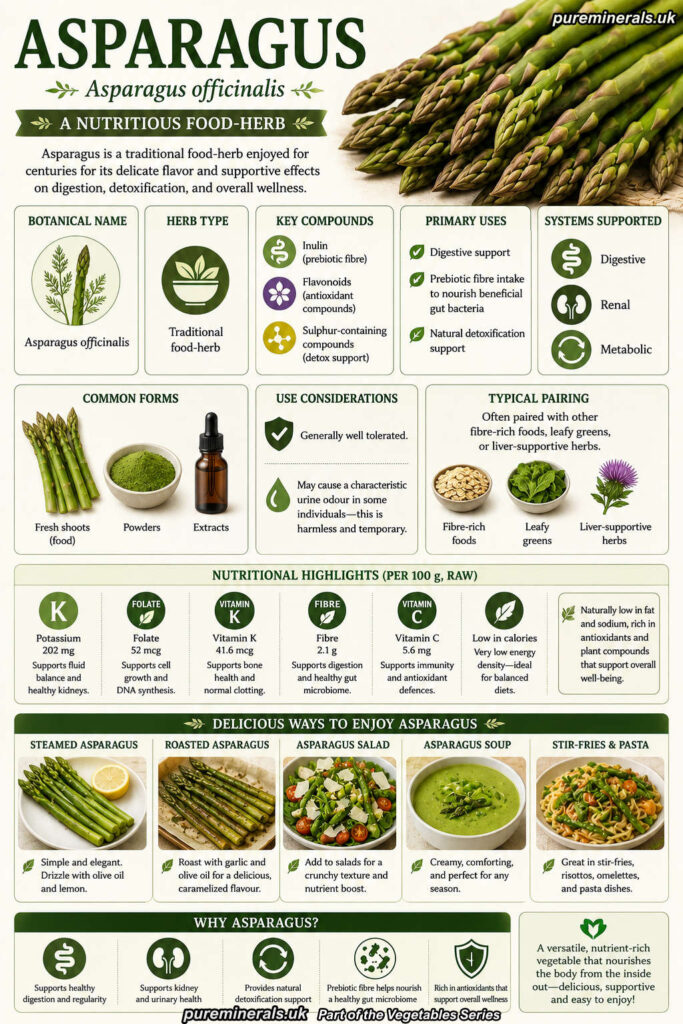
Download the full high-resolution Asparagus infographic for offline reference.
Explore more minerals in the full Vegetables Hub
Frequently Asked Questions
Below are answers to some common questions about asparagus and its effects on health. These insights will help you maximize the benefits of this nutritious vegetable.
How much asparagus should I eat for health benefits?
For noticeable health benefits, aim to consume at least 5-8 spears (about one cup) of asparagus 2-3 times per week. This amount provides significant nutrients while allowing for dietary variety. There’s no established upper limit for asparagus consumption—some people enjoy it daily during peak season without adverse effects. If you’re using asparagus specifically for its diuretic properties, consuming a full cup serving can produce noticeable effects within a few hours.
Why does asparagus make urine smell different?
The distinctive odor in urine after eating asparagus comes from sulfur-containing metabolites produced when your body breaks down asparagusic acid. This compound is unique to asparagus and creates volatile sulfur compounds during digestion that are excreted through urine. While about 80% of people produce these compounds, only 40-50% possess the genetic ability to smell them. This reaction is completely harmless and simply indicates that your body is processing the vegetable normally.
Is white asparagus nutritionally different from green asparagus?
White asparagus has a slightly different nutritional profile than green varieties because it’s grown underground without exposure to sunlight, preventing chlorophyll development. Green asparagus typically contains more vitamin C and vitamin A, while white asparagus is slightly lower in these nutrients but may have more fiber. Purple asparagus contains additional anthocyanins, the same antioxidants found in blueberries. Despite these differences, all varieties offer substantial health benefits and can be used interchangeably in recipes with slight adjustments for cooking times.
Can asparagus help with bloating and water retention?
Yes, asparagus is particularly effective at reducing bloating and water retention due to its natural diuretic properties. The amino acid asparagine, along with specific minerals and asparagusic acid, increases urine production and helps flush excess fluid from the body. Many people notice reduced abdominal bloating and less puffiness in extremities within hours of consuming asparagus. This makes it especially beneficial before events where you want to reduce bloating, during periods of hormonal water retention, or as part of a balanced approach to managing mild edema.
Is asparagus safe to eat during pregnancy?
Asparagus is not only safe during pregnancy but also especially beneficial due to its high folate content. Folate is crucial during early pregnancy for preventing neural tube defects and supporting proper fetal development. The fiber in asparagus can also help alleviate constipation, a common pregnancy complaint. However, pregnant women taking blood thinners should maintain consistent vitamin K intake and discuss asparagus consumption with their healthcare provider. As with any food during pregnancy, thoroughly wash asparagus before preparation to remove any potential contaminants.
Adding asparagus to your diet represents one of the simplest yet most effective dietary upgrades you can make. From cellular protection to digestive support and heart health, few vegetables offer such comprehensive benefits in such a delicious package. Whether you’re seeking to improve specific health concerns or simply enhance your overall nutrition, asparagus deserves a regular place on your plate.