

Published: 28 February 2026
Last Updated: 6 May 2026
This article is periodically reviewed and updated to reflect current scientific understanding by Vic George.
Fact-Checked: Includes 1 PubMed-indexed study and 2 other authoritative medical/scientific references. See our Editorial Policy.
What Is Arugula (Rocket)?
Arugula is a leafy green vegetable belonging to the species Eruca vesicaria, known for its distinctive peppery flavor and high concentration of glucosinolates, vitamins, and essential minerals. It is widely consumed as a salad green and culinary herb, valued for its nutrient density and bioactive plant compounds.
Arugula and Rocket are the same plant. “Arugula” is the term used in the United States. “Rocket” is used in the UK, Australia, and New Zealand because the name comes from the French roquette, which itself is derived from the Italian “ruchetta,” a diminutive of “ruca” (Latin Eruca).
Definition
Arugula or Rocket is the edible leaf of Eruca vesicaria, a fast-growing annual plant in the Brassicaceae family, consumed as a leafy green vegetable. It is also known as roquette or rucola.
This article uses the American name.
Extended Definition
Arugula is a member of the Brassicaceae family, which includes nutritionally significant vegetables such as broccoli, cabbage, kale, and mustard greens. This plant family is characterized by its production of sulfur-containing compounds known as glucosinolates.
When plant tissue is damaged through chewing or chopping, glucosinolates are converted by the enzyme myrosinase into biologically active compounds such as isothiocyanates. These compounds contribute to the characteristic pungent flavor of arugula and serve protective functions within the plant.
Arugula leaves are particularly rich in vitamin K, which plays a fundamental role in normal blood coagulation and bone metabolism. The plant also provides vitamin A precursors, vitamin C, folate, calcium, and potassium, all of which contribute to normal physiological function.
Despite its low caloric density, arugula delivers a high concentration of micronutrients and phytochemicals. Its high nitrate content, naturally present in leafy greens, is involved in plant nitrogen metabolism and contributes to its nutritional profile.
Arugula grows rapidly and can be harvested multiple times during its lifecycle. It is commonly consumed raw, which preserves heat-sensitive nutrients and enzymatic activity.
The vegetable is cultivated widely across the globe, with its primary production and native range concentrated in the Mediterranean region. Due to its popularity as a salad green and its ability to grow in temperate climates, it is cultivated commercially in many countries. In Italy, it is considered a staple, having been cultivated there since Roman times, and is central to Italian cuisine. In the UK, it has been a common leafy green used since Elizabethan times. In Africa and the Middle East, Arugula is part of the native range and features heavily in local cuisine. In the United States, it has gained massive popularity as a commercial crop since the 1990s.
Arugula grows best in the cool seasons of spring or fall. In warmer climes like the Philippines, it is grown in cooler seasons or under shade. It is known for its fast growth and is a staple in both home gardens and commercial operations.
Key Facts
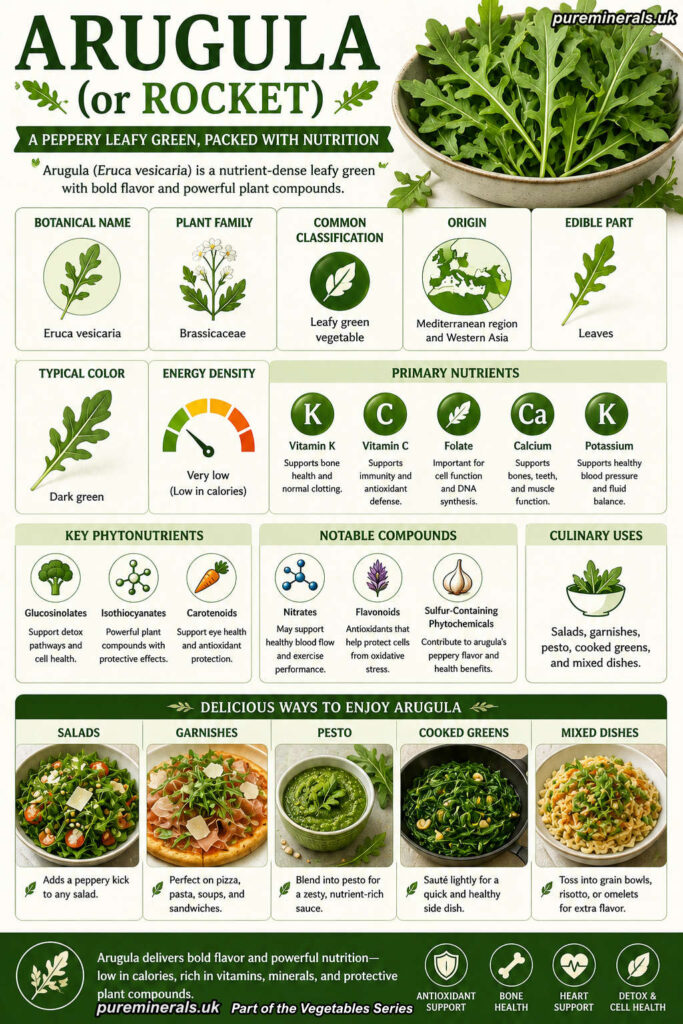
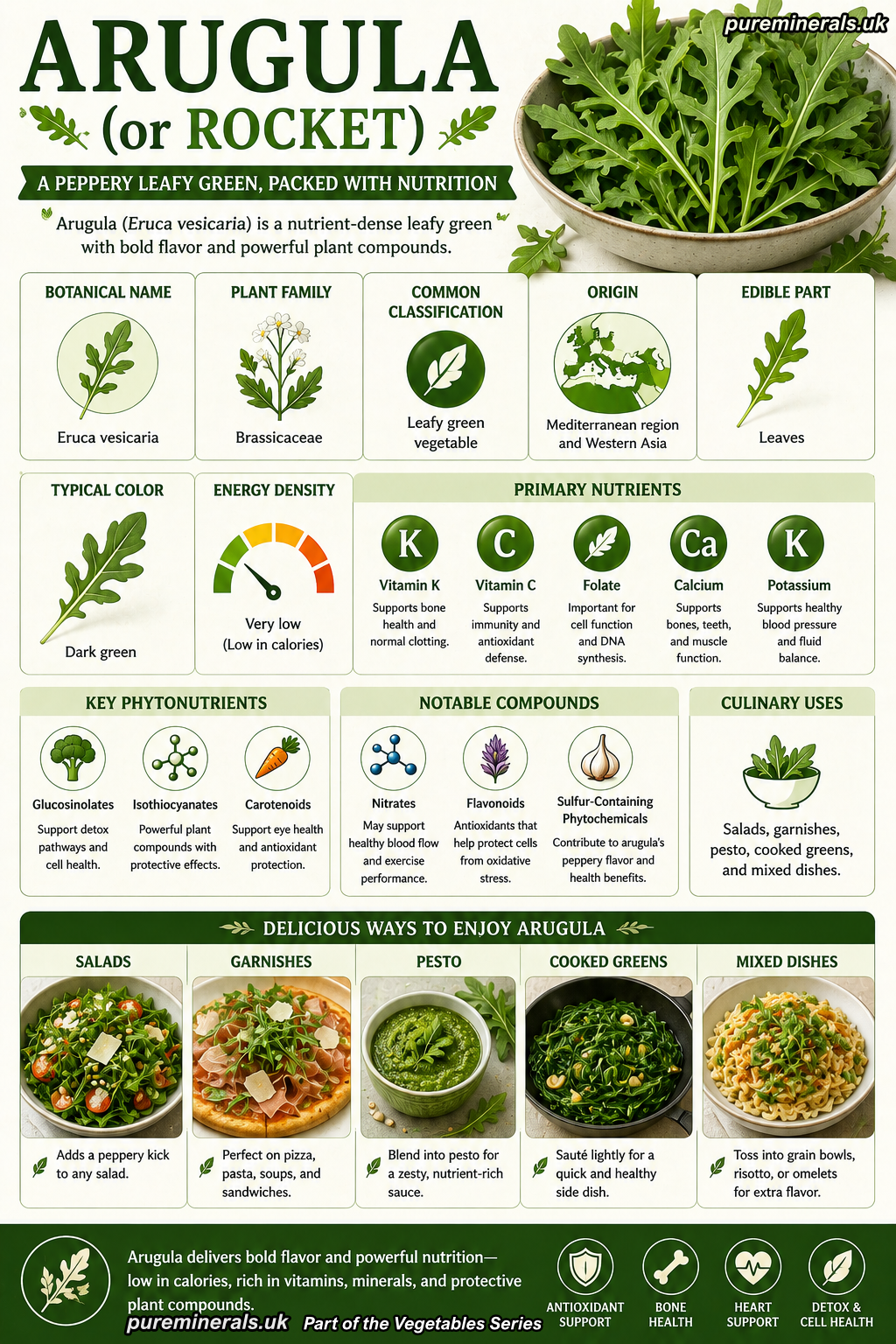
Botanical name: Eruca vesicaria
Plant family: Brassicaceae
Common classification: Leafy green vegetable
Origin: Mediterranean region and Western Asia
Edible part: Leaves
Typical color: Dark green
Primary nutrients: Vitamin K, vitamin C, folate, calcium, potassium
Key phytonutrients: Glucosinolates, isothiocyanates, carotenoids
Energy density: Very low
Notable compounds: Nitrates, flavonoids, sulfur-containing phytochemicals
Culinary uses: Salads, garnishes, pesto, cooked greens, and mixed dishes
Key Takeaways
- Arugula is a nutrient-dense cruciferous vegetable that delivers significant amounts of vitamin K, folate, and protective antioxidants in just a small serving.
- Its peppery bite comes from glucosinolates — sulfur-containing compounds that convert into powerful cancer-fighting isothiocyanates like sulforaphane and erucin when chewed.
- Two cups of raw arugula provides 10% of your daily folate needs, making it especially valuable for cardiovascular health and pregnancy nutrition.
- Arugula contains the carotenoids lutein and zeaxanthin, which research links to reduced risk of age-related macular degeneration — a detail most people overlook when choosing salad greens.
- Despite being extremely low in calories, arugula competes with kale and spinach in several key micronutrient categories, making it one of the most efficient greens you can eat.
Arugula is one of the most nutritionally efficient leafy greens you can put on your plate — and most people have no idea just how much it delivers per calorie.
Known scientifically as Eruca sativa, arugula goes by several names depending on where you are: rocket in the UK and Australia, rucola in Italy, and roquette in France. It belongs to the Brassica family of cruciferous vegetables, sitting in the same botanical group as broccoli, kale, bok choy, and cabbage. That family connection matters a great deal nutritionally, because it means arugula carries many of the same powerful phytochemicals that make cruciferous vegetables so widely studied in nutrition science. Resources have highlighted arugula’s nutrient profile extensively, and the research behind its benefits is worth understanding in detail.
Arugula is native to the Mediterranean region and has been consumed since at least the first century A.D., particularly across parts of Italy and the Middle East. Historically, it wasn’t just eaten as food — it was used as a medicinal plant, with both the leaves and seeds valued for their health properties. That long track record of traditional use aligns well with what modern nutritional science now confirms.
Arugula Packs More Nutrition Than Most Salad Greens
Most people reach for romaine or iceberg out of habit, but calorie for calorie, arugula dramatically outperforms both. It’s a low-sugar, hydrating food that delivers a concentrated package of vitamins, minerals, and phytonutrients without adding meaningful calories to your diet. Because people typically eat two cups or more of leafy greens in a sitting, arugula functions as a true superfood for anyone trying to maximize nutrition while managing calorie intake.
Arugula Nutrition Facts: What’s in Every Serving
A two-cup (40g) serving of raw arugula is the standard salad portion used in nutritional guidelines, and it’s a useful benchmark for understanding what you’re actually getting. The numbers are modest in calories but meaningful in micronutrients.
Calories, Macros, and Fiber Content
Two cups of raw arugula contain approximately 10 calories, making it one of the lowest-calorie foods in existence. It provides around 1 gram of protein, negligible fat, and roughly 1.5 grams of carbohydrates with a small amount of dietary fiber. These macro numbers are almost irrelevant from an energy standpoint — arugula’s value lies entirely in what it contributes beyond macros.
Vitamin K, Folate, and Key Micronutrients
This is where arugula genuinely earns its place in a nutrient-dense diet. One cup alone provides a solid dose of vitamin K, making it a meaningful contributor to your daily target. A two-cup serving provides approximately 10% of the Daily Value for folate, a B vitamin critical for DNA synthesis, red blood cell production, and neurological health.
Here’s what a two-cup (40g) serving of raw arugula delivers according to USDA data:
- Calories: ~10 kcal
- Vitamin K: A significant contributor toward daily needs — essential for blood clotting and bone metabolism
- Folate: 10% Daily Value — supports fetal neural tube development and reduces homocysteine buildup
- Calcium: Present in notable amounts — arugula actually contains more calcium than kale per comparable serving
- Vitamin C: Contributes to immune function and collagen synthesis
- Potassium: Supports blood pressure regulation and muscle function
- Beta-carotene, lutein, zeaxanthin: Protective carotenoid antioxidants that benefit eye and skin health
Folate deserves special attention here. Beyond pregnancy, adequate folate intake helps prevent the accumulation of homocysteine in the blood — an amino acid byproduct linked to increased cardiovascular risk when levels run too high.
How Arugula Compares to Other Leafy Greens
Arugula holds its own against the most celebrated greens on the market. Compared to kale, arugula actually contains more calcium, though kale edges it out on vitamin K and vitamin C. Spinach leads in potassium and is one of the strongest plant sources of calcium overall, but arugula’s glucosinolate content — which spinach lacks — gives it a distinct advantage in cancer-protective phytochemicals. Neither kale nor spinach delivers the same concentration of erucin that arugula does.
Glucosinolates: The Cancer-Fighting Compounds in Arugula
The peppery, slightly bitter flavor that makes arugula instantly recognizable isn’t just a taste quirk — it’s a direct signal of its glucosinolate content. Glucosinolates are sulfur-containing compounds found across the cruciferous vegetable family, and arugula contains them in particularly large quantities. Research published via ScienceDirect confirms arugula’s protective properties in this area, placing it alongside broccoli and other well-studied crucifers.
How Glucosinolates Convert to Isothiocyanates When Chewed
Glucosinolates are essentially inactive in their raw state. The activation process begins the moment you chew arugula — mechanical breakdown releases an enzyme called myrosinase, which converts glucosinolates into biologically active isothiocyanates. This is why chewing thoroughly and eating arugula raw maximizes the availability of these compounds. Cooking deactivates myrosinase, which reduces but doesn’t eliminate isothiocyanate production.
This conversion mechanism is one of the more fascinating examples of food chemistry at work. The plant essentially stores these defensive compounds in a locked form, and the “unlocking” happens through the physical act of eating — a design that also protects the plant from releasing these pungent compounds unnecessarily.
Sulforaphane and Erucin: Arugula’s Most Potent Phytochemicals
Arugula is particularly rich in two isothiocyanates: sulforaphane and erucin. Sulforaphane is the most extensively researched anticancer compound in the cruciferous vegetable family, studied for its ability to activate detoxification enzymes and inhibit tumor cell growth. Erucin is structurally similar to sulforaphane and appears to work through related biological pathways. Together, these compounds represent the primary reason arugula has been consistently flagged in cancer-prevention research as a vegetable worth including regularly in the diet.
Carotenoids in Arugula and Eye Health
Beyond its glucosinolate profile, arugula delivers a meaningful load of carotenoid antioxidants — specifically beta-carotene, lutein, and zeaxanthin. These fat-soluble pigments accumulate in eye tissue and play a direct role in protecting vision from oxidative damage. Pairing arugula with a small amount of healthy fat, such as olive oil in a salad dressing, significantly improves carotenoid absorption since these compounds require dietary fat to be properly absorbed through the gut.
Research indicates that arugula may help prevent age-related macular degeneration, one of the leading causes of vision loss in older adults. Lutein and zeaxanthin specifically concentrate in the macula of the eye, where they filter harmful blue light and neutralize free radicals before they can damage retinal cells. Beta-carotene adds another layer of antioxidant protection and also serves as a precursor to vitamin A, which is essential for low-light vision and maintaining the integrity of surface tissues in the eye.
Lutein and Zeaxanthin: What They Do for Your Vision
Lutein and zeaxanthin are the only carotenoids that accumulate directly in the human retina, specifically in the macula — the small central region responsible for sharp, detailed vision. They act as a biological filter against high-energy blue light and function as localized antioxidants, neutralizing free radicals that would otherwise degrade retinal tissue over time. Regular dietary intake of these two compounds is consistently associated with a reduced risk of age-related macular degeneration and cataracts in population research.
Beta-Carotene and Its Role as an Antioxidant
Beta-carotene in arugula serves a dual purpose. First, it acts as a direct antioxidant, scavenging reactive oxygen species that contribute to cellular aging and chronic disease. Second, it functions as a provitamin A carotenoid, meaning the body converts it into retinol as needed — supporting immune function, skin cell turnover, and the maintenance of mucous membranes. Unlike preformed vitamin A, beta-carotene from plant sources doesn’t carry toxicity risk at high intake levels, making arugula a safe and reliable source.
Health Benefits Supported by Research
Arugula’s health benefits aren’t built on folklore — they’re grounded in a growing body of nutritional research that connects its specific compounds to measurable outcomes across multiple body systems. From cancer prevention to bone density, the evidence makes a compelling case for eating this green regularly.
Anti-Cancer Properties of Cruciferous Vegetables
The isothiocyanates produced from arugula’s glucosinolates — particularly sulforaphane and erucin — are among the most studied anticancer compounds in the plant kingdom. They work through several mechanisms: activating phase II detoxification enzymes that help the body neutralize carcinogens, inducing apoptosis (programmed cell death) in cancer cells, and inhibiting the proliferation of tumor cells. Research cited by ScienceDirect places arugula alongside broccoli in terms of its protective phytochemical profile.
What makes this particularly significant is that these effects have been observed across multiple cancer types in laboratory and epidemiological research. Cruciferous vegetable consumption as a category has been linked to reduced risk of colorectal, lung, prostate, and breast cancers. Arugula’s specific isothiocyanate profile — especially its high erucin content — makes it a meaningful contributor to a cancer-protective diet, not just a passive leafy green filling out a salad bowl.
Bone Health and Vitamin K
Vitamin K is essential for bone metabolism, and arugula is a reliable dietary source. It activates osteocalcin, a protein that binds calcium into bone matrix and gives bone its structural integrity. Without adequate vitamin K, calcium cannot be effectively incorporated into bone tissue, regardless of how much calcium you consume — a detail that often gets overlooked in conversations about bone health that focus almost exclusively on calcium and vitamin D.
Arugula actually contains more calcium than kale on a per-serving basis, which adds another layer to its bone health value. The combination of both vitamin K and calcium in a single food source makes arugula a particularly efficient choice for supporting skeletal health across all age groups, including older adults at risk of osteoporosis.
Folate, Homocysteine, and Cardiovascular Health
Folate’s role in cardiovascular health comes down to a single metabolic pathway: the conversion of homocysteine into methionine. When folate intake is inadequate, homocysteine accumulates in the bloodstream. Elevated homocysteine is associated with increased risk of arterial damage, blood clots, and cardiovascular events. Arugula’s folate content — providing 10% of the Daily Value in just two cups — contributes meaningfully to keeping this pathway functioning correctly.
This benefit extends well beyond heart health. Folate is critical during the earliest stages of pregnancy for preventing neural tube defects in developing fetuses, and it supports red blood cell production and DNA synthesis throughout life. Getting folate from whole food sources like arugula rather than supplements also delivers the natural form (5-methyltetrahydrofolate), which the body uses more readily than synthetic folic acid for many people.
Skin Protection From UV Damage
The carotenoids and antioxidants in arugula contribute to skin health by neutralizing free radicals generated by UV exposure before they can trigger inflammatory cascades and DNA damage in skin cells. Beta-carotene in particular has been studied for its role in building a degree of internal photoprotection — it doesn’t replace sunscreen, but consistent dietary intake of carotenoid-rich foods is associated with better baseline skin resilience against sun-induced aging.
Digestive Health and Gut Support
Arugula is a hydrating food, composed largely of water, which helps maintain the moist environment that the digestive tract requires to move food efficiently. Research published in PMC supports the role of leafy green consumption in nourishing the digestive system, with regular intake linked to healthier gut transit and reduced risk of digestive complaints.
The fiber in arugula, while modest per serving, adds to cumulative daily intake when arugula is eaten regularly as part of a vegetable-forward diet. Dietary fiber feeds beneficial gut bacteria, supports regular bowel movements, and contributes to the short-chain fatty acid production that keeps the intestinal lining healthy.
Additionally, arugula’s glucosinolates may offer direct benefits to gut health by influencing the gut microbiome composition. Emerging research suggests that cruciferous vegetables support a more diverse microbial environment in the colon, and microbial diversity is one of the strongest markers of overall gut health identified in current gastroenterology research.
Arugula’s Role in Traditional Medicine and Cultural History
Arugula’s history as a health food predates modern nutrition science by roughly two millennia. Native to the Mediterranean, it has been cultivated and consumed across Italy, North Africa, and the Middle East since at least the first century A.D., with records documenting its use in Roman times both as a food and as a remedy.
In traditional Mediterranean medicine, arugula seeds were pressed for oil and used topically, while the leaves were eaten to support digestion and vitality. Ancient Roman texts reference arugula as an aphrodisiac — an attribution likely connected to its stimulating bitter compounds rather than any direct hormonal effect, but it reflects how seriously this plant was taken beyond its culinary role.
The fact that arugula remained a dietary staple in Mediterranean cultures for over 2,000 years before modern nutrition validated its benefits is worth noting. Traditional food systems often preserved nutritional wisdom empirically, and arugula is a clear example of a food where centuries of intuitive use align with what controlled nutritional research now confirms.
How to Add Arugula to Your Diet

Arugula is one of the most versatile leafy greens in the kitchen, and its peppery flavor means it adds character to dishes rather than just filling out the plate. Baby arugula — the younger, smaller leaves — is the most commonly available variety and has a milder bite than mature arugula, making it the better starting point if you find the flavor intense.
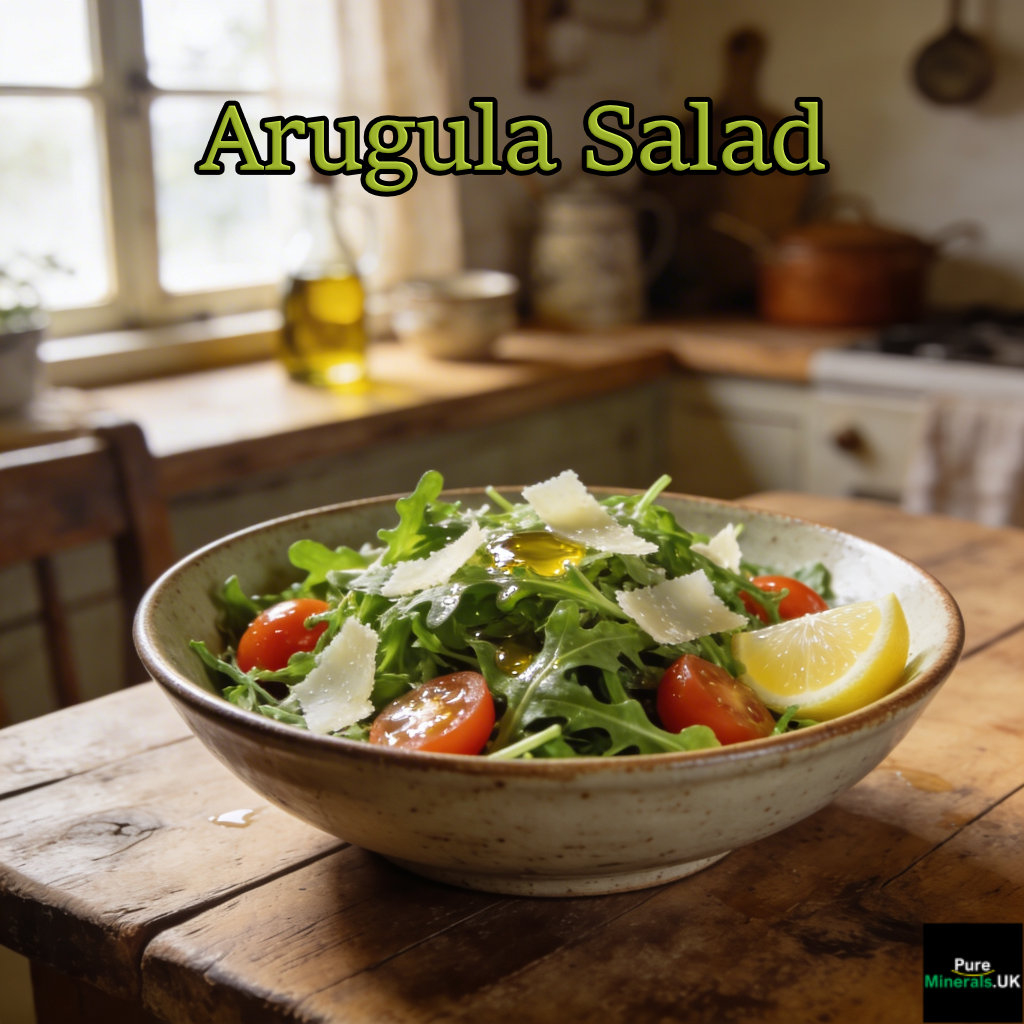
The most straightforward use is a classic arugula salad, often built with cherry tomatoes, shaved parmesan, lemon juice, and good olive oil. But arugula works just as well stirred into hot pasta (where the heat slightly wilts the leaves without fully cooking them), layered onto pizza fresh out of the oven, blended into pesto as a partial replacement for basil, or used as a bed under grilled fish or chicken. Its versatility makes daily consumption genuinely easy to maintain without eating the same meal repeatedly.
Raw vs. Cooked: Which Preserves More Nutrients
Raw arugula preserves the full activity of myrosinase — the enzyme responsible for converting glucosinolates into their active isothiocyanate forms. Heat deactivates myrosinase, which means cooking arugula reduces the conversion efficiency of sulforaphane and erucin. If maximizing cancer-protective phytochemicals is the goal, raw arugula is the clear choice.
That said, cooking doesn’t eliminate arugula’s nutritional value entirely. Vitamin K, folate, calcium, and carotenoids remain largely intact through light cooking methods like brief wilting in a warm pan or tossing onto hot pasta. The key word is light — prolonged high heat is where nutrient losses become significant. A practical approach is to use arugula raw most of the time and cooked occasionally, getting the best of both preparations without overthinking it.
Simple Ways to Use Arugula Beyond Salads
Arugula’s versatility extends well beyond the salad bowl. Here are some of the most effective ways to work it into daily eating without effort: try combining it with other fruits like raspberries for a refreshing twist.
- Pasta topping: Toss a large handful over hot pasta just before serving — the residual heat wilts the leaves slightly while keeping their nutrients largely intact
- Pizza finish: Layer fresh arugula over a baked pizza straight from the oven for a peppery, nutrient-dense contrast to rich toppings
- Arugula pesto: Blend arugula with olive oil, garlic, lemon juice, pine nuts, and parmesan for a bolder, more nutritious alternative to traditional basil pesto
- Grain bowls: Use arugula as the base under quinoa, farro, or brown rice bowls — it holds up better than spinach under warm toppings
- Egg dishes: Fold into scrambled eggs or omelets in the final 30 seconds of cooking for a mineral and vitamin K boost at breakfast
- Sandwich and wrap layering: Replace iceberg or romaine with arugula for significantly more phytonutrient density with the same volume
- Smoothies: Baby arugula blends well with fruit-forward smoothies — its flavor is mild enough to disappear behind banana or mango while adding folate and carotenoids
The common thread across all of these uses is that arugula requires almost no preparation. There’s no chopping required for baby arugula, no cooking needed, and no special equipment. The barrier to daily consumption is essentially zero, which is what makes it such a practical nutritional upgrade for nearly any eating pattern.
Arugula Is One of the Most Nutrient-Dense Low-Calorie Foods Available
When you measure nutritional output against caloric cost, arugula sits at the very top of the leafy green category. Ten calories per two-cup serving — delivering vitamin K, folate, calcium, carotenoids, and a full spectrum of cancer-protective isothiocyanates — is an extraordinary return on investment by any nutritional metric. Very few foods offer this combination of breadth and efficiency simultaneously.
The case for eating arugula regularly isn’t built on a single impressive nutrient or one standout health claim. It’s the combination — glucosinolates for cancer protection, carotenoids for eye and skin health, vitamin K for bones and clotting, folate for cardiovascular and prenatal health, and antioxidants for systemic inflammation reduction — that makes it genuinely exceptional. Adding two cups of arugula to your daily diet is one of the simplest, lowest-effort nutritional upgrades available.
Important note: Arugula
Arugula is widely recognized as safe for consumption as a food. This article is provided for educational purposes only and does not constitute medical advice. Individuals taking anticoagulant medications or those with specific dietary concerns should consult a qualified healthcare professional before making significant dietary changes. You may also want to read about the response of Arugula to the integrated use of biological, inorganic, and organic fertilization.
Arugula Infographic
Download the full high-resolution Arugula infographic for offline reference.
Explore more minerals in the full Vegetables Hub
Frequently Asked Questions
Is it healthy to eat arugula every day?
Yes, eating arugula daily is safe and beneficial for most people. Its extremely low calorie count, absence of common allergens, and low sugar content mean there’s no practical upper limit for healthy adults. Regular consumption supports consistent intake of vitamin K, folate, and protective phytonutrients — nutrients that benefit from daily rather than occasional delivery. The only population that needs to monitor intake is people on anticoagulant medications due to arugula’s vitamin K content, which should remain consistent rather than fluctuating dramatically day to day.
Does cooking arugula destroy its nutrients?
Cooking arugula partially reduces its phytochemical activity, specifically by deactivating the myrosinase enzyme responsible for converting glucosinolates into isothiocyanates. This means fewer sulforaphane and erucin compounds are produced in cooked arugula compared to raw. However, heat-stable nutrients like vitamin K, calcium, and carotenoids remain largely available even after light cooking.
The practical takeaway is that raw arugula maximizes phytochemical benefits, but lightly wilted or briefly heated arugula still delivers meaningful nutrition. Avoid prolonged boiling or high-heat roasting if nutrient retention is a priority — quick exposure to heat, such as tossing arugula onto hot pasta or a freshly baked pizza, represents a reasonable middle ground.
How does arugula compare to spinach nutritionally?
Both are excellent choices, but they have different nutritional strengths. Spinach leads in potassium, iron, and magnesium, and is one of the strongest plant sources of calcium overall. Arugula, on the other hand, delivers significantly more glucosinolate-derived phytochemicals — sulforaphane and erucin — which spinach does not contain. Arugula also holds a comparable folate profile and edges out spinach in its specific carotenoid and isothiocyanate content. Ideally, rotating both greens gives you the full spectrum of what each delivers uniquely.
What gives arugula its peppery flavor?
Arugula’s distinctive peppery, slightly bitter taste comes directly from its glucosinolate content. When arugula leaves are damaged — whether by chewing, cutting, or wilting — glucosinolates react with the enzyme myrosinase and produce isothiocyanates, which are the compounds responsible for both the sharp flavor and the cancer-protective properties. Younger baby arugula leaves contain lower concentrations of these compounds, which is why they taste milder than mature arugula leaves.
Is arugula safe for people on blood thinners?
Arugula is safe for people on blood thinners like warfarin, but consistency matters. Vitamin K plays a central role in blood clotting, and warfarin works by interfering with vitamin K activity. Sudden large increases or decreases in dietary vitamin K — from foods like arugula, kale, or spinach — can affect how warfarin performs and alter INR (international normalized ratio) readings.
The key principle is consistency rather than avoidance. People on anticoagulants don’t need to eliminate arugula or other vitamin K-containing greens — they simply need to maintain a relatively stable intake week to week so their medication dosage can be calibrated accurately. Sporadic large servings followed by periods of no intake create more management challenges than eating arugula in moderate, regular amounts.
Anyone on anticoagulant therapy should discuss their specific dietary vitamin K intake with their prescribing physician or a registered dietitian to establish an appropriate and consistent eating pattern that supports both their nutritional needs and medication management goals.