

Published: 26 February 2026
This article is periodically reviewed and updated to reflect current scientific understanding by Vic George.
Fact-Checked: 2 other authoritative medical/scientific references. See our Editorial Policy.

What Is Black Currant and Why Is It Important for Immune Health, Vision, and Antioxidant Protection?
Black currant is a nutrient-dense berry valued for its exceptionally high vitamin C content and concentrated anthocyanin profile. It supports immune defence, visual health, and cardiovascular function through its potent antioxidant compounds. Black currants are most beneficial when consumed fresh, frozen, or minimally processed without added sugar.
Definition:
Black currant refers to the fruit of Ribes nigrum, a deciduous shrub cultivated in temperate climates. Black currants provide vitamin C, fibre, potassium, and high concentrations of anthocyanins and polyphenols.
Extended Definition:
Black currants are among the richest natural sources of vitamin C, often exceeding citrus fruits in concentration. This supports immune defence, collagen synthesis, and cellular protection against oxidative damage.
Their deep purple colour reflects high anthocyanin content, particularly delphinidin and cyanidin derivatives. These compounds support vascular health, visual function, and reduce oxidative stress in retinal tissues.
Black currants also contain flavonoids and phenolic acids that contribute to cardiovascular resilience and metabolic support. These compounds may support endothelial function and help maintain healthy blood flow.
The fruit provides fibre, supporting digestive health and glycaemic balance. Potassium contributes to fluid balance, nerve function, and cardiovascular stability.
Black currants have a naturally tart flavour and are often consumed fresh, frozen, or as unsweetened preparations.
Overall, black currants are best understood as a vitamin C– and anthocyanin-rich functional berry, supporting immune, visual, and cardiovascular health.
Key Facts:
- Food type: Berry / high-antioxidant fruit
- Botanical name: Ribes nigrum
- Key nutrients: Vitamin C, fibre, potassium
- Key compounds: Anthocyanins, flavonoids, polyphenols
- Primary roles: Immune support, antioxidant protection, visual support
- Systems supported: Immune, visual, cardiovascular, metabolic
- Best forms: Fresh berries, frozen berries, unsweetened preparations
- Use considerations: Naturally tart; avoid sugar-sweetened products
- Typical pairing: Often paired with yoghurt, oats, apples, berries
Key Takeaways
- Black currants contain up to 15 unique types of anthocyanins — making them one of the most antioxidant-dense fruits available, outpacing blueberries, elderberries, and even acai in several key measures.
- Just one cup of raw black currants delivers triple your daily vitamin C requirement, giving your immune system a serious, science-backed boost.
- The anthocyanins in black currants don’t just fight free radicals — they also carry antimicrobial, anti-inflammatory, and potentially anti-cancer properties that most people have never heard about.
- There’s a smarter way to get black currant antioxidants daily — and the form you choose (fresh, dried, juice, or oil) makes a real difference in what you actually absorb.
- Black currants were banned in the United States for nearly a century, which is a big reason most Americans still don’t know about one of nature’s most powerful berries.
Black currants are one of the most antioxidant-rich fruits on the planet — and most people in the U.S. have never even tried one.
That’s starting to change. As interest in functional foods and immune-supporting nutrition grows, this deep-purple berry is finally getting the attention it deserves. CurrantC has been a key voice in bringing awareness to the science-backed benefits of black currants, offering concentrated black currant products rooted in real nutritional research.
Black Currants Pack More Punch Than Most Berries You Know
Most people reach for blueberries when they want an antioxidant boost. That’s a reasonable choice — but black currants quietly outperform them in almost every measurable category. The berry’s intense dark-purple color isn’t just visual. It’s a direct indicator of its anthocyanin concentration, one of the most powerful classes of antioxidants found in food.
Black currants were actually banned in the United States in the early 1900s because the plants were thought to spread a disease that threatened the timber industry. That federal ban wasn’t fully lifted until 2003, which is a big part of why American consumers are only now catching up to what European countries have known for decades — that black currants are an exceptionally potent health food.
The Antioxidant Power of Black Currants

Poland and Russia are the main producers of black currants, with Germany also contributing to the European market, which grows 99.1% of the world’s crop. However, many growers, particularly in the UK, are part of the “Blackcurrant Foundation” or supply large companies like Ribena, which manufactures the popular black currant cordial drink.
Black currants are available in shops primarily in frozen form rather than fresh. They are highly seasonal (typically July to August in the UK) and notoriously difficult to find fresh in conventional supermarkets. They are highly perishable, do not travel well, and are often instantly sold to commercial manufacturers (e.g., Ribena).
The antioxidant capacity of black currants is not a marketing claim — it’s measurable, consistent, and well-documented. These berries rank among the highest of any fruit when it comes to their ability to neutralize free radicals, which are the unstable molecules that damage cells, accelerate aging, and contribute to chronic disease. The combination of vitamin C, anthocyanins, and other polyphenols creates a multi-layered antioxidant defense that few fruits can match. For comparison, explore the antioxidant benefits of raspberries as well.
What makes black currants stand out antioxidant-wise:
- Over 3x the vitamin C content of oranges by weight
- Up to 15 unique types of anthocyanins identified in research
- High levels of polyphenols including quercetin and myricetin
- Strong ORAC (Oxygen Radical Absorbance Capacity) values compared to most common berries
- Gamma-linolenic acid (GLA) in the seed oil, with additional anti-inflammatory effects
Black currants also contain iron, potassium, and B vitamins, which means you’re not just getting antioxidant protection — you’re getting a nutritionally complete package that supports multiple body systems at once. Additionally, with over 3x the vitamin C content of oranges by weight, they are a powerful source of this essential nutrient.
Anthocyanins: The Pigment That Fights Free Radicals
Anthocyanins are the water-soluble pigments responsible for the deep red, purple, and blue colors in many fruits and vegetables. In black currants specifically, research published in the Journal of Agricultural and Food Chemistry has identified up to 15 distinct anthocyanin compounds — a diversity that surpasses most other anthocyanin-rich foods. These compounds work by donating electrons to unstable free radical molecules, neutralizing them before they can damage healthy cells. The result is reduced oxidative stress throughout the body, which has downstream effects on inflammation, aging, and disease risk.
How Black Currants Compare to Other High-Antioxidant Fruits
To put it in perspective, here’s how black currants stack up against other commonly promoted antioxidant fruits:
Fruit | Vitamin C per 100g | Anthocyanin Variety | Notable Antioxidant Compounds |
|---|---|---|---|
Black Currant | ~181mg | Up to 15 types | Delphinidin, cyanidin, quercetin |
~9.7mg | 5 major types | Malvidin, pterostilbene | |
~36mg | 2-3 major types | Cyanidin-3-glucoside | |
~53mg | Minimal | Hesperidin, naringenin | |
~58mg | 1-2 types | Pelargonidin |
The numbers don’t lie. Black currants aren’t just competitive — they dominate in vitamin C content and anthocyanin diversity compared to the berries most commonly marketed as superfoods.
Oxidative Stress Reduction and Cell Protection
Oxidative stress happens when there are more free radicals in the body than antioxidants available to neutralize them. Over time, this imbalance contributes to the development of serious conditions, including heart disease, type 2 diabetes, neurodegenerative disorders, and certain cancers. Black currants help tip the balance back in your favor. Their anthocyanins actively scavenge free radicals, while their vitamin C regenerates other antioxidants — including vitamin E — so your body’s defense system keeps working efficiently.
Research has also shown that anthocyanins from black currants may specifically protect liver cells, with some studies suggesting the compounds can slow the development of abnormal cell growth in liver tissue. This is an emerging area of research, but the early signals are consistent with the berry’s broader antioxidant and anti-inflammatory profile.
Black Currants and Immune System Support
The immune-boosting reputation of black currants is one of the most well-supported aspects of their health profile. It’s not just about vitamin C, though that alone would be impressive. The combination of vitamin C, anthocyanins, and antimicrobial polyphenols creates a synergistic effect that helps your immune system detect threats faster, respond more aggressively, and recover more efficiently.
Vitamin C Content: More Than Three Times That of Oranges
One cup of raw black currants contains roughly 203mg of vitamin C — well over the recommended daily intake for most adults, which sits at 65–90mg per day according to the National Institutes of Health. By comparison, a medium orange delivers around 70mg. That means black currants are delivering more than three times the immune-supporting vitamin C per serving.
Why this matters for immunity:
Vitamin C supports the production and function of white blood cells, specifically neutrophils and lymphocytes. It also acts as an antioxidant within immune cells themselves, protecting them from the oxidative damage that occurs during an active immune response. Without adequate vitamin C, your immune system is essentially fighting with one hand tied behind its back.
Getting your vitamin C from whole food sources like black currants also means you’re absorbing it alongside bioflavonoids and other co-factors that enhance uptake — something isolated supplements can’t always replicate.
Research on Black Currants and Respiratory Infection Prevention
Several studies have investigated black currants specifically in the context of respiratory health and infection resistance. Research has indicated that black currant extract may help inhibit the ability of influenza viruses to bind to host cells — essentially blocking the first step of infection at the cellular level. The antimicrobial compounds in black currants appear to interfere with pathogen activity before the immune system even has to mount a full response.
This preventative mechanism is distinct from how most vitamin C supplements work. Rather than simply supporting immune cell production after exposure, black currant compounds may actively reduce the likelihood of successful viral entry — a meaningful distinction for anyone looking to stay healthy through cold and flu season.
Antimicrobial Properties That Block Viruses at the Cell Level
Black currants don’t just support your immune system passively — their polyphenols actively interfere with how pathogens operate. Studies have shown that black currant extracts demonstrate meaningful antimicrobial activity against both bacterial and viral threats, including Staphylococcus aureus and certain strains of influenza. The anthocyanins — particularly delphinidin and cyanidin — appear to disrupt the ability of pathogens to attach to and penetrate healthy cells. This cell-level blocking mechanism means that black currant compounds may reduce infection risk before your immune system even needs to respond.
Black Currant Seed Oil as an Immune-Boosting Alternative
- Rich in gamma-linolenic acid (GLA) — an omega-6 fatty acid that supports immune regulation and reduces inflammatory signaling throughout the body
- Contains stearidonic acid (SDA) — a plant-based omega-3 precursor that is converted more efficiently in the body than the ALA found in flaxseed
- Supports skin barrier function — GLA helps maintain the integrity of your skin, which is your first physical line of immune defense
- Anti-inflammatory at the cellular level — helps modulate prostaglandin production, which controls how strongly your body triggers inflammatory responses
- Available in softgel capsule form — making it easy to supplement even when fresh or dried black currants aren’t accessible
Black currant seed oil is pressed from the seeds of the fruit and offers a concentrated dose of the berry’s fatty acid profile. It’s a particularly useful option for people who want the anti-inflammatory and immune-regulating benefits of black currants without consuming the fruit itself daily. For those interested in other berry alternatives, raspberry offers its own unique benefits.
The GLA content in black currant seed oil is notably higher than in other popular seed oils, including evening primrose oil and borage oil in some comparisons. GLA plays a direct role in regulating immune response — not by ramping it up indiscriminately, but by helping the immune system respond proportionally. This is especially relevant for people dealing with chronic low-grade inflammation, which quietly drives conditions like cardiovascular disease, metabolic syndrome, and autoimmune disorders.
For best results, black currant seed oil supplements should be taken consistently over several weeks. Like most fatty acid interventions, the benefits accumulate gradually rather than appearing overnight. Pairing it with whole black currant consumption — whether fresh, dried, or as a concentrate — gives you both the lipid-soluble and water-soluble antioxidant fractions working together. If you’re interested in exploring other fruits with antioxidant properties, consider learning more about raspberries.
Additional Health Benefits Backed by Research
The antioxidant and immune benefits of black currants get the most attention, but the research extends well beyond those two areas. From cardiovascular protection to vision support and even cognitive function, black currants have a broader health profile than most people realize. Here’s what the science actually says about some of the lesser-known benefits.
Anti-Inflammatory Effects on Chronic Disease Risk
Chronic inflammation is now widely recognized as a root driver of many of the most common diseases in the modern world — including heart disease, type 2 diabetes, and several cancers. Black currants address this at multiple levels. Their anthocyanins suppress key inflammatory markers by inhibiting enzymes like cyclooxygenase (COX-1 and COX-2) — the same enzymes targeted by common anti-inflammatory medications. Meanwhile, the GLA in black currant seed oil modulates prostaglandin activity, helping the body regulate its own inflammatory response rather than staying in a state of constant low-grade activation. Together, these mechanisms make black currants a meaningful dietary tool for long-term disease prevention.
Eye Health Protection from Anthocyanins
The anthocyanins in black currants have a particular affinity for eye tissue, and Japanese researchers have investigated this connection extensively. Studies have shown that black currant anthocyanins — specifically delphinidin-3-rutinoside and cyanidin-3-rutinoside — can help improve blood flow to the retina, reduce eye fatigue caused by prolonged screen time, and may slow the progression of conditions like glaucoma by supporting ocular pressure regulation. For anyone spending long hours in front of a screen, this is one of the more immediately practical benefits black currants offer.
Black Currant Nutrition Facts
Understanding the full nutritional picture of black currants helps explain why the health benefits are so wide-ranging. This isn’t a fruit with one standout nutrient — it’s genuinely broad-spectrum nutrition packed into a small, tart berry.
A single cup (approximately 112g) of raw black currants delivers a striking nutritional profile. You’re getting substantial vitamin C, meaningful amounts of potassium, iron, and B vitamins, plus a full complement of anthocyanins and other polyphenols — all for roughly 70 calories. The fiber content also supports gut health, which in turn influences immune function, making every component of the berry interconnected in its health impact. For a different taste, you might explore the benefits of passion fruit, another fruit rich in vitamins and minerals.
Here’s a closer look at the key nutrients per one cup (112g) of raw black currants:
- Calories: ~70 kcal
- Vitamin C: ~203mg (over 200% of the recommended daily value)
- Fiber: ~5g
- Potassium: ~361mg
- Iron: ~1.7mg
- Vitamin B6: ~0.07mg
- Magnesium: ~27mg
- Calcium: ~62mg
- Anthocyanins: Among the highest of any commonly consumed berry
- Total carbohydrates: ~17g (primarily from natural sugars and fiber)
Easy Ways to Add Black Currants to Your Diet
Getting more black currants into your daily routine doesn’t require any complicated cooking. The berry is versatile enough to work in everything from morning smoothies to savory sauces, and the concentrated forms — dried, juiced, or supplemented — make it easy to stay consistent even when fresh berries aren’t in season.
Fresh, Frozen, Dried, or Concentrated: Which Form Works Best
Fresh black currants are the gold standard in terms of full-spectrum nutrition. When you eat the whole berry, you get the complete matrix of fiber, anthocyanins, vitamin C, and cofactors working together as nature intended. The problem is availability — fresh black currants are still hard to find in most American grocery stores, and their season is short even where they do grow.
Frozen black currants are an excellent alternative. Freezing preserves the anthocyanin content effectively, and frozen berries are available year-round. Dried black currants offer a more concentrated dose of antioxidants per gram, though they do lose some vitamin C in processing and come with a higher natural sugar density per serving.

Black currant juice and concentrates are widely available and practical for daily use, but look for options with no added sugar to keep the health profile intact. Black currant supplements — including capsules, powders, and seed oils — are the most convenient form and the easiest way to guarantee a consistent daily dose regardless of seasonal availability.
Simple Black Currant Recipes to Try at Home
The easiest entry point is a black currant smoothie — blend one cup of frozen black currants with a banana, half a cup of Greek yogurt, a tablespoon of honey, and a splash of almond milk. You get a thick, antioxidant-loaded drink that delivers well over your daily vitamin C needs in one glass. From there, black currant jam is the classic preparation — simmer fresh or frozen berries with sugar and lemon juice until thickened, and you have a versatile spread that works on toast, stirred into oatmeal, or swirled into plain yogurt.
For something savory, a black currant reduction sauce pairs surprisingly well with roasted duck, lamb, or pork — simply reduce black currant juice with a shallot, a splash of red wine, and a knob of butter until glossy and concentrated.
Blackcurrant Tiramisu
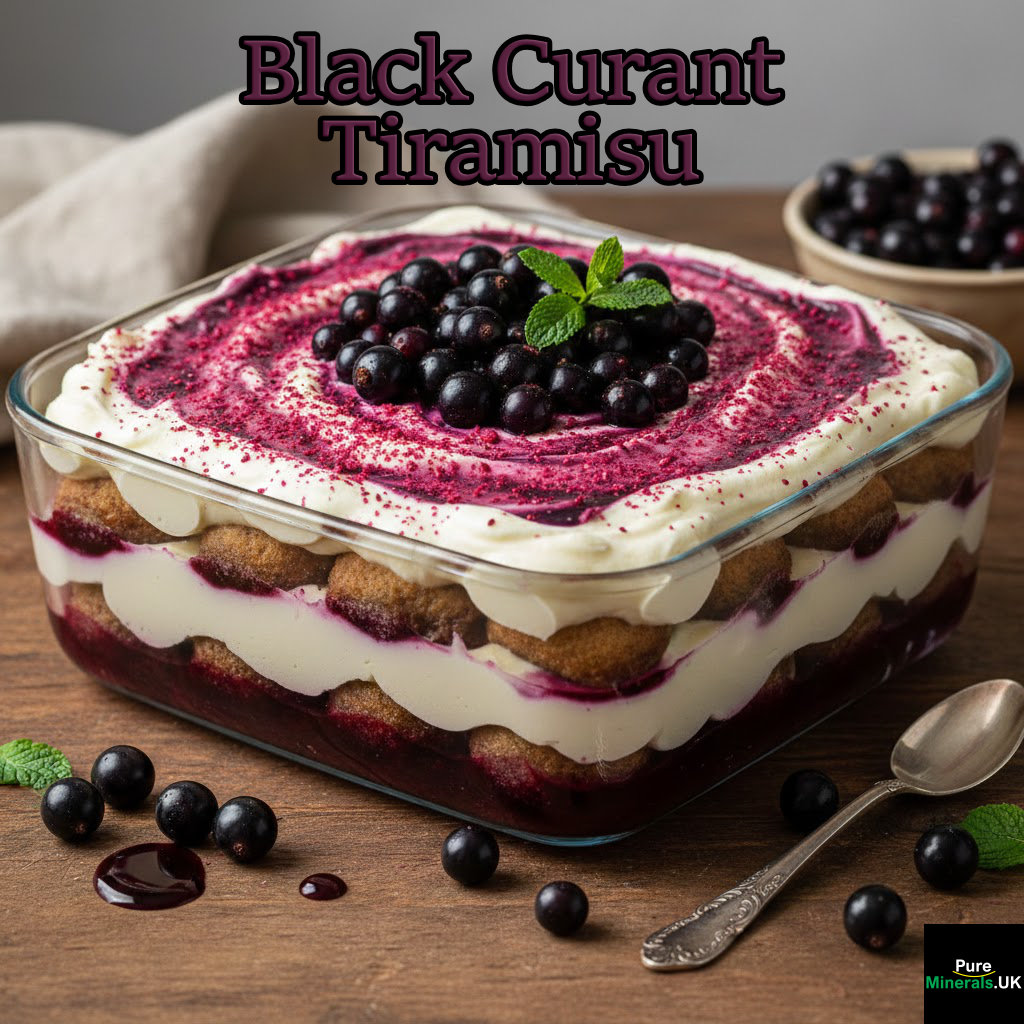
This is a stunning, jewel-toned riff on the Italian classic. By swapping the espresso for a sharp, vibrant blackcurrant syrup and the cocoa powder for a dusting of freeze-dried fruit (or a glossy coulis), you get a dessert that is creamy, tart, and incredibly refreshing.
Prep time: 30 minutes (plus at least 6 hours chilling); Servings: 6–8
Ingredients
The Blackcurrant “Soak”
- 2 cups Fresh or frozen blackcurrants
- ½ cup Water
- ⅓ cup Sugar
- Optional: 2 tbsp Cassis (blackcurrant liqueur) or Elderflower syrup
The Cream Filling
- 2 cups (500g) Mascarpone cheese (cold)
- 1 ¼ cups Heavy whipping cream (cold)
- ½ cup Powdered sugar
- 1 tsp Vanilla extract
The Assembly
- 1 pack (approx. 24) Ladyfingers (Savoiardi)
- Extra blackcurrants for garnish
- Optional: Freeze-dried raspberry or blackcurrant powder for dusting
Instructions
1. Make the Blackcurrant Syrup
- Simmer: In a small saucepan, combine the blackcurrants, water, and sugar. Simmer over medium heat for 5–8 minutes until the berries burst and the liquid thickens slightly.
- Strain: Press the mixture through a fine-mesh sieve into a shallow bowl to remove the skins and seeds. Stir in the Cassis or elderflower syrup if using.
- Cool: Let the syrup cool completely. It must be cold before you dip the ladyfingers.
2. Whip the Mascarpone Cream
- Combine: In a large chilled bowl, add the mascarpone, heavy cream, powdered sugar, and vanilla.
- Whip: Start slow, then increase speed until you have stiff peaks. Be careful not to overbeat, or the mascarpone might split and turn grainy. It should be thick and billowy.
3. Assemble the Layers
- Dip: Quickly dunk each ladyfinger into the blackcurrant syrup. Do not soak them—just a 1-second dip per side, or they will turn to mush.
- Layer 1: Arrange a layer of dipped biscuits in the bottom of a glass dish (approx. 8×8 inch).
- Cream: Spread half of the mascarpone mixture over the biscuits.
- Layer 2: Repeat with another layer of dipped biscuits and the remaining cream. Smooth the top with a spatula.
4. The “Set” (Critical Step)
Cover the dish and refrigerate for at least 6 hours, though overnight is best. This allows the ladyfingers to soften into a cake-like texture and the flavors to meld.
Tips
- The Color Pop: If you want a “marbled” look, swirl a few spoonfuls of the leftover blackcurrant syrup into the mascarpone cream layers as you build them.
- Frozen vs. Fresh: Frozen blackcurrants actually work better for the syrup as they release their juices more easily.
- Garnish: Just before serving, top with fresh berries or a light dusting of freeze-dried fruit powder for a professional finish.
Important note: Black currants
Black currants are safe for the vast majority of people when consumed as food in normal dietary amounts. However, there are a few situations worth knowing about before significantly increasing your intake or starting a black currant seed oil supplement. The high vitamin C content, while generally beneficial, can cause digestive discomfort — including nausea, stomach cramps, or loose stools — in sensitive individuals when consumed in large quantities. Starting with smaller portions and building up gradually is the practical approach if you’re new to eating them regularly.
People taking blood-thinning medications like warfarin should speak with their doctor before adding significant amounts of black currant or black currant seed oil to their routine, as the GLA content may have mild anticoagulant effects. Similarly, individuals scheduled for surgery are typically advised to stop taking seed oil supplements at least two weeks beforehand. Black currant seed oil should also be used cautiously by anyone with a known bleeding disorder.
There is currently insufficient clinical data to confirm the safety of high-dose black currant supplements during pregnancy and breastfeeding, so whole food consumption in normal amounts is the conservative recommendation for that group. Outside of these specific cases, black currants are a well-tolerated, low-risk food with a strong nutritional upside.
Frequently Asked Questions
Here are answers to the most common questions people ask when they’re first discovering black currants and trying to figure out how to make them a practical part of a health-focused diet.
Are Black Currants the Same as Blackberries?
No, black currants and blackberries are entirely different fruits from different plant families. Blackberries are an aggregate fruit that grows on thorny canes in the Rubus genus, related to raspberries and roses. Black currants are small, round, smooth-skinned berries that grow in clusters on Ribes nigrum shrubs, a completely separate genus.
The confusion is understandable given the similar dark color, but the flavor profiles, nutritional content, and plant biology are distinct. Black currants have a more intense, tart, almost resinous flavor compared to the sweeter, milder taste of blackberries. Nutritionally, black currants significantly outperform blackberries in vitamin C content and anthocyanin diversity.
In terms of availability in the U.S., blackberries are far more common in grocery stores — which is another reason many Americans default to them without knowing that black currants are the more nutritionally dense option. If you’ve only ever had blackberries and assume they’re interchangeable with black currants, the flavor difference alone will tell you immediately that these are two very different berries.
Can Black Currant Juice Replace Vitamin C Supplements?
For most healthy adults, yes — black currant juice can absolutely serve as a whole-food alternative to isolated vitamin C supplements. A single cup of black currant juice made from whole fruit delivers enough vitamin C to meet or exceed the recommended daily intake, and it comes packaged with anthocyanins, polyphenols, and cofactors that enhance absorption and amplify the antioxidant effects. Synthetic ascorbic acid supplements provide the vitamin in isolation, without those synergistic compounds.
That said, the comparison depends heavily on the quality of the juice. Many commercial black currant juice products are heavily diluted or contain added sugars that offset some of the health benefits. Look for 100% pure black currant juice or concentrate with no additives. If you’re managing a specific medical condition that requires precise vitamin C dosing — such as recovering from surgery or treating a deficiency under medical supervision — a supplement offers more exact control over intake. For general daily immune support and antioxidant protection, whole-food black currant juice is the more nutritionally complete choice.
How Much Black Currant Should You Eat Per Day?
There is no single universally established therapeutic dose for black currants, but based on the nutritional research available, a practical daily target for most adults looks something like this:
- Fresh or frozen black currants: ½ to 1 cup per day (approximately 56–112g) provides well over 100% of your daily vitamin C and a meaningful dose of anthocyanins
- Dried black currants: 2 to 3 tablespoons daily offers a concentrated antioxidant hit — watch portion size due to higher natural sugar density
- Black currant juice (pure, unsweetened): 100–150ml per day is a practical serving that delivers strong antioxidant and immune benefits
- Black currant seed oil supplements: Most clinical studies have used doses in the range of 500mg to 2,000mg per day — follow product-specific guidelines and consult a healthcare provider for therapeutic use
- Black currant powder or concentrate: Follow label directions, as potency varies significantly between products
Consistency matters more than the exact daily amount. The antioxidant and anti-inflammatory benefits of black currants accumulate over time — they’re not a one-dose solution. Building black currants into a daily habit, even in modest amounts, is more effective than occasional large servings.
If you’re new to black currants, start on the lower end of these ranges and increase gradually. The high vitamin C content is beneficial, but jumping straight to large daily quantities can cause digestive sensitivity in some people until the body adjusts.
Is Black Currant Safe During Pregnancy?
Eating black currants as a whole food in normal dietary amounts is generally considered safe during pregnancy and provides beneficial nutrients, including vitamin C, iron, and folate. However, high-dose black currant seed oil supplements are not recommended during pregnancy due to insufficient safety data at therapeutic doses. The GLA in the seed oil may have effects on uterine muscle tone, and until more clinical research is available, the conservative approach is to avoid supplemental forms and stick to whole fruit consumption. Always consult your healthcare provider before adding any new supplement to your routine during pregnancy.
Where Can You Buy Black Currants in the United States?
Where to Find Black Currants in the U.S.
Form
Where to Buy
Availability
Fresh black currants
Farmers markets, specialty grocers, U-pick farms
Seasonal (summer only, limited regions)
Frozen black currants
Whole Foods, online retailers, European specialty stores
Year-round
Dried black currants
Health food stores, Amazon, specialty online retailers
Year-round
Black currant juice/concentrate
Natural grocery stores, online, European import shops
Year-round
Black currant seed oil capsules
Online supplement retailers, natural health stores
Year-round
Black currant powder
Online retailers, health food stores
Year-round
Fresh black currants are the hardest to find in the U.S., largely because commercial cultivation is still limited compared to Europe, where the berry has been a dietary staple for generations. Your best bet for fresh berries is local farmers’ markets during the summer harvest window, typically July through August, depending on your region, or U-pick farms in states like New York, Oregon, and parts of the Pacific Northwest where black currant cultivation has grown significantly since the federal ban was lifted.
For year-round access, frozen and dried black currants are the most practical options for most Americans. Frozen berries retain their anthocyanin content well and can be ordered online if they’re not stocked locally. Dried black currants from a reputable source give you a shelf-stable, concentrated option that’s easy to keep on hand and add to meals without any preparation.
Online retailers have made the biggest difference in black currant accessibility in the U.S. Specialty brands focused on black currant nutrition — including CurrantC, which offers a range of dried and concentrated black currant products — have made it significantly easier to source high-quality options without hunting through specialty import stores. When buying any black currant product online, check for minimal processing, no added sugars in juice or dried forms, and transparent sourcing information.
Black currant seed oil and supplement capsules are the easiest to find nationwide, stocked by most major online supplement retailers and increasingly available in physical health food stores. If you’re looking for therapeutic-level anthocyanin intake and convenience is your priority, this is the most accessible entry point while you explore other whole-food sources.