
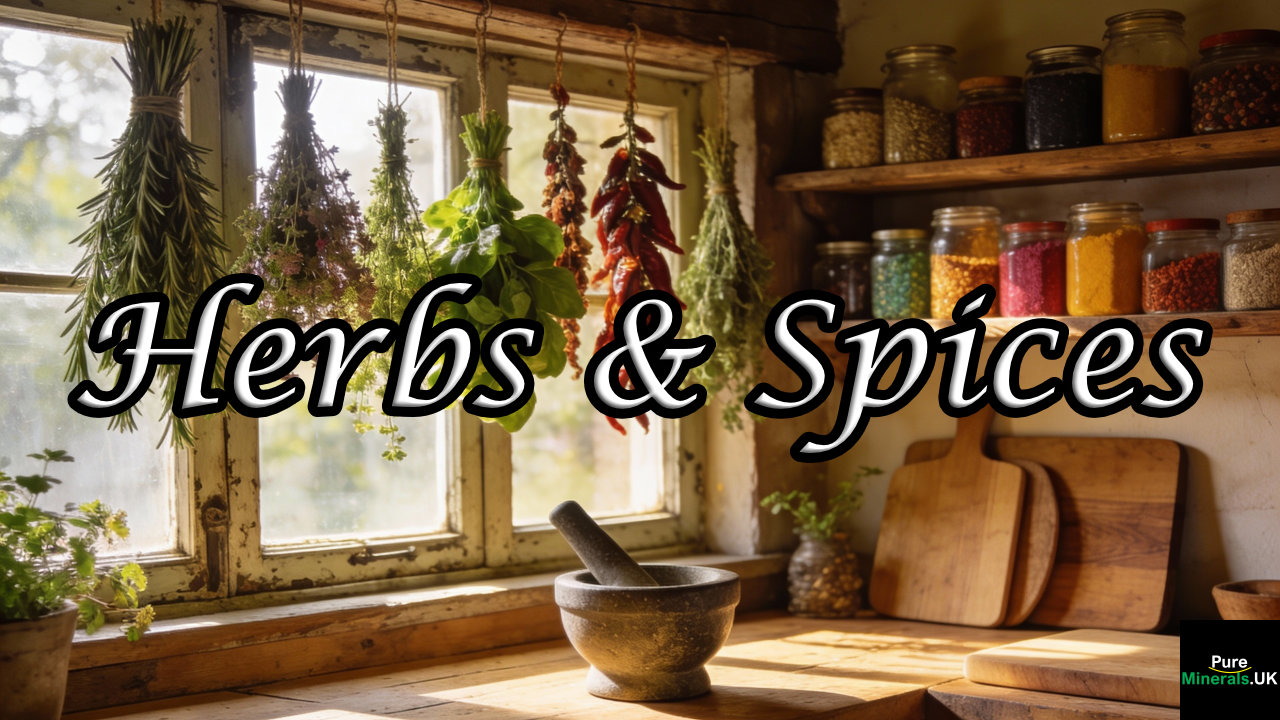
Herbs and Spices
What Are Herbs?
Herbs are the leafy, green parts of aromatic plants used to add freshness, fragrance, and flavor to food. They’re typically the tender leaves and sometimes soft stems, used fresh or dried. Common examples include basil, parsley, cilantro, mint, dill, chives, and tarragon (tender herbs), as well as sturdier “woody” herbs like thyme, rosemary, oregano, and sage. Bay leaves are an herb usually used dried and removed before serving.
Compared with spices—which come from non-leafy parts like seeds, bark, or roots—herbs are milder and more delicate, often added toward the end of cooking or used raw to preserve their bright aromas. Some plants provide both: cilantro (leaf) vs. coriander (seed), dill weed vs. dill seed, and fennel fronds vs. fennel seeds.
In the kitchen, herbs lift dishes with freshness and color. Tender herbs shine in salads, salsas, dressings, pestos, and as finishing garnishes. Woody herbs tolerate heat and can be added earlier to stews, roasts, and braises. Gently bruising or chopping releases their essential oils; overcooking tender herbs, however, can dull their flavor.
Flavors range widely: basil is sweet and peppery, parsley clean and grassy, cilantro citrusy, mint cool, dill anise-like, tarragon licorice-noted, oregano and thyme savory and earthy, rosemary piney, and sage warm and resinous. Blends like bouquet garni and fines herbes combine complementary herbs for depth and balance.
For storage, keep fresh tender herbs refrigerated: wrap in slightly damp paper towels and seal in a container, or stand like a bouquet in a jar with a little water (change the water and keep leaves above the waterline). Woody herbs keep well, loosely wrapped and chilled. Most fresh herbs last 3–7 days; hardy ones can last longer. You can also freeze chopped herbs in olive oil in ice-cube trays. Dried herbs should be stored airtight, away from heat and light, and are best within 1–3 years; as a rule of thumb, use about one-third as much dried herb as fresh.
Nutritionally, herbs provide vitamins, minerals, and polyphenols, and their strong flavors can help you season with less salt. Culinary amounts are generally safe for most people, but very large or supplemental doses of certain herbs can interact with medications or medical conditions.
What Are Spices?
Spices are aromatic plant parts—other than leaves—used primarily to flavor, color, and sometimes preserve food. They’re usually dried and can come from seeds, bark, roots, fruits, or flower buds. Common examples include cinnamon (bark), cumin and coriander (seeds), ginger and turmeric (roots/rhizomes), black pepper and allspice (berries), chili peppers (fruits), and cloves (flower buds). Nutmeg and cardamom are also spices, with cardamom pods containing the fragrant seeds.
Spices differ from herbs, which are the leafy parts of plants like basil, parsley, or cilantro, and are often used fresh. Spices are typically more concentrated in flavor and aromatic compounds. And while it’s used for seasoning, salt isn’t a spice at all—it’s a mineral.
You’ll find spices sold whole or ground, and they’re often combined into blends such as curry powder, garam masala, Chinese five-spice, or ras el hanout. Toasting whole spices or blooming ground spices briefly in hot oil can release more aroma and depth of flavor. Beyond taste, some spices add color—like turmeric’s yellow or paprika’s red—and they also play roles in pickling and preservation.
Their flavors span a wide range. Warm and sweet spices include cinnamon, nutmeg, and allspice. Hot or pungent spices include chili peppers and black pepper. Earthier notes come from cumin and turmeric, while coriander and cardamom lend citrusy or floral tones.
To keep spices fresh, store them in airtight containers away from heat, light, and moisture. Whole spices generally stay potent for about two to four years, while ground spices are best within one to three years. If their aroma has faded noticeably, it’s time to replace them.
Many spices are rich in beneficial compounds like polyphenols—curcumin in turmeric and gingerols in ginger, for example—but they’re best used in moderation. Very large amounts of cassia cinnamon (due to coumarin) or nutmeg can be problematic.
Using Herbs and Spices Safely
Herbal products are not medicines and should not be used as a substitute for medical advice or prescribed treatment. Before using any herb for health purposes, consult a qualified healthcare professional, especially if you are pregnant, breastfeeding, have an existing medical condition, or are taking prescription or over-the-counter medicines. Some herbs may interact with medications or may not be suitable for long-term use. Always follow professional advice and stop use if any unwanted effects occur.
About | Our Videos | Copyright 2023 - Privacy Policy | Affiliate Disclaimer | Legal Disclaimer | Editorial Disclaimer