

Published: 19 April 2026
This article is periodically reviewed and updated to reflect current scientific understanding by Vic George.
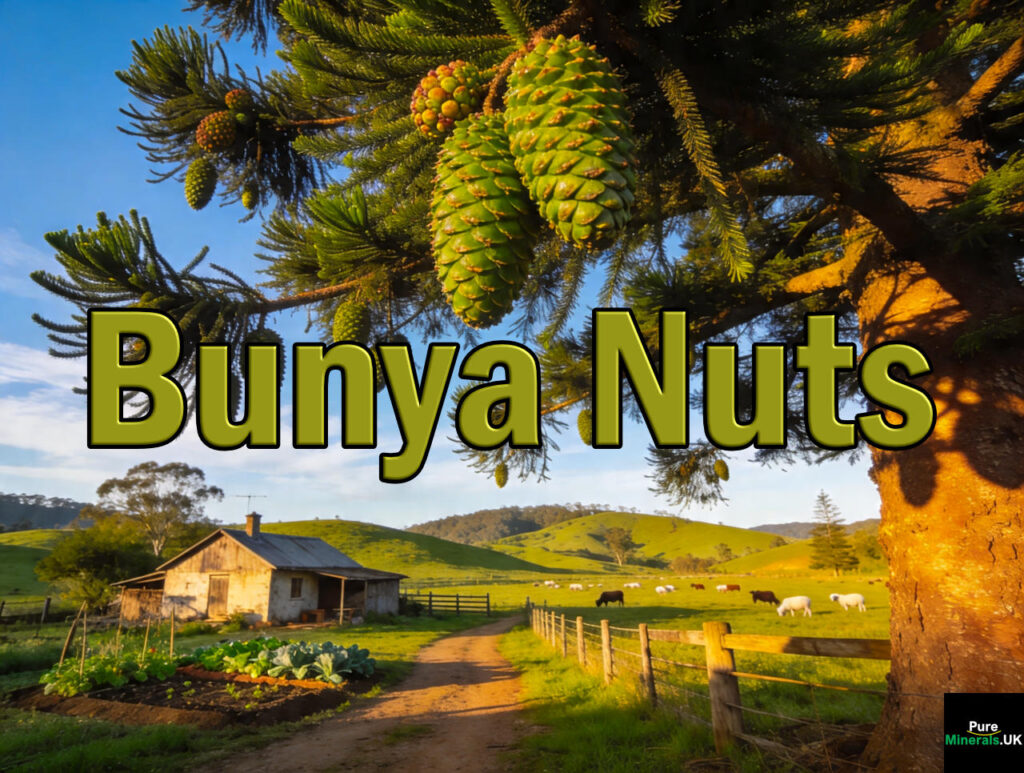
What Are Queensland Bunya Nuts and Why Are They Traditionally Important?
Queensland bunya nuts are large edible seeds from the bunya pine (Araucaria bidwillii), native to eastern Australia. They have been an important traditional food source for Indigenous Australian communities, valued for their energy content and seasonal abundance.
Definition
Queensland bunya nuts are the seeds of the bunya pine (Araucaria bidwillii), found within large woody cones and consumed after cooking.
Extended Definition
The bunya pine (Araucaria bidwillii) is a conifer native to Queensland, Australia, producing massive cones that can weigh several kilograms and contain numerous large seeds known as bunya nuts. These seeds are rich in stored starch, reflecting their biological role in supporting seedling growth.
Nutritionally, bunya nuts are predominantly carbohydrates, particularly starch, with modest protein and very low fat content compared to most culinary nuts. They also provide dietary fiber and small amounts of minerals such as potassium and magnesium.
Traditionally, bunya nuts were harvested during seasonal gatherings and consumed by Indigenous Australian communities. Preparation methods include roasting, boiling, or grinding into a paste or flour. When cooked, the texture is often compared to chestnuts or firm potatoes, with a mild, slightly nutty flavour.
Despite their historical importance, bunya nuts are not widely consumed in modern global diets but remain culturally significant and are occasionally used in regional cuisine.
Key Facts
- Botanical Name: Araucaria bidwillii
- Plant Type: Coniferous tree (seed)
- Edible Part: Seed (kernel inside the shell)
- Macronutrient Profile: High carbohydrates (starch), moderate protein, low fat
- Notable Micronutrients: Potassium, magnesium (modest levels)
- Natural Compounds: Starch, dietary fibre, phenolic compounds
- Typical Preparation: Boiled, roasted, or ground into flour/paste
- Common Uses: Traditional staple, cooked seeds, flour-based preparations
- Taste Profile: Mild, slightly nutty, similar to chestnut or potato when cooked
- Culinary Status: Traditional and regional food; limited modern consumption
Key Takeaways
- Bunya nuts are one of the few plant foods that contain all nine essential amino acids, making them a complete protein source — rare in the nut world.
- Each nut is made up of roughly 40% complex carbohydrates, 9% protein, 2% fat, and 40% water, giving them a unique nutritional fingerprint compared to most other nuts.
- Bunya nuts have antibacterial properties and may help inhibit foodborne illness, adding a functional health dimension beyond basic nutrition.
- They combine dietary fibre with disease-preventing phenolics — a pairing that researchers describe as genuinely rare in any single food.
- Keep reading to learn how to prepare them three different ways, and why bunya nut flour is quietly transforming gluten-free baking.
Bunya nuts have fed First Nations Australians for thousands of years — and modern nutritional science is finally catching up to what Indigenous communities have always known.
These large seeds come from the Araucaria bidwillii, a prehistoric bunya pine native to the Bunya Mountains and surrounding areas in southeast Queensland. Each tree produces massive, soccer ball-sized cones in late summer, with each cone holding anywhere from 30 to 80 individual nuts. For those exploring native Australian superfoods, understanding the full nutritional depth of foods like bunya nuts is a powerful first step toward natural, food-based health.
Bunya Nuts Are One of Australia’s Most Nutrient-Dense Foods
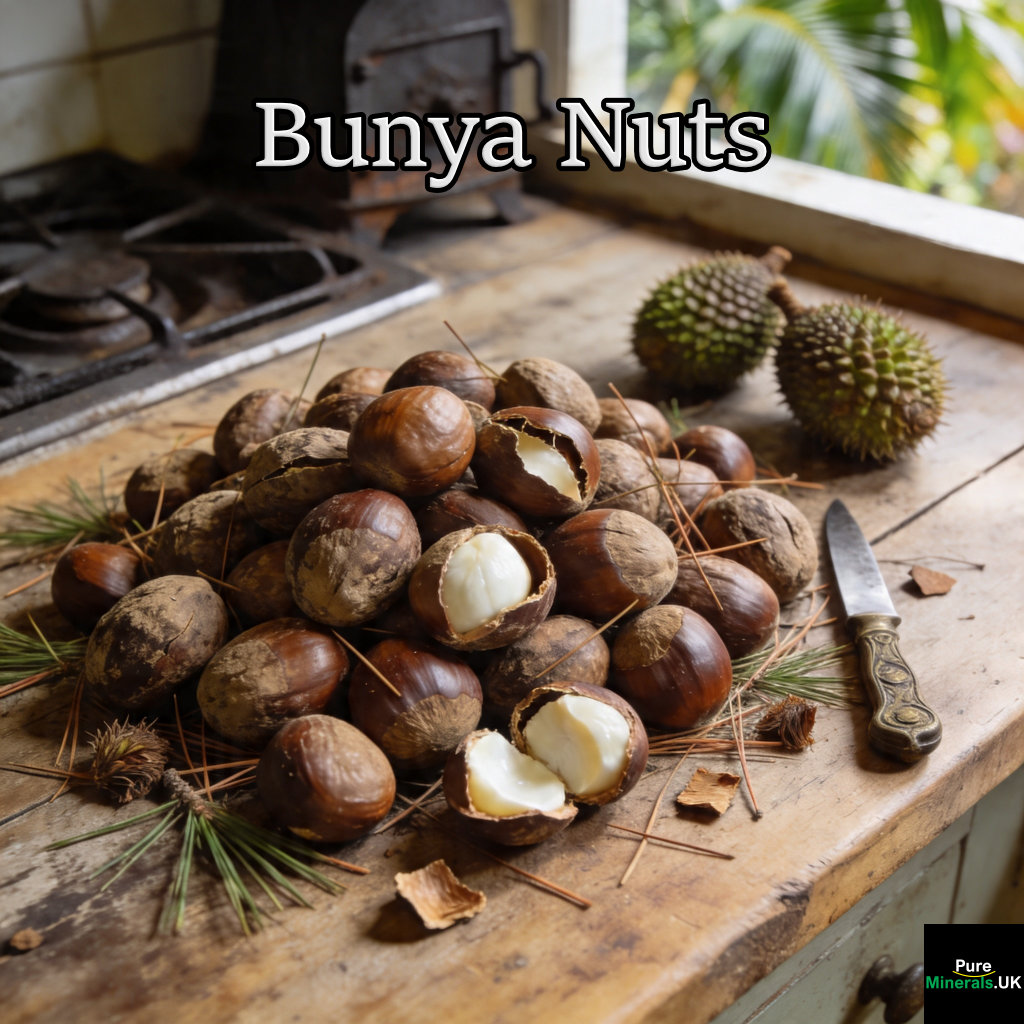
Most people reach for almonds or walnuts when they want a nutritious nut. But bunya nuts offer something genuinely different — a starchy, protein-rich seed with a nutritional profile that sits somewhere between a nut and a grain, with benefits that outperform both in several key areas.
What makes them stand out isn’t just their macronutrient content, but the quality of those macronutrients. The combination of complete protein, essential fatty acids, phenolic compounds, and dietary fibre in a single gluten-free food is hard to match anywhere in the natural world.
Nutritional Profile of Bunya Nuts
Nutritional analysis of dried bunya nuts, led by researcher Jaqui Huntley, revealed a composition that surprised even food scientists. The numbers tell only part of the story — it’s what’s inside those numbers that makes the real difference.
Macronutrient Breakdown: Starch, Protein, and Fat
Fresh bunya nuts are made up of approximately 40% water, 40% complex carbohydrates, 9% protein, and 2% fat. When dried, the macronutrient concentrations shift — dried bunya nut analysis shows approximately 70% starch, 4.7% protein, and 4.4% fat. That high starch content makes them unusually energy-dense and filling compared to most other nuts, which tend to be fat-dominant. They are also completely gluten-free, which has significant implications for their use in alternative baking.
Bunya Nuts Contain All Nine Essential Amino Acids
This is where bunya nuts genuinely earn superfood status. Despite being a plant food, bunya nuts contain all nine essential amino acids, making them a complete protein — a distinction shared by very few nuts or seeds. Most plant proteins are incomplete, meaning you need to combine them with other foods to get the full amino acid spectrum your body needs. Bunya nuts do it alone, which is remarkable and makes them especially valuable for plant-based diets. If you’re interested in exploring other nuts with unique nutritional benefits, consider Brazil nuts as well.
Omega-3 and Omega-6 Fatty Acids in Bunya Nuts
The fat content in bunya nuts, while modest at around 4.4% in dried form, includes both omega-3 and omega-6 polyunsaturated fatty acids. These are essential fats that the body cannot produce on its own, and they play critical roles in reducing inflammation, supporting brain function, and maintaining cardiovascular health. Getting them from a whole-food source like bunya nuts means they come packaged with fibre and antioxidants, which support better absorption and overall metabolic effects.
Low-Glycemic-Index Starch and Blood Sugar Control
Despite their high starch content, bunya nuts have properties that suggest a favorable impact on blood sugar. The complex carbohydrates in bunya nuts digest slowly, providing sustained energy rather than a sharp glucose spike. This makes them a genuinely useful food for people managing blood sugar levels or looking for long-lasting fuel without the crash that comes from refined carbohydrates.
Health Benefits Backed by Research
Beyond their macronutrient makeup, bunya nuts have a range of functional health properties that researchers and nutritionists have begun to document more formally. These aren’t vague wellness claims — there are specific, measurable compounds in bunya nuts that drive real physiological effects.
High Phenolic Content and Antioxidant Properties
Phenolic compounds are plant-based chemicals known for their ability to neutralize free radicals — the unstable molecules linked to cellular damage, ageing, and chronic disease. Bunya nuts contain a notable concentration of these disease-preventing phenolics, and what makes this especially significant is how those phenolics interact with the nut’s fibre content. For more insights on bunya nuts, you can explore their nutritional benefits and uses.
Researcher Jaqui Huntley found that including the inner coating when milling dried bunya nuts into flour significantly boosts the antioxidant effect. The fibre in that coating amplifies the protective phenolic activity — a synergy that is genuinely uncommon in food science.
- Phenolics in bunya nuts help neutralise free radicals linked to cellular ageing
- The inner coating of the nut is particularly rich in both fiber and antioxidant compounds
- Milling the whole nut (including the inner coating) into flour preserves and enhances these benefits
- This phenolic-fiber combination is described by researchers as rare in any single food source
Dietary Fiber and Antioxidants: A Rare Combination
Most high-fiber foods are not particularly rich in antioxidants, and most antioxidant-rich foods are not especially high in fibre. Bunya nuts are one of the few foods that deliver both simultaneously. According to Huntley, “It’s really hard to find anything that has dietary fiber and antioxidants together.” That combination supports gut health, reduces systemic inflammation, and contributes to long-term disease prevention in ways that neither nutrient alone can match.
Antibacterial Properties and Food Safety Benefits
Bunya nuts have demonstrated antibacterial properties that go beyond basic nutrition. Research indicates they may help inhibit foodborne illness-causing bacteria, which partly explains why they have such a long shelf life and why Aboriginal communities historically used them as a food preservation method. This antibacterial quality also makes bunya nut flour a potentially valuable ingredient in commercial food production, where natural preservatives are increasingly in demand.
Potential Role in Reducing Chronic Disease Risk
The combination of phenolics, essential fatty acids, complete protein, and dietary fibre creates a nutritional environment that actively works against the conditions that drive chronic disease. Foods that deliver antioxidants alongside fibre help reduce oxidative stress and inflammation simultaneously — two of the primary biological drivers behind conditions like type 2 diabetes, cardiovascular disease, and certain cancers.
Bunya nuts also act as a natural preservative, a property tied to their phenolic content. This means the protective compounds aren’t just beneficial when consumed — they actively slow oxidation in food products that contain bunya nut flour or meal, extending shelf life without synthetic additives. For a whole food, that’s an unusually practical health benefit.
Traditional and Cultural Significance
Long before nutritional science had the language to describe phenolics or essential amino acids, First Nations Australians understood the profound value of the bunya nut. Known as bonyi-bonyi to the Gubbi Gubbi people of South East Queensland, the bunya nut has been eaten, celebrated, and protected for thousands of years.
The bunya pine and its nuts hold deep sacred significance. The trees, the nuts, and the landscapes in which they grow are not simply food sources — they are cultural landmarks, gathering places, and living connections to ancestral knowledge. This relationship between people and plants represents one of the longest continuous food traditions on Earth.
What makes the bunya nut culturally unique is its power to bring people together across vast distances. The seasonal harvest drew First Nations clans and language groups from as far as western Queensland and beyond, converging on the Bunya Country for ceremonies, trade, and feasting. These weren’t small local events — they were large, organized intertribal gatherings centred entirely around this one extraordinary food, similar to how beechnuts have been used in various cultures.
- Bunya nuts are known as bonyi-bonyi to the Gubbi Gubbi people of South East Queensland
- The trees, nuts, and surrounding land carry deep sacred and cultural significance
- Harvest gatherings drew clans from across Queensland and beyond
- Aboriginal communities traditionally buried nuts in mud to intensify their flavour
- Indigenous communities hold critical knowledge about sustainable harvesting practices
Aboriginal communities also developed clever preparation methods passed down through generations. Burying fresh bunya nuts in mud was one traditional technique used to enhance flavour — a form of natural fermentation that deepened the taste and extended the usable life of the nuts during and after the harvest season.
The Bunya Feast: A Gathering of First Nations Clans
The bunya harvest was not simply a food event. It was a social, spiritual, and economic occasion that structured relationships between clans across an enormous geographic area. Bunya trees are so nourishing — so reliably abundant when they fruit — that they created the conditions for large-scale peaceful gathering among groups who might otherwise have had limited contact. Feasting on bunya nuts together was an act of community-building that strengthened alliances and shared knowledge across language groups.
Today, that cultural legacy is being actively reclaimed. Chefs like Aunty Dale Chapman are leading the way, demonstrating the versatility of bunya nuts in modern cooking while ensuring the cultural story behind the food remains front and centre. At her shop, My Dilly Bag in Forest Glen, she prepares bunya nuts multiple ways, including in pesto made with crushed bunya nuts — a living demonstration of how ancient food knowledge translates directly into contemporary cuisine.
Why Bunya Nuts Are a Queensland-Exclusive Bush Food
Bunya pines grow naturally only in the Bunya Mountains and surrounding areas of southeast Queensland, making the nut one of Australia’s most geographically specific bush foods. This exclusivity isn’t just a marketing point — it’s a reflection of the tree’s deep ecological roots in a very particular landscape, and it gives the nut a provenance and identity that no other Australian food can replicate.
How to Prepare Bunya Nuts
Fresh bunya nuts require some preparation before eating, but the process is straightforward, and the results are worth it. The nuts sit inside large, heavy cones that drop from the tree in late summer, and each nut is encased in a tough outer shell. Once shelled, they can be prepared in three main ways, depending on how you intend to use them.
1. Boiling: The Most Common Method
Boiling is the most widely used preparation method and the starting point for most bunya nut recipes. Place the whole nuts in a pot of water and boil until tender — the shell softens and splits, making it easy to extract the starchy, creamy interior. The texture after boiling is similar to a dense potato or chestnut, and the flavour is mild and slightly sweet, making it an adaptable base for both savoury and sweet dishes.
2. Roasting Bunya Nuts
Roasting brings out a deeper, nuttier flavour profile that boiling doesn’t achieve. Pre-boiled and shelled bunya nuts can be roasted in the oven or over an open fire, developing a slightly crispy exterior while maintaining a dense, starchy centre. This method was historically used by Aboriginal communities and remains one of the most satisfying ways to eat bunya nuts as a standalone snack.
The roasting process also concentrates the nut’s natural sugars, giving it a gentle caramelised quality that pairs exceptionally well with native spices like mountain pepper and lemon myrtle. These flavour pairings aren’t accidental — they reflect thousands of years of culinary knowledge developed alongside the nut itself.
3. Grinding Into Flour or Paste
Dried bunya nuts can be ground into a fine meal or flour, making them one of the most versatile native ingredients available for baking. Bunya Nut Meal can be substituted wherever almond meal is used — in cakes, biscuits, slices, and desserts — but with a nutritional profile that surpasses almond meal in several key areas, particularly protein completeness and phenolic content.
For best results when milling, researchers recommend including the inner coating of the nut. This preserves the maximum fibre and antioxidant content, producing a flour that is not only more nutritious but also functions as a mild natural preservative in baked goods. The resulting flour improves gluten-free blends by adding structure, density, and a subtle earthy flavour that works across a wide range of recipes. For more details on bunya nuts, check out these bunya nut recipes.
Bunya Nuts in Modern Cooking and Commercial Products
The commercial potential of bunya nuts is only just beginning to be realized in Australia, even though comparable products have existed in Brazil for decades. In Brazil, mechanized flour production is well established, and bunya-adjacent products range from pickled nuts through to bunya-based beer — a range of applications that Australian producers are now beginning to explore seriously.
Locally, bunya nuts are appearing on restaurant menus, in specialty bush food shops, and increasingly in the health food space as awareness of their nutritional properties grows. Products like Bunya Nut Meal from producers such as Natif are making the ingredient accessible to home cooks and professional chefs alike, while the long shelf life and preservative properties of the nut make it attractive to food manufacturers looking for functional, natural ingredients like breadnuts.
How to Use Bunya Nut Meal in Baking
Bunya Nut Meal works as a direct substitute for almond meal in almost any recipe. Use it in banana bread, muffin batters, cookie bases, and dense cakes where almond meal would typically add moisture and structure. The flavour is earthier and slightly more neutral than almond meal, which means it blends seamlessly into spiced recipes without competing with other ingredients.
Because the starch content is higher than that of almond meal, bunya nut flour adds a firmer, denser crumb to baked goods, which is actually an advantage in gluten-free baking, where structure is notoriously difficult to achieve. Start by replacing almond meal at a 1:1 ratio, then adjust liquid ratios slightly downward if the batter feels too thick. Including the inner coating when milling, as researchers recommend, also means your baked goods carry that rare fibre-antioxidant combination in every serve.
Gluten-Free Flour Blends and Bunya Nut Flour
One of the most commercially promising applications for bunya nut flour is in gluten-free flour blends. Standard gluten-free flours — rice flour, tapioca starch, potato flour — lack protein and tend to produce crumbly, textureless results. Bunya nut flour addresses both problems at once. Its complete protein content improves binding, its starch adds density, and its natural preservative properties extend shelf life in packaged gluten-free products. For manufacturers developing gluten-free baking mixes, bunya nut flour is a genuinely functional ingredient rather than just a nutritional add-on.
Commercial Potential: From Flour to Fermented Products
In Brazil, where related species of Araucaria grow, mechanised bunya nut flour production is already well established. Products include pickled nuts, nut-based pastes, and even fermented beverages, including bunya-based beer. Australian producers are now actively looking to adapt these processes to the local bunya nut, with food researchers flagging that the knowledge and technology developed in Brazil is directly transferable to Queensland-grown bunya nuts.
Beyond flour, the antibacterial and preservative properties of bunya nuts make them attractive to the functional food industry. A food ingredient that naturally extends shelf life, delivers complete protein, combines fibre with antioxidants, and is gluten-free checks nearly every box on a product developer’s wish list. Researcher Jaqui Huntley has emphasised that developing commercial bunya nut products also directly benefits Indigenous communities, who hold the harvesting knowledge and the cultural rights to this uniquely Queensland ingredient.
Bunya Nuts Are a Superfood Worth Adding to Your Diet
Very few foods can genuinely claim to deliver complete protein, essential fatty acids, dietary fibre, antioxidant phenolics, and antibacterial properties all in one package. Bunya nuts do exactly that — and they do it in a naturally gluten-free, low-fat, whole-food form that has been sustaining human health for thousands of years.
The nutritional case for bunya nuts is compelling at every level. Whether you eat them boiled as a starchy side, roasted as a snack, or ground into flour for baking, you are accessing a food that works on multiple physiological levels simultaneously — supporting gut health, reducing inflammation, delivering sustained energy, and protecting against cellular damage.
Adding bunya nuts to your diet doesn’t require a dramatic overhaul. Small, consistent changes — swapping almond meal for bunya nut meal in your weekly baking, keeping roasted bunya nuts as a snack, or experimenting with bunya nut pesto — are enough to start experiencing the benefits.
- Substitute bunya nut meal for almond meal in cakes, slices, and cookies at a 1:1 ratio
- Boil fresh bunya nuts and use them in curries or stews in place of potatoes or chickpeas
- Roast pre-boiled bunya nuts with native mountain pepper and lemon myrtle for a nutrient-dense snack
- Add bunya nut meal to gluten-free flour blends to improve structure, protein content, and shelf life
- Look for sustainably harvested bunya nuts from Indigenous-owned suppliers to support the communities behind this food
The bunya nut boom is real — and it’s driven by substance, not just trend. This is a food with thousands of years of proven nourishment behind it, now supported by modern nutritional science. Getting familiar with it now puts you ahead of a shift in Australian food culture that is already well underway.
Important note: Bunya Nuts
Queensland bunya nuts should be cooked before consumption, as raw seeds are firm and less digestible. Due to the large size and weight of bunya cones, care should be taken when harvesting. Individuals unfamiliar with this food should introduce it gradually. This information is provided for educational purposes and is not intended as medical advice.
Frequently Asked Questions
Bunya nuts are still unfamiliar to many people outside Queensland, so questions about safety, storage, sourcing, and nutrition are common. Here are the most important answers based on current research and traditional knowledge.
Are Bunya Nuts Safe to Eat Raw?
Fresh bunya nuts can technically be eaten raw, but they are significantly more digestible and palatable when cooked. Boiling is the most recommended first preparation step, softening the dense starchy interior and making the nutrients more bioavailable. Eating large quantities of raw bunya nuts may cause digestive discomfort due to the high starch content, so cooking is strongly recommended, particularly if you are trying them for the first time.
How Do Bunya Nuts Compare Nutritionally to Other Nuts?
Bunya nuts occupy a genuinely different nutritional category compared to most common nuts. Where almonds, walnuts, and cashews are primarily fat-dominant, bunya nuts are starch-dominant — sitting closer to a grain or legume in their macronutrient structure while still delivering the functional benefits of a nut.
The complete protein profile sets them apart from almost every other nut on the market. Most nuts provide incomplete protein, meaning they are missing one or more essential amino acids. Bunya nuts deliver all nine, which is a significant distinction for anyone relying on plant foods for their protein intake.
Their fat content is notably lower than most other nuts, which, combined with their high complex carbohydrate content, makes them a more sustained energy source rather than a calorie-dense fat source. For people who find high-fat nuts heavy or hard to digest, bunya nuts offer a lighter, starchier alternative with no nutritional compromise.
Nutrient | Fresh Bunya Nuts | Almonds | Cashews |
|---|---|---|---|
Protein | 9% | ~21% | ~18% |
Fat | 2% | ~50% | ~44% |
Carbohydrates | 40% | ~22% | ~30% |
Complete Protein | ✓ Yes | ✗ No | ✗ No |
Gluten-Free | ✓ Yes | ✓ Yes | ✓ Yes |
Antibacterial Properties | ✓ Yes | ✗ No | ✗ No |
Where Can You Buy Bunya Nuts or Bunya Nut Flour?
Fresh bunya nuts are available seasonally — typically late summer in Queensland — through farmers’ markets, specialty bush food retailers, and Indigenous-owned food businesses. Bunya Nut Meal and dried bunya nut products are available year-round through online native food suppliers. Sourcing from Indigenous-owned suppliers where possible ensures that the communities that carry the cultural knowledge of this food benefit directly from its growing commercial popularity.
How Long Do Bunya Nuts Last and How Should They Be Stored?
One of the practical advantages of bunya nuts is their notably long shelf life, which is partly attributable to their natural antibacterial and preservative properties. Fresh nuts should be stored in a cool, dry place or refrigerated and used within a few weeks. Dried bunya nuts and bunya nut meal have a significantly longer shelf life and can be stored in an airtight container in a cool pantry or freezer, where they will remain stable for several months without loss of nutritional quality.
Are Bunya Nuts Gluten-Free?
Yes, bunya nuts are completely gluten-free. This applies to the whole nut, dried nut, and milled bunya nut flour or meal in their natural form. There is no gluten present in any part of the bunya nut, making them safe for people with coeliac disease or gluten sensitivity when sourced from a dedicated gluten-free facility.
This gluten-free status, combined with the nut’s complete protein and high starch content, makes bunya nut flour one of the most nutritionally complete gluten-free flours available — far exceeding the nutritional profile of rice flour, tapioca starch, or potato flour commonly used in gluten-free baking.
For anyone building a gluten-free pantry with genuine nutritional depth, bunya nut meal belongs on the shelf alongside — or ahead of — almond meal as a versatile, high-performance baking ingredient with a richer health profile than most alternatives currently on the market.
The Bunya nut is a traditional food source with a rich history among Indigenous Australians. These nuts, which are native to Queensland, have been consumed for centuries and are celebrated for their nutritional benefits.