

Published: 17 April 2026
Last Updated: 18 April 2026
This article is periodically reviewed and updated to reflect current scientific understanding by Vic George.
Fact-Checked: 2 other authoritative medical/scientific references. See our Editorial Policy.

What Are Brazil Nuts and Why Are They Nutritionally Significant?
Brazil nuts are large edible seeds from the Amazonian tree (Bertholletia excelsa), known for their exceptionally high selenium content. They are among the most concentrated natural dietary sources of this essential trace mineral.
Definition
Brazil nuts are the seeds of the Brazil nut tree (Bertholletia excelsa), enclosed within a large woody fruit and classified botanically as seeds rather than true nuts. Each spherical Brazil nut fruit (or pod) typically contains between 10 and 25 Brazil nuts, arranged inside the hard, woody, coconut-like shell in segments somewhat similar to an orange.
Extended Definition
The Brazil nut tree (Bertholletia excelsa) is native to the Amazon rainforest and produces large, coconut-like fruits containing multiple triangular seeds commonly referred to as Brazil nuts. These seeds are harvested from the wild, as the trees are difficult to cultivate commercially due to their ecological dependence on rainforest pollinators.
Nutritionally, Brazil nuts are rich in fats, particularly monounsaturated and polyunsaturated fatty acids, along with moderate protein and small amounts of carbohydrates. Their most distinctive feature is their extremely high selenium content. Selenium is an essential trace mineral involved in antioxidant enzyme systems, thyroid hormone metabolism, and immune function.
A single Brazil nut can provide more than the recommended daily intake of selenium, although the exact amount varies depending on the soil conditions where the tree grows. In addition to selenium, Brazil nuts contain magnesium, phosphorus, zinc, and vitamin E, contributing to their overall nutrient density.
Due to their high selenium concentration, Brazil nuts are often consumed in small quantities rather than as a staple food. They are eaten raw or lightly roasted and are also used in baking, confectionery, and plant-based products.
Key Facts
- Botanical Name: Bertholletia excelsa
- Plant Type: Tropical tree (seed)
- Edible Part: Seed (kernel inside the shell)
- Macronutrient Profile: High in fats, moderate protein, low carbohydrates
- Notable Micronutrients: Selenium (very high), magnesium, phosphorus, zinc, vitamin E
- Natural Compounds: Selenium-containing compounds, phytosterols, phenolics
- Typical Preparation: Consumed raw or roasted
- Common Uses: Snack, baking, confectionery, plant-based products
- Taste Profile: Rich, creamy, slightly earthy
- Culinary Status: Widely consumed; notable for trace mineral density
Key Takeaways
- One Brazil nut contains approximately 96 micrograms of selenium — that’s 175% of your daily requirement from a single bite.
- Two Brazil nuts a day is just as effective as a selenium supplement for maintaining healthy levels, according to The American Journal of Clinical Nutrition.
- Brazil nuts are rich in healthy fats, magnesium, copper, and vitamin E — but selenium is what makes them truly exceptional among all whole foods.
- Eating too many Brazil nuts can cause selenium toxicity — stick to one to three per day to stay safely within the upper limit of 400 mcg.
- Keep reading to discover exactly how Brazil nuts affect your thyroid, brain, and heart — and who needs them most.
One Nut, Nearly 10x Your Daily Selenium Needs
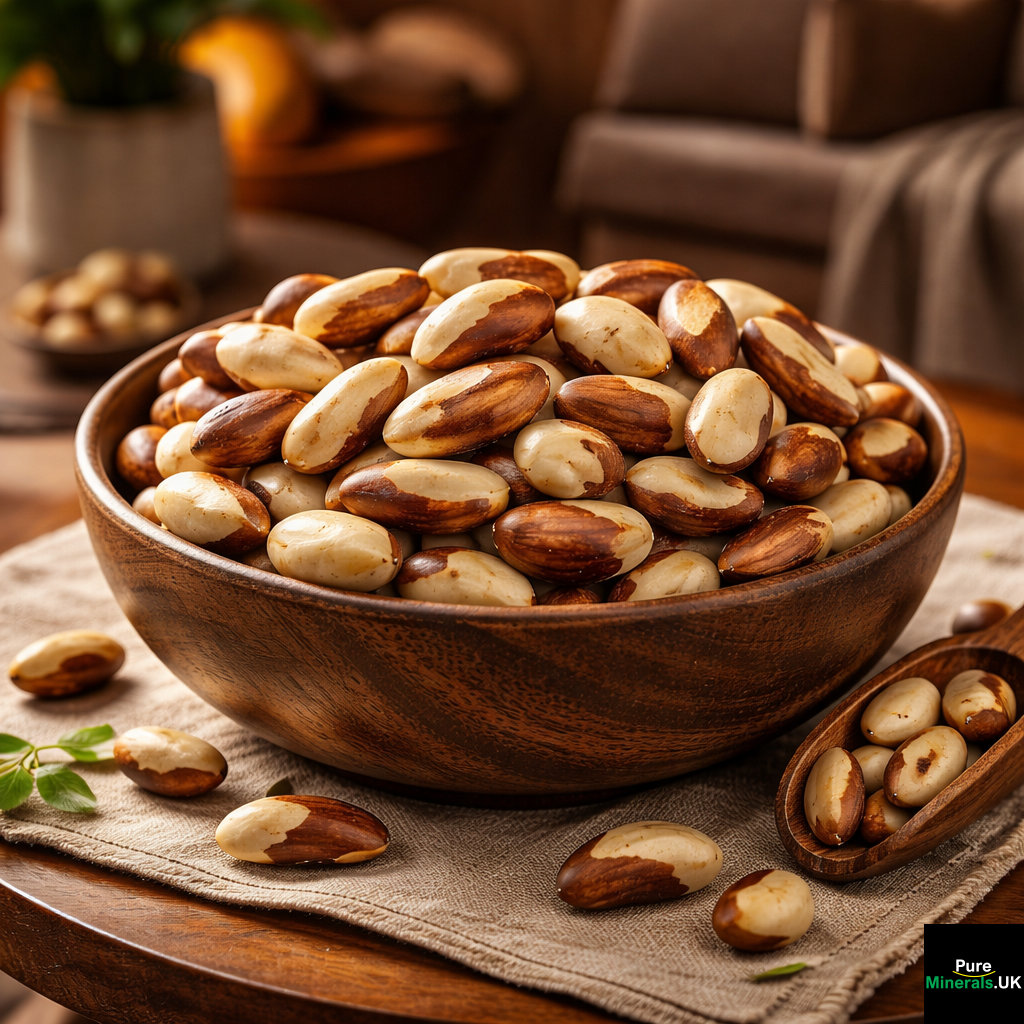
Most superfoods require a handful or a full serving to deliver meaningful nutrition — Brazil nuts break that rule entirely with just one nut.
A single medium-sized Brazil nut delivers around 96 micrograms of selenium. Your daily requirement as an adult is just 55 micrograms. That means one nut alone provides roughly 175% of what your body needs for the entire day — and a one-ounce serving (about six to eight nuts) pushes that figure to nearly 989% of the daily value. No other whole food comes close to that selenium density.
For superfood enthusiasts looking to optimize their nutrition without loading up on supplements, Brazil nuts are a practical, food-first solution. Brazil nuts are one of the most concentrated natural sources of any single micronutrient found in the human diet — and the science firmly backs that up.
How Much Selenium Is Actually in a Brazil Nut
The selenium content in Brazil nuts is impressive, but it’s worth understanding exactly what the numbers mean before you start snacking.
Selenium per Nut vs. per Ounce
A single Brazil nut weighs roughly 5 grams and contains approximately 96 mcg of selenium. Scale that up to a standard one-ounce serving — which equals about six to eight nuts — and you’re looking at somewhere between 544 and 767 mcg of selenium, well above the recommended daily intake of 55 mcg and approaching the upper tolerable limit of 400 mcg for adults set by the National Institutes of Health. This is why portion control with Brazil nuts isn’t just good advice — it’s essential.
How Brazil Nuts Compare to Other Selenium Sources
To put Brazil nuts in context, here’s how they stack up against other common dietary sources of selenium, such as sunflower seeds:
|
Brazil nuts |
1 nut (5g) |
96 mcg |
175% |
|
Tuna (cooked) |
3 oz |
92 mcg |
167% |
|
Sardines (canned) |
3 oz |
45 mcg |
82% |
|
Chicken breast (cooked) |
3 oz |
22 mcg |
40% |
|
Sunflower seeds |
1 oz |
19 mcg |
35% |
|
Other mixed nuts |
1 oz |
<1 mcg |
<2% |
Most other nuts are practically invisible on the selenium scale. While tuna and sardines are competitive sources, they require a fully cooked serving to match what one small Brazil nut delivers effortlessly.
Why Selenium Levels Vary Between Nuts
Not every Brazil nut contains exactly 96 mcg of selenium — that figure is an average. The actual selenium content depends heavily on the soil where the tree grew. Brazil nut trees (Bertholletia excelsa) absorb selenium directly from the soil through their root systems, and selenium concentrations in South American soils vary significantly by region. Nuts harvested from selenium-rich areas of the Amazon basin can contain dramatically more than those from lower-selenium soils, which is why some nutrition databases show a wide range — anywhere from 55 mcg to over 550 mcg per nut in extreme cases.
Full Nutritional Profile of Brazil Nuts
Selenium gets all the attention, but Brazil nuts are genuinely nutrient-dense across the board. A one-ounce serving (approximately 28 grams or six nuts) provides a meaningful contribution across macronutrients, healthy fats, and several critical minerals. For a deeper dive into the health benefits of Brazil nuts, check out this resource.
Brazil Nuts Nutritional Profile — Per 1 oz (28g / ~6 nuts)
Calories: 187 • Total Fat: 19g • Protein: 4g • Carbohydrates: 3.3g • Fiber: 2.1g • Selenium: 544–767 mcg • Magnesium: 107 mg (25% DV) • Phosphorus: 206 mg (16% DV) • Copper: 0.5 mg (55% DV) • Zinc: 1.2 mg (11% DV) • Vitamin E: 1.6 mg (11% DV) • Thiamine (B1): 0.18 mg (15% DV)
Macronutrients: Fat, Protein, and Carbohydrates
Brazil nuts are calorie-dense, with most of those calories coming from fat. Of the 19 grams of total fat in a one-ounce serving, the breakdown leans heavily toward unsaturated fats — roughly 7 grams of monounsaturated fat and 6 grams of polyunsaturated fat, with the remaining 4.3 grams coming from saturated fat. That fat profile, combined with 4 grams of protein and just 3.3 grams of carbohydrates, makes them a strong fit for low-carb and ketogenic eating patterns.
Key Vitamins and Minerals Beyond Selenium
Magnesium and copper are where Brazil nuts really shine beyond selenium. A single ounce provides 107 mg of magnesium — around 25% of your daily value — which supports muscle function, energy production, and blood pressure regulation. The copper content is equally impressive at 55% DV per ounce, supporting iron metabolism and immune function. You also get solid amounts of phosphorus, zinc, thiamine, and vitamin E, making Brazil nuts one of the more complete mineral sources available in a single whole food.
Polyunsaturated Fatty Acid Content
Brazil nuts contain a notable concentration of linoleic acid, an omega-6 polyunsaturated fatty acid. While omega-6 fats sometimes get a bad reputation in the context of modern diets, linoleic acid in whole food form — delivered alongside fiber, minerals, and antioxidants — behaves differently than refined vegetable oils. Research published in the Journal of Nutrition and Metabolism found that a single high-amount consumption of Brazil nuts improved the lipid profile of healthy volunteers, suggesting the fat composition actively supports cardiovascular health rather than undermining it.
How Brazil Nuts are Harvested in the Amazon Rainforest
Brazil nuts are the fruit of a tree species native to the highlands of the Amazon rainforest. It is mainly found in Peru, Bolivia, and Brazil. Each pod, with a very tough exterior, can weigh up to 5 pounds and look like a wooden cannonball.
Brazil nut collectors, known as castanellos, and collect the fruit during the rainy season from December through March.
Brazil nut trees grow only in the Amazon rainforest. They are not economically feasible outside their natural habitat. That means every Brazil nut traded worldwide is collected in the Amazon and nowhere else.
What Selenium Does in Your Body
Selenium is classified as a trace mineral, meaning your body only needs it in small amounts — but those small amounts drive an outsized number of critical biological processes. It functions primarily as a component of selenoproteins, a family of proteins that regulate everything from DNA synthesis to thyroid hormone metabolism. Without adequate selenium, these systems start to break down in ways that ripple across your entire health.
There are at least 25 known selenoproteins in the human body, each playing a distinct role. Glutathione peroxidase, one of the most studied, acts as a powerful antioxidant enzyme that neutralizes harmful free radicals before they can damage cells. Thioredoxin reductase is another key player, helping regulate cell growth and protecting against oxidative stress — a process increasingly linked to chronic disease development.
Key Selenoproteins and Their Functions
Glutathione Peroxidase (GPx): Neutralizes free radicals, protects cell membranes from oxidative damage
Thioredoxin Reductase (TrxR): Regulates cell growth, supports DNA repair and cancer prevention
Selenoprotein P: Primary selenium transport protein in blood plasma, antioxidant function
Iodothyronine Deiodinase: Converts inactive thyroid hormone T4 into active T3
Selenoprotein S: Regulates inflammatory response, protects against ER stress
Thyroid Hormone Production and Protection
Your thyroid gland holds the highest concentration of selenium per gram of tissue of any organ in the body. That’s not a coincidence. The enzyme responsible for converting the inactive thyroid hormone T4 into the active form T3 — iodothyronine deiodinase — is a selenoprotein. Without sufficient selenium, this conversion slows down, leaving you with elevated T4 but inadequate active T3, which can produce symptoms that closely mirror hypothyroidism even when iodine levels are normal. Research published in Polski Merkuriusz Lekarski directly links selenium’s role to thyroid physiology and the prevention of thyroid pathology, including autoimmune thyroid conditions such as Hashimoto’s thyroiditis.
Immune Function and Cell Growth
Selenium plays a direct role in the activation and proliferation of T-cells — the immune system’s frontline responders. When selenium levels are adequate, the immune system can mount faster, more targeted responses to infections and abnormal cell growth. Deficiency, by contrast, is associated with impaired immune response and greater susceptibility to viral infections.
The relationship between selenium and cell growth regulation is particularly important in the context of cancer prevention. Selenoproteins help suppress tumor growth by regulating apoptosis — the programmed death of damaged or abnormal cells — and reducing DNA oxidative damage that can trigger malignant mutations. This is an active area of ongoing research, though the evidence supporting selenium’s protective role is already substantial.
Links to Heart Disease, Cancer, and Mood Disorders
Higher selenium status has been associated with reduced markers of cardiovascular inflammation and improved lipid profiles. Selenium’s antioxidant activity helps prevent the oxidation of LDL cholesterol — a key step in the development of arterial plaque — and supports healthy endothelial function. Research published in Nutritional Neuroscience also found meaningful connections between selenium intake and mood, with adequate selenium levels correlating with lower rates of depression, anxiety, and general psychological distress.
The cancer connection is equally compelling. While no single nutrient prevents cancer outright, population studies have consistently found that individuals with higher selenium levels face lower risks of certain cancers, particularly prostate, colorectal, and lung cancers. The Proceedings of the Nutrition Society published arguments specifically supporting increased selenium intake based on these observed protective associations.
Health Benefits of Eating Brazil Nuts
Knowing what selenium does at a cellular level makes the real-world benefits of eating Brazil nuts much easier to understand. These aren’t vague, marketing-driven health claims — they’re direct downstream effects of correcting or maintaining optimal selenium status through one of nature’s most concentrated food sources, such as sunflower seeds.
What makes Brazil nuts particularly valuable isn’t just their selenium content — it’s the bioavailability of that selenium. The selenium in Brazil nuts exists primarily as selenomethionine, an organic form that the body absorbs and retains more efficiently than the inorganic selenium forms found in many supplements. This means two Brazil nuts can genuinely compete with — and in some cases outperform — a standard selenium supplement.
Thyroid Support From Just One Nut Per Day
For people managing thyroid conditions, particularly autoimmune thyroiditis and Graves’ disease, selenium intake is a clinically relevant consideration. The thyroid gland’s dependence on selenoproteins for hormone conversion and antioxidant protection makes it uniquely vulnerable to selenium shortfalls. While research specifically using Brazil nuts as the selenium source in thyroid disease populations is still limited, the underlying mechanism is well-established, and discussing Brazil nut supplementation with a healthcare provider is a reasonable step for anyone with thyroid concerns.
Even for people without diagnosed thyroid conditions, maintaining selenium adequacy through one or two Brazil nuts daily supports the continuous, efficient conversion of T4 to T3 — keeping metabolism, energy levels, and temperature regulation running smoothly without the need for pharmaceutical intervention.
Cognitive Performance in Older Adults
A 2016 study found that older adults experiencing mild cognitive impairment who consumed just one Brazil nut per day for six months showed measurably improved verbal fluency and overall thinking ability, alongside increased blood selenium levels. The connection makes biological sense — selenium’s antioxidant selenoproteins protect brain neurons from oxidative damage, which is a central driver of age-related cognitive decline. For aging populations looking to protect mental sharpness through diet alone, one Brazil nut daily represents a remarkably low-effort, high-impact intervention.
Cardiovascular Protection From Healthy Fats
Research published in the Journal of Nutrition and Metabolism found that even a single high-amount consumption of Brazil nuts produced measurable improvements in the lipid profiles of healthy volunteers. The combination of selenium’s antioxidant protection, magnesium’s blood pressure support, and the heart-healthy unsaturated fat profile works together to create a genuinely cardioprotective food — not just a selenium delivery vehicle.
How Many Brazil Nuts Are Safe to Eat Daily
This is the most important practical question about Brazil nuts, and the answer requires real precision. Their extraordinary selenium density is both their greatest strength and their most significant risk factor when consumed carelessly.
The Recommended Daily Limit
The tolerable upper intake level for selenium in adults, established by the National Institutes of Health, is 400 mcg per day. Given that a single Brazil nut averages 96 mcg of selenium, staying under that ceiling means limiting yourself to one to three medium-sized Brazil nuts per day — not a handful, not a full one-ounce serving as you might eat of other nuts.
If you’re already taking a selenium supplement or a multivitamin that includes selenium, you need to factor that in before adding Brazil nuts to your daily routine. Consuming both simultaneously makes it significantly easier to approach or exceed the upper limit, particularly on days when you eat larger or more selenium-dense nuts. Consulting a healthcare professional before making Brazil nuts a regular habit is genuinely worthwhile — especially if you take medications that interact with selenium metabolism.
Signs and Symptoms of Selenium Toxicity
Selenium toxicity, known clinically as selenosis, becomes a real concern when intake regularly exceeds 400 mcg per day. The early warning signs are easy to dismiss — a garlic-like odor on the breath, brittle nails, and hair loss are often the first indicators that selenium has accumulated to problematic levels. These symptoms can appear before more serious complications develop, making them important early signals to take seriously.
At higher levels of overconsumption — particularly around the 5,000 mcg range, which corresponds to roughly 50 average-sized Brazil nuts — the consequences escalate significantly. Severe selenosis can cause:
- Nausea, vomiting, and diarrhea
- Nerve damage and neurological symptoms
- Fatigue and irritability
- Skin rashes and lesions
- Breathing difficulties
- Kidney failure
- Heart attack or heart failure in extreme cases
Reaching truly dangerous selenium levels from food alone requires persistent, significant overconsumption — but it has happened, and the cases on record typically involve people who dramatically underestimated how much selenium Brazil nuts actually contain.
Who Faces the Highest Risk of Overconsumption
High-Risk Groups for Brazil Nut Selenium Toxicity
Supplement users: People already taking selenium supplements or selenium-containing multivitamins who add Brazil nuts on top of their existing intake
Health enthusiasts eating large portions: Those treating Brazil nuts like regular trail mix or snack nuts without accounting for selenium density
People on specific diets: Individuals following high-nut diets (keto, paleo, raw food) who may eat Brazil nuts multiple times per day
Children and adolescents: Lower body weight means the upper tolerable limit is reached at far smaller quantities than for adults
Pregnant individuals: Selenium needs increase during pregnancy, but the upper limit remains the same — careful calibration is essential
The people most at risk aren’t reckless eaters — they’re often health-conscious individuals who recognize Brazil nuts as a superfood and assume that more must be better. That logic breaks down completely with selenium, where the gap between beneficial and harmful intake is unusually narrow.
If you’re consuming Brazil nuts alongside a diet already rich in selenium from fish, meat, and eggs, your baseline selenium intake before eating a single nut may already be substantial. Tracking total dietary selenium — not just Brazil nut consumption — gives you a far more accurate picture of where you actually sit relative to the 400 mcg upper limit.
Children require particular caution. The tolerable upper intake levels for selenium drop significantly with age and body weight, from 400 mcg for adults down to just 90 mcg per day for children aged one to three. A single Brazil nut can push a young child well past their daily safe threshold, which means Brazil nuts should be treated as an adult-oriented superfood requiring age-appropriate portion guidance.
Selenium Deficiency: Who Actually Needs Brazil Nuts Most
While overconsumption is a real risk, selenium deficiency affects a meaningful portion of the global population — particularly people living in regions where soil selenium levels are low, including parts of Europe, China, and New Zealand. Deficiency is also common in people with digestive conditions that impair nutrient absorption, such as Crohn’s disease or ulcerative colitis, as well as those undergoing kidney dialysis or recovering from serious gastrointestinal surgery. For these groups, Brazil nuts represent one of the most efficient food-based corrections available.
Vegans and vegetarians are another group that frequently falls short on selenium, since the richest dietary sources — tuna, sardines, organ meats, and poultry — are all animal products. Plant-based selenium sources exist but are inconsistent in their content due to soil variability. One or two Brazil nuts per day fills that gap with remarkable precision, and research published in The American Journal of Clinical Nutrition confirmed that Brazil nuts are as effective as selenium supplements at raising and maintaining blood selenium levels — a finding that makes them an especially practical tool for plant-based eaters managing their micronutrient status.
Brazil Nuts Are Exceptionally Powerful — Eat Them Wisely
Brazil nuts occupy a genuinely unique position in the world of whole foods — no other single food delivers this concentration of a critical micronutrient in such a small, convenient package. One to two nuts per day is enough to maintain selenium adequacy, support thyroid function, protect cardiovascular health, and contribute meaningfully to cognitive resilience as you age. The key is treating them as a precision nutrition tool rather than a casual snack. Keep your daily intake between one and three nuts, account for selenium from other sources in your diet, and skip them entirely if you’re already supplementing with selenium. Done right, Brazil nuts are one of the simplest, most impactful additions you can make to a whole-food nutrition strategy.
Important note: Brazil Nuts
Brazil nuts contain very high levels of selenium, and excessive intake can lead to selenium toxicity (selenosis), with symptoms such as gastrointestinal discomfort and hair or nail changes. Regular consumption should be limited to small amounts, typically one to two nuts per day. Individuals should avoid excessive intake from multiple selenium sources. This information is provided for educational purposes and is not intended as medical advice.
Frequently Asked Questions
Brazil nuts generate a lot of questions — and rightly so. Their selenium content is so far outside the norm for any whole food that it naturally raises concerns about safety, efficacy, and practical use. Here are the most common questions answered with the specificity they deserve.
Before diving in, a quick framing note: the answers below assume you’re eating whole, unprocessed Brazil nuts without concurrent selenium supplementation. If you’re managing a health condition or taking medications, the specifics of your situation matter — always loop in a qualified healthcare provider before making Brazil nuts a regular therapeutic tool.
- One to three Brazil nuts per day is the broadly recommended safe range for healthy adults
- Never combine Brazil nuts with selenium supplements without professional guidance
- Selenium content varies by nut — soil origin affects concentration significantly
- Children have lower upper limits for selenium — treat Brazil nuts as adult nutrition
- Selenomethionine in Brazil nuts is more bioavailable than inorganic supplement forms
With that context in place, here’s what you need to know about Brazil nuts in practice.
Can eating one Brazil nut a day meet your selenium needs?
Yes — one Brazil nut per day typically provides enough selenium to meet the recommended daily intake of 55 mcg for adults, and often exceeds it. A single average-sized nut delivers approximately 96 mcg of selenium in the highly bioavailable selenomethionine form, which the body absorbs and retains efficiently. Research published in The American Journal of Clinical Nutrition confirmed that eating just two Brazil nuts daily was as effective as taking a dedicated selenium supplement at maintaining healthy blood selenium concentrations over time.
What happens if you eat Brazil nuts every day?
Eating one to three Brazil nuts daily is safe for most healthy adults and actively beneficial — supporting thyroid function, antioxidant activity, and immune health. Problems arise when daily intake consistently exceeds three to four nuts, particularly when combined with other dietary selenium sources or supplements. Regular overconsumption above 400 mcg per day can gradually lead to selenosis, with early signs including brittle nails, hair thinning, and a garlic-like breath odor progressing to more serious neurological and cardiovascular complications if intake remains unchecked.
Are Brazil nuts safe for people with nut allergies?
Not necessarily. Brazil nuts are tree nuts, and people with existing tree nut allergies — including allergies to cashews, almonds, walnuts, or pecans — may also react to Brazil nuts. Cross-reactivity between different tree nuts is well documented, though individual sensitivity varies. Brazil nut allergy specifically can cause reactions ranging from mild oral irritation to severe anaphylaxis in sensitized individuals. Anyone with a known tree nut allergy should consult an allergist before attempting to include Brazil nuts in their diet, rather than self-testing at home.
Do roasted Brazil nuts have less selenium than raw ones?
Roasting does cause some reduction in selenium content, but the difference is generally modest rather than dramatic. The selenium in Brazil nuts exists as selenomethionine, which is relatively heat-stable compared to some other micronutrients. Studies examining the effect of roasting on nut nutrition consistently show that mineral content — including selenium — is largely preserved through standard roasting temperatures and durations.
The more meaningful variable affecting selenium content isn’t roasting — it’s the geographic origin of the nuts. Soil selenium concentration in the region where the tree grew has a far greater impact on final selenium levels than any post-harvest processing. Whether you prefer raw or roasted Brazil nuts, the practical advice remains the same: limit intake to one to three per day and don’t assume roasting has made them safe to eat in larger quantities.
Can Brazil nuts support thyroid health in people with hypothyroidism?
Selenium plays a well-established role in thyroid hormone metabolism, and Brazil nuts are one of the most efficient ways to correct selenium deficiency, which can independently impair thyroid function even when iodine levels are adequate. The enzyme responsible for converting inactive T4 into active T3 is a selenoprotein, meaning selenium is literally required for your thyroid hormones to become biologically usable.
For people with hypothyroidism related to Hashimoto’s thyroiditis — an autoimmune condition — selenium has shown particular promise. Research has found that adequate selenium intake can reduce thyroid antibody levels and decrease inflammation within the gland, potentially slowing disease progression. The journal Polski Merkuriusz Lekarski specifically addressed selenium’s significance in thyroid physiology and pathology, reinforcing the mineral’s clinical relevance in this context. Additionally, exploring the nutritional benefits of other minerals, such as sunflower seeds, can provide further insights into maintaining thyroid health.
That said, Brazil nuts are not a replacement for prescribed thyroid medication, and the research specifically using Brazil nuts as the selenium intervention in hypothyroid populations remains limited. Using them as a dietary selenium source to support — not replace — conventional thyroid management is a reasonable, evidence-informed approach.
If you have hypothyroidism and want to incorporate Brazil nuts for thyroid support, one to two nuts per day is a practical starting point. Discuss it with your endocrinologist or healthcare provider, especially if your selenium status has never been formally tested — because supplementing selenium in someone who is already replete offers no additional thyroid benefit and only adds overconsumption risk. Targeted use, based on actual need, is where Brazil nuts deliver their greatest value.