

Published: 11 May 2026
Last Updated: 18 June 2026
This article is periodically reviewed and updated to reflect current scientific understanding by Vic George.
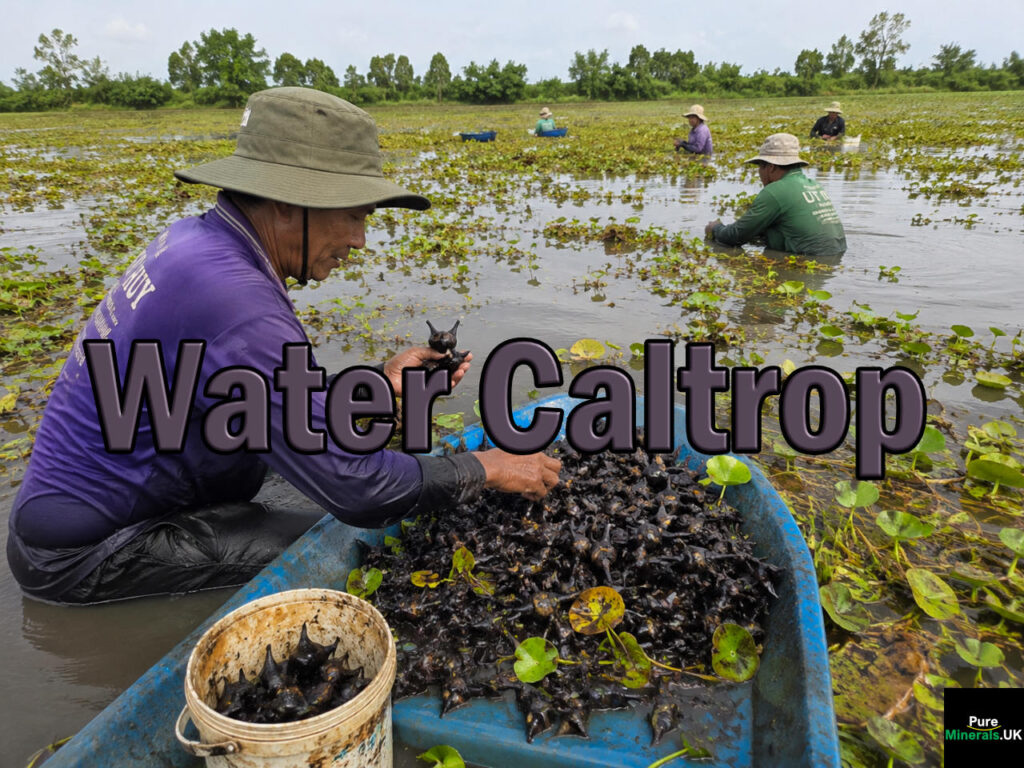
What Is Water Caltrop and Why Is It Traditionally Consumed?
Water caltrop is an aquatic plant producing edible seeds widely used in parts of Asia. Despite its common name, it is not closely related to true nuts but is valued for its starchy texture and culinary versatility.
Definition
Water caltrop refers to the edible seed of aquatic plants in the genus Trapa, particularly Trapa natans, characterised by distinctive horn-shaped shells.
Extended Definition
Water caltrop is produced by floating aquatic plants in the genus Trapa, which grow in freshwater ponds, lakes, and slow-moving wetlands. The plant forms rosettes of floating leaves while developing submerged fruits that mature into hard-shelled seeds with characteristic horn-like projections.
Although often referred to as a “nut,” water caltrop is botanically a seed from an aquatic fruit rather than a true tree nut. The edible portion inside the shell is rich in carbohydrates, particularly starch, and contains low levels of fat compared with most culinary nuts. It also provides modest amounts of potassium and small quantities of other minerals.
Water caltrop is commonly boiled, roasted, or ground into flour. In many Asian cuisines, it is used in soups, snacks, desserts, and festive dishes. The texture of the cooked seed is firm and starchy, somewhat similar to chestnut or potato.
Historically, water caltrop has been cultivated in wetland agriculture systems and served as an important seasonal carbohydrate source in several regions.
Key Facts
- Botanical Name: Trapa spp.
- Plant Type: Aquatic plant (seed)
- Edible Part: Seed (kernel inside the shell)
- Macronutrient Profile: High carbohydrates, low fat, modest protein
- Notable Micronutrients: Potassium, trace minerals
- Natural Compounds: Starch, phenolic compounds
- Typical Preparation: Boiled, roasted, or ground into flour
- Common Uses: Soups, snacks, desserts, flour-based dishes
- Taste Profile: Mild, starchy, slightly sweet
- Culinary Status: Traditional food in Asian cuisines
Key Takeaways
- Water caltrop (Trapa spp.) is an aquatic plant cultivated for thousands of years in Asia for both food and traditional medicine.
- The kernels are packed with starch and essential amino acids, while the peels are surprisingly rich in dietary fiber and phenolic compounds with real medicinal value.
- Research has confirmed anti-cancer, antioxidant, anti-hyperglycemic, and liver-protective properties — making this an ingredient worth taking seriously.
- Water caltrop is often confused with Chinese water chestnut (Eleocharis dulcis), but they are completely different plants with different nutritional profiles.
- There is one part of the water caltrop most people throw away that may actually be the most valuable — more on that later in this article.
Water Caltrop Is More Than Just an Unusual-Looking Nut
Most people who encounter water caltrop for the first time have the same reaction — they stare at it, turn it over in their hands, and wonder if it belongs in a fantasy novel rather than a kitchen. The dark, horn-shaped fruit of Trapa spp. looks almost prehistoric, and in a sense, it is. This aquatic plant has been feeding and healing people across Asia for well over two thousand years, with documented use in China dating back to the Rites of Zhou in the 2nd century BC.
What makes water caltrop genuinely fascinating is not just its appearance but its nutritional depth. The kernels deliver a dense hit of starch and protein, while the peels — the part most people discard — carry concentrated dietary fiber and phenolics that researchers are now actively studying for their bioactive properties. For culinary enthusiasts who love digging into ingredients with real history and real function, this one delivers on every level.
For those interested in diving deeper into aquatic crops and their culinary applications, resources like those provided by agricultural and food science communities offer a solid foundation for understanding plants like water caltrop and their growing role in global food systems.
What Exactly Is Water Caltrop?
Water caltrop is an annual aquatic herb belonging to the genus Trapa, part of the family Lythraceae. It grows floating on the surface of still or slow-moving freshwater bodies, with its fruit developing beneath the water’s surface. The fruit itself is the edible part, encased in a tough, dark-colored shell with horn-like projections that vary in number depending on the species.
Botanical Profile of Trapa spp.
The taxonomy of Trapa is a subject of ongoing debate among plant biologists. Some sources recognize only a handful of species while others list dozens, and further research is still needed to resolve the discrepancy. What is consistent across species is the plant’s growth habit: rosettes of diamond-shaped leaves float on the water’s surface, supported by spongy, inflated petioles that act as natural floats. The plant anchors itself to the muddy bottom via roots while the fruit matures just below the waterline.
It is worth clarifying a persistent confusion right here: water caltrop is not the same as Chinese water chestnut (Eleocharis dulcis). Chinese water chestnut is a grass-like sedge in the family Cyperaceae — an entirely different plant family with a different growth form, flavor profile, and nutritional composition. For scientific accuracy and to avoid this confusion, the name water caltrop is the recommended term when referring specifically to Trapa spp.
Where Water Caltrop Grows Naturally
Water caltrop thrives across a wide band of Asia, from China and India to Bangladesh, Japan, and Southeast Asia. It prefers warm, shallow, nutrient-rich freshwater environments — ponds, lakes, slow rivers, and flooded paddy fields. China and India represent the primary cultivation centers, where it has been grown both as a subsistence crop and a commercially traded commodity for centuries.
Why It Is Considered a Pest in North America
Outside of Asia, the story of the water caltrop takes a very different turn. In North America — particularly across the northeastern United States and parts of Canada — water caltrop is classified as an invasive aquatic weed. Introduced unintentionally, it spreads aggressively across water bodies, forming dense floating mats that block sunlight, deplete oxygen levels, and disrupt native aquatic ecosystems.
The sharp, spiny fruits also present a physical hazard to swimmers and wildlife. However, researchers have noted that this invasive abundance in North America could actually be redirected productively. A review of world literature has suggested that water caltrop could be utilized even in North America for food, energy, fish habitat, and recreation — effectively turning an ecological problem into a sustainable resource. The challenge is shifting public and regulatory perception from pest to potential.
Water Caltrop Production Around the World
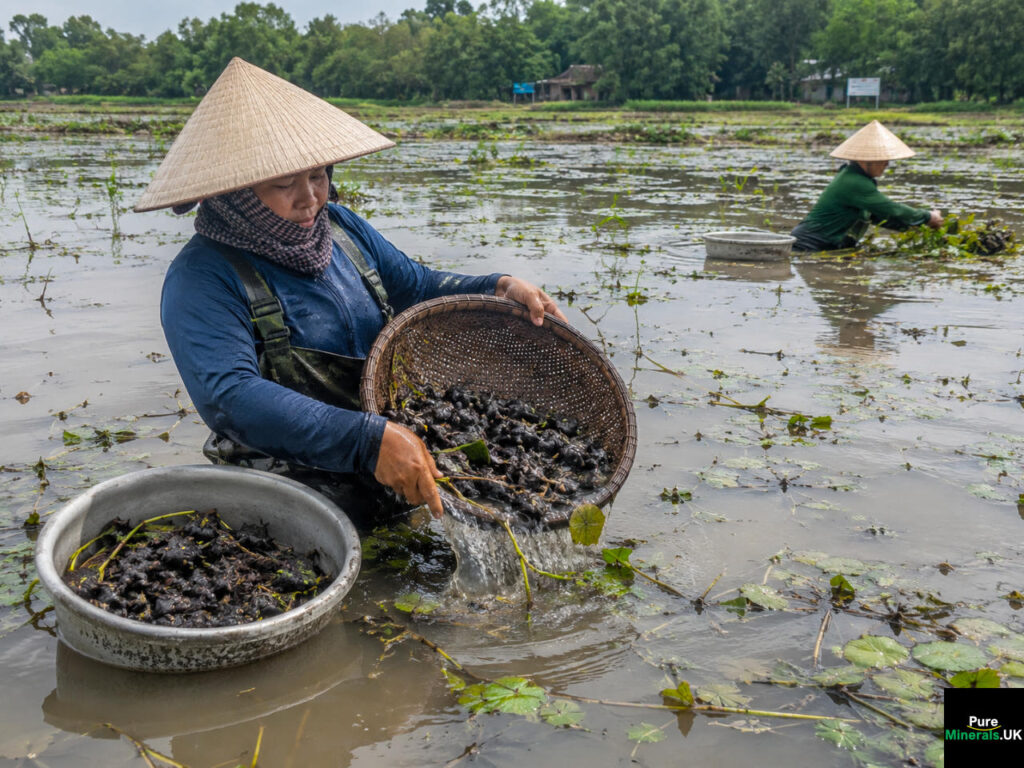
Production is heavily concentrated in Asia, where both the culinary tradition and the infrastructure to process the crop are well established. Commercially available machinery for removing the tough outer peels from the kernels exists in China, which has helped transition water caltrop from a hand-harvested subsistence food into a more scalable agricultural product. For those interested in exploring other nut varieties, tiger nuts offer a unique alternative with their own set of nutritional benefits.
Primary Growing Regions in Asia
China leads global production by a wide margin, with water caltrop cultivated extensively in provinces with ample freshwater resources. India is another major producer, where the crop holds significance not only as food but within the Ayurvedic system of medicine. The plant’s tolerance for flooded growing conditions makes it particularly valuable in agricultural systems where conventional crops cannot thrive.
Role in Food Security in Flood-Prone Regions Like Bangladesh
In flood-prone regions like Bangladesh, water caltrop fills a critical agricultural gap. When seasonal flooding renders land-based farming impossible, aquatic crops like water caltrop can be cultivated on the very floodwaters that destroy other crops. This positions it as a genuine food security asset — a crop that works with challenging environmental conditions rather than against them. Growing interest in developing and utilizing water caltrop for food applications across Asia reflects this recognition of its practical value beyond tradition.
Nutritional Breakdown of Water Caltrop
Understanding the nutritional composition of water caltrop means looking at the two main parts of the fruit separately: the kernel and the peel. They have very different nutritional profiles, and both offer distinct value.
Component | Location in Fruit | Key Nutritional Highlights |
|---|---|---|
Starch | Kernel | Primary macronutrient; novel starch source for diverse food applications |
Protein & Essential Amino Acids | Kernel | Complete amino acid profile supporting dietary protein needs |
Dietary Fiber | Peel | Relatively high concentration; supports digestive health |
Phenolic Compounds | Peel | High concentration; linked to antioxidant and anti-cancer bioactivities |
Minerals | Both kernel and peel | Essential micronutrients contributing to overall nutritional value |
The kernel is the part most commonly eaten and is dominated by starch, making water caltrop a significant source of complex carbohydrates. For communities that rely on it as a staple, this starch content provides sustained energy comparable to other starchy crops like taro or cassava.
What often surprises people is the nutritional density of the peel. While most consumers and even many cooks simply discard the outer shell, it contains relatively high amounts of both dietary fiber and phenolics — two categories of compounds that are increasingly valued in functional nutrition. Ancient Chinese medicinal texts already recognized this, noting that the peels could help address diarrhea and alcohol poisoning. Modern research is beginning to validate what traditional medicine observed empirically.
Starch and Carbohydrate Content in the Kernels
The kernel of water caltrop is predominantly starch — and not just in a general sense. Researchers have identified it as a novel starch resource with unique physicochemical properties that distinguish it from more common starches like corn or potato. Water caltrop starch has been successfully modified using heat-moisture treatment (HMT), which alters its gelatinization properties and digestibility, opening the door for specialized food manufacturing applications. For food scientists and culinary developers, this makes water caltrop starch genuinely interesting as a functional ingredient.
Dietary Fiber and Phenolic Compounds in the Peels
The peels tell a completely different nutritional story. While the kernel is starch-forward, the outer shell accumulates dietary fiber and phenolic compounds in relatively high concentrations. Phenolics are plant-based compounds associated with a range of protective biological activities, and the concentration found in water caltrop peels has been specifically linked to antioxidant capacity and anti-cancer bioactivity in research studies. This makes the peel far more than kitchen waste — it is functionally one of the most valuable parts of the fruit.
Essential Amino Acids and Minerals
Beyond starch, the kernel of water caltrop contains a meaningful protein contribution, including essential amino acids — those that the human body cannot synthesize on its own. This combination of complex carbohydrates and complete amino acids makes water caltrop a nutritionally well-rounded food, particularly in plant-based dietary contexts where getting a full amino acid profile from a single source is always a win.
The mineral content of water caltrop adds another layer of nutritional value across both the kernel and the peel. While specific mineral concentrations vary across species, the presence of essential micronutrients contributes to its historical role as a sustaining staple food. In regions where water caltrop is consumed regularly, it provides nutritional support that goes well beyond simple caloric density.
Health Benefits Backed by Research
The health benefits of water caltrop are not folklore dressed up in modern language — they are increasingly supported by scientific investigation. Research has identified a range of bioactivities associated with different parts of the plant, with the most significant findings centered on its antioxidant capacity, anti-cancer properties, liver-protective effects, and ability to help regulate blood sugar levels.
What makes the health research on water caltrop compelling is that it validates centuries of traditional use across two major medical traditions: Chinese medicine and Indian Ayurveda. The Rites of Zhou, dating to the 2nd century BC, documented water caltrop as both food and medicine. The Indian Ayurvedic system incorporated it as an important therapeutic plant. Modern phytochemical analysis is now providing the mechanistic explanations for why these traditions held water caltrop in such high regard.
The bioactive properties are distributed across the whole fruit rather than concentrated in one location. This means that how you prepare and consume water caltrop — whether you use just the kernel, incorporate the peel, or process it into flour — directly affects the health benefits you receive. Whole-fruit preparations or peel extracts will deliver a substantially different bioactive profile than eating the kernel alone.
Key Bioactivities of Water Caltrop Identified in Research:
- Antioxidant activity — Neutralizes free radicals, reducing oxidative stress linked to chronic disease
- Anti-cancer properties — Phenolic compounds in the peel have demonstrated cancer-inhibiting bioactivity
- Anti-hyperglycemic effects — Helps moderate blood glucose levels, relevant for diabetes management
- Hepato-protection — Supports and protects liver function
- Anti-diarrheal and digestive support — Noted in ancient Chinese medicinal texts and supported by the peel’s high fiber content
It is important to approach these findings with appropriate context. Much of the current research involves laboratory and animal studies, and while the results are genuinely promising, clinical trials in humans are still an evolving area. That said, the convergence of traditional knowledge and modern phytochemical research is hard to dismiss, and water caltrop stands as a strong candidate for further nutritional and pharmaceutical investigation.
Antioxidant and Anti-Cancer Properties
The phenolic compounds concentrated in the peel of water caltrop are the primary drivers of its antioxidant and anti-cancer bioactivities. Phenolics work by scavenging free radicals — unstable molecules that damage cells and contribute to aging, inflammation, and the development of chronic diseases including cancer. The relatively high phenolic concentration in water caltrop peels gives them a measurably strong antioxidant capacity, comparable to other recognized antioxidant-rich plant foods. For anyone serious about functional eating, incorporating the peel rather than discarding it is a meaningful choice.
Anti-Hyperglycemic Effects
Water caltrop has demonstrated anti-hyperglycemic properties, meaning it can help moderate elevated blood glucose levels. This is particularly relevant given the global rise in type 2 diabetes and metabolic syndrome. While the starch content of the kernel does contribute carbohydrates to the diet, the overall metabolic response to water caltrop — especially when the fiber-rich peel is included — appears to be more favorable than its raw carbohydrate content might suggest. The dietary fiber in the peel slows glucose absorption, which helps prevent the sharp blood sugar spikes associated with refined starchy foods.
Liver Protection Benefits
Hepato-protection — the ability to protect and support liver function — is one of the more specific bioactivities documented for water caltrop. The liver is the body’s primary detoxification organ, and compounds that support its function have significant implications for overall health. Traditional Chinese medicine already pointed toward this benefit, using water caltrop preparations to address alcohol poisoning, which places acute stress on the liver. Modern research is beginning to identify the specific compounds responsible for this protective effect, adding scientific weight to a very old observation.
Culinary Uses of Water Caltrop
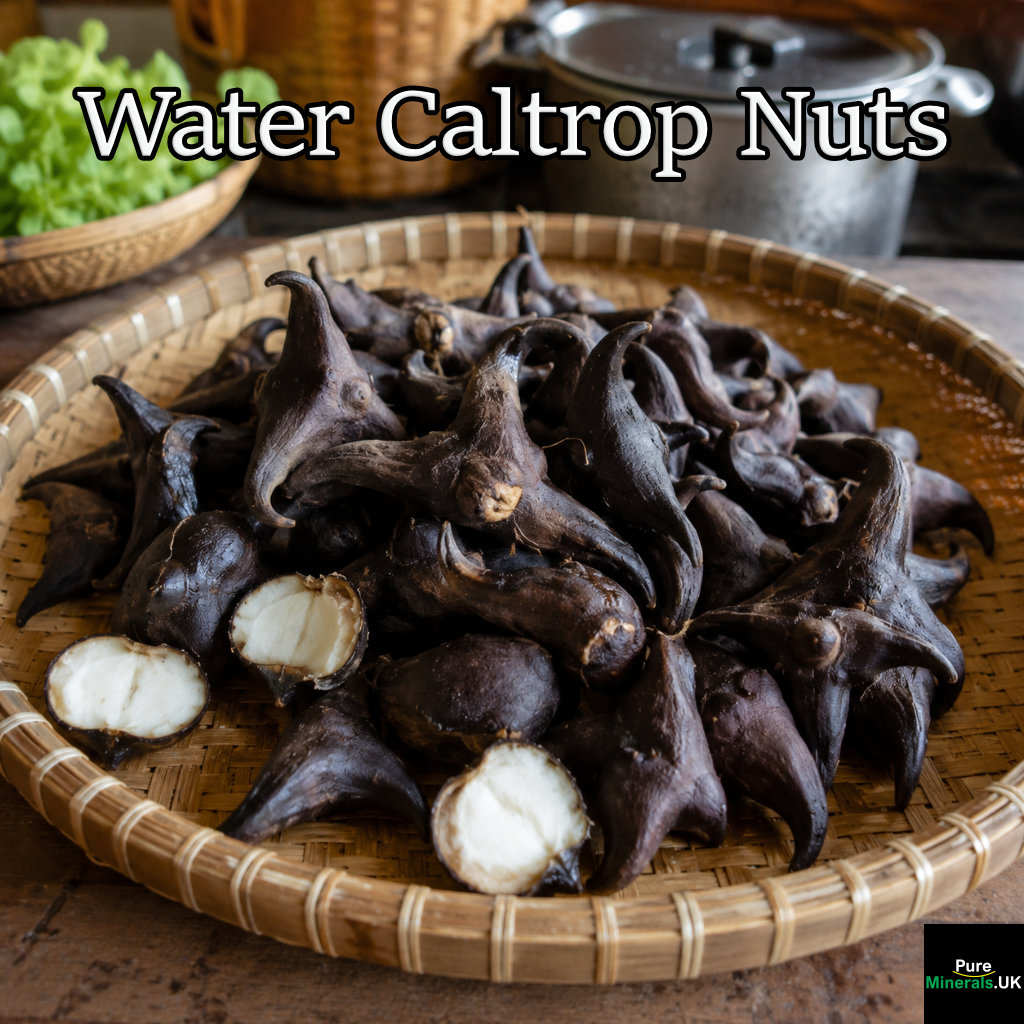
This is where the water caltrop moves from interesting to genuinely exciting. The ingredient has a culinary range that surprises most people who encounter it for the first time outside of Asia. Raw, boiled, roasted, dried, and ground into flour, water caltrop adapts to a remarkable variety of preparations, and each method brings out a different character in the ingredient. The flavor is mild and slightly sweet when fresh, with a starchy, dense texture that firms up beautifully when cooked.
Traditional Uses in Chinese and Indian Cuisine
In China, water caltrop has been eaten boiled or steamed as a simple snack for centuries, much the way chestnuts are enjoyed in European culinary traditions. The cooked kernel has a satisfying, floury texture with a clean, lightly sweet flavor that pairs well with both savory and sweet preparations. In Indian cuisine, water caltrop holds particular significance during fasting periods — especially Navratri — where it is consumed as singhara (its Hindi name) in the form of flour-based flatbreads and puddings. This fasting-food status reflects the cultural trust in water caltrop as a nutritionally sustaining ingredient when other staples are restricted.
Water Caltrop Flour in Modern Food Products
Ground water caltrop flour, produced from dried kernels, is one of the most versatile processed forms of the ingredient. In India, singhara flour is a well-established pantry staple used to make everything from pakoras and halwa to porridge and flatbreads. The flour is naturally gluten-free, which has attracted attention from food manufacturers developing products for gluten-intolerant consumers. Its unique starch properties — distinct from wheat, rice, or tiger nut starch — give it functional characteristics that food technologists find useful for texture modification in baked goods, thickening applications, and specialty dietary products.
Jams, Biscuits, and Beverages: Niche Market Products in China
China’s food industry has moved well beyond simply boiling water caltrop and selling it at markets. Diverse processed products — including jams, biscuits, and ready-to-drink beverages — featuring water caltrop as a primary ingredient have found their way into niche markets across the country. These products capitalize on the fruit’s mild, naturally sweet flavor profile and its reputation as a traditional health food. For food entrepreneurs and culinary innovators, this niche market development signals a clear opportunity: an ingredient with deep cultural roots, strong nutritional credentials, and demonstrated consumer acceptance is ready for broader creative application.
How to Prepare and Cook Water Caltrop at Home
Getting started with water caltrop at home is straightforward once you understand the basic approach. The tough outer shell is the main barrier — it needs to be removed before the kernel is edible, and this requires either a dedicated tool or a firm hand with a sturdy knife. In China, commercial peeling machinery handles this at scale, but at home, scoring the shell and boiling the whole fruit first makes peeling significantly easier.
Here is a simple preparation sequence that works well for first-time cooks:
- Wash the fruit thoroughly — scrub the outer shell under cold running water to remove any mud or debris from the aquatic growing environment.
- Boil whole for 20 to 30 minutes — this softens both the shell and the kernel, making peeling easier and the texture more palatable.
- Score and peel while warm — use a small paring knife to split along the seam and lever the shell open. The kernel inside should be creamy white and firm.
- Eat as is, or use in recipes — the boiled kernel is delicious on its own with a pinch of salt, or it can be sliced and added to stir-fries, curries, soups, or desserts.
- Dry and grind for flour — slice the cooked kernels thin and dry them at low temperature, then grind to produce a fine, gluten-free flour for baking and thickening.
If you manage to source fresh water caltrop, use it quickly — like most fresh aquatic produce, it deteriorates faster than land-based fruits and vegetables. Dried or processed forms have a much longer shelf life and are far easier to find in markets outside of Asia.
Using Water Caltrop Peels: The Overlooked Ingredient
Here is the part most people get wrong: they throw away the peel. Given everything the research tells us about the phenolic concentration and dietary fiber content of the water caltrop shell, discarding it is essentially throwing away the most bioactively valuable part of the fruit. Ancient Chinese medicinal practitioners were not working with phytochemical analysis, but they still figured this out — traditional texts specifically reference the peels for their therapeutic applications in addressing diarrhea and alcohol-induced stress on the body.
In practical culinary terms, the peel can be dried and ground into a powder that works as a functional additive in teas, broths, and baked goods. It can also be simmered directly in water to create a medicinal-style decoction that has been consumed in traditional Chinese households for generations. The flavor of the peel is more astringent than the kernel — that astringency is actually a signal of the tannins and phenolics present. For culinary enthusiasts who approach food as both nourishment and medicine, learning to use the whole water caltrop fruit rather than just the kernel is a meaningful step toward more intentional, waste-conscious cooking.
Water Caltrop Is a Crop Worth Paying Attention To
Water caltrop sits at a genuinely rare intersection: it is an ingredient with millennia of documented use, a compelling modern research profile, culinary versatility that spans cultures and cooking styles, and a supply base that is actually growing — even if unintentionally in North America. Whether you encounter it as singhara flour in an Indian grocery, as a boiled snack at a Chinese market, or as an invasive species study in an environmental journal, the story is consistently more interesting than the fruit’s strange appearance suggests. For anyone serious about cooking, nutrition, or sustainable food systems, water caltrop deserves a place on your radar — and eventually, on your plate.
Important note: Water Caltrop
Water caltrop should be properly cooked before consumption, particularly when harvested from natural freshwater environments, to reduce potential contamination risks. Correct identification is important, as some aquatic plants may resemble edible species. This information is provided for educational purposes and is not intended as medical advice.
Frequently Asked Questions
Water caltrop generates a lot of questions, especially among cooks and health-conscious consumers encountering it for the first time. The confusion with Chinese water chestnut alone accounts for a significant portion of the misinformation circulating about this ingredient. Below are the most common questions, answered directly and practically.
Before diving in, a few things worth knowing up front about water caltrop:
- It is an aquatic plant, not a true nut, despite its shell and the common name “water-nut.”
- The fruit has two distinct edible parts — the kernel and the peel — with very different uses
- It is gluten-free in all its forms, including the flour
- Availability outside Asia is limited but growing, particularly in dried and flour forms
- Cooking significantly improves both flavor and digestibility compared to eating it raw
With that foundation in place, here are the specific answers you need.
What does water caltrop taste like?
Water caltrop has a mild, slightly sweet, and starchy flavor — think somewhere between a chestnut and a raw potato, with the starchiness becoming more pronounced and satisfying after cooking. The texture of the boiled kernel is dense and floury, similar to a cooked chestnut or a firm taro. No strong or distinctive flavor dominates, which is actually part of what makes it so culinarily flexible — it absorbs surrounding flavors readily in both savory and sweet preparations, much like tiger nuts.
Is water caltrop the same as water chestnut?
No, and this is one of the most important distinctions to understand if you are researching this ingredient. Water caltrop (Trapa spp.) and Chinese water chestnut (Eleocharis dulcis) are entirely different plants from different plant families. Chinese water chestnut is a grass-like sedge in the family Cyperaceae, producing small, round, brown corms that are crisp even when cooked — the familiar water chestnut found in canned form in many Western supermarkets and used extensively in Chinese-American cooking.
Water caltrop, by contrast, is a fruit from an aquatic flowering plant in the family Lythraceae. It has a tough, horn-shaped outer shell, a starchy kernel that becomes floury when cooked, and a completely different nutritional and bioactive profile. The shared use of the name “water chestnut” for both plants is the source of enormous confusion in both culinary and nutritional literature. When precision matters — in research, in recipe development, or in purchasing — always specify water caltrop for Trapa spp. and Chinese water chestnut for Eleocharis dulcis.
Can you eat water caltrop raw?
Technically yes, but it is not recommended as the default approach. Raw water caltrop kernels are edible, but the flavor is bland, and the texture is somewhat tough compared to the cooked version. More importantly, because water caltrop is an aquatic plant grown in freshwater environments, there is a risk of contamination from waterborne pathogens or agricultural runoff — the same concern that applies to other aquatic produce like watercress or water spinach.
- Boiling is the safest and most common preparation method, eliminating pathogen risk while significantly improving flavor and texture
- Roasting produces a nuttier, more concentrated flavor profile that many people prefer
- Steaming preserves more of the nutritional content while still rendering the fruit safe and palatable
- Drying and grinding into flour is the most shelf-stable preparation, ideal for baking and thickening
If you are sourcing water caltrop from a clean, certified agricultural supplier and the fruit is very fresh, a small amount of raw water caltrop is unlikely to cause harm. That said, cooking it is both safer and genuinely more delicious — there is very little culinary argument for eating it raw when cooked preparations are so clearly superior.
The one exception is dried water caltrop flour, which has already undergone processing that reduces microbial risk. This form can be used directly in uncooked applications like raw energy balls or no-bake preparations, though some light toasting of the flour beforehand is still a good practice from both a food safety and flavor development perspective.
Where can you buy water caltrop outside of Asia?
Outside of Asia, freshwater caltrop is genuinely difficult to find. Your best options are Asian grocery stores in major metropolitan areas — particularly those serving Chinese, Indian, or Southeast Asian communities — during the autumn harvest season when imported fresh fruit occasionally appears. Indian grocery stores are often the most reliable source, where it may be sold as singhara, either fresh in season or as singhara flour year-round.
Online retailers have made access considerably easier for those not near a specialty market. Dried water caltrop and singhara flour are available through Indian food importers and online platforms that specialize in Asian pantry ingredients. If you are in North America and interested in freshwater caltrop, it is worth noting the irony that the plant grows abundantly — and invasively — in many northeastern waterways, though harvesting from wild or uncontrolled sources requires caution regarding water quality and local regulations.
Is water caltrop safe to eat for people with diabetes?
Key nutritional considerations for water caltrop and blood sugar management:
- The kernel is starch-dominant, contributing carbohydrates to the diet
- The peel contains high dietary fiber, which slows glucose absorption
- Research has identified anti-hyperglycemic bioactivity associated with water caltrop
- Whole-fruit preparations (including peel) produce a more favorable metabolic response than kernel alone
- Processing method matters — flour-based products may have a different glycemic impact than whole boiled fruit
Water caltrop is generally considered a reasonable food choice for people managing blood sugar, particularly when consumed as a whole boiled fruit rather than as a refined flour product. The key factor is the fiber content of the peel — dietary fiber is one of the most well-established nutritional tools for moderating postprandial blood glucose spikes, and water caltrop peel delivers this in meaningful amounts.
The documented anti-hyperglycemic effects of water caltrop add another layer of relevance for diabetic consumers. While this research is not yet at the level of clinical dietary prescription, the convergence of high fiber content and demonstrated blood-sugar-moderating bioactivity makes water caltrop a more interesting option than many conventional starchy foods for people managing glycemic load.
Portion size and preparation method remain important variables. A modest serving of boiled whole water caltrop — where the fiber from the peel is consumed alongside the starchy kernel — is a very different proposition metabolically than a large serving of refined water caltrop flour used in a baked product with added sugar. As with any starchy food, context and quantity matter.
People with diabetes who want to incorporate water caltrop into their diet should do so as part of a balanced, varied eating pattern and ideally consult with a registered dietitian who can account for individual metabolic responses. That said, there is nothing in the current research profile of water caltrop that flags it as problematic for diabetic consumers — quite the opposite, the evidence points toward a food with genuinely favorable characteristics for blood sugar management when consumed thoughtfully.
If you are looking to explore aquatic crops, functional ingredients, and heritage foods with real nutritional depth, water caltrop is an ideal starting point — and culinary resources focused on Asian and Ayurvedic food traditions can help you integrate it into your cooking with confidence and creativity.