

Published: 26 April 2026
This article is periodically reviewed and updated to reflect current scientific understanding by Vic George.
Fact-Checked: 1 other authoritative medical/scientific reference. See our Editorial Policy.
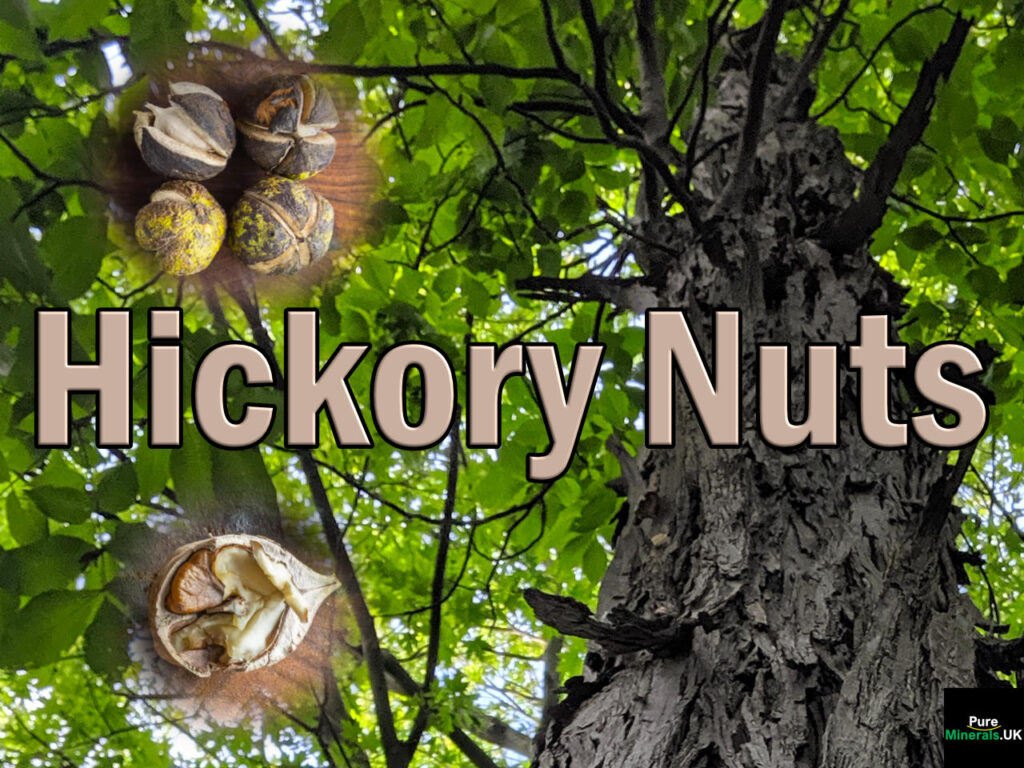
What Are Hickory Nuts and Why Are They Traditionally Valued?
Hickory nuts are the edible seeds of trees in the genus Carya, native to North America. Certain species are highly valued for their rich, sweet flavour, while others are bitter and not typically consumed.
Definition
Hickory nuts are the seeds of hickory trees (Carya spp.), enclosed in a hard shell within a splitting outer husk, with edibility varying by species.
Extended Definition
The genus Carya includes multiple species of deciduous trees that produce nuts differing significantly in flavour, size, and shell thickness. Hickory nuts are closely related to pecans (Carya illinoinensis), though pecans are typically treated as a separate category in culinary contexts.
Edible hickory species such as shagbark (Carya ovata), shellbark (Carya laciniosa), and red hickory (Carya ovalis) are known for producing sweet, oily kernels with a flavour often compared to pecans or walnuts. These nuts are rich in fats—primarily unsaturated fatty acids—along with moderate protein and small amounts of carbohydrates. They also provide minerals such as magnesium, phosphorus, and trace B vitamins.
Hickory nuts are used in pies, cakes, and cookies. Pignut hickory, which is generally less sweet, is used in baking and can be ground into powder.
Other species, including bitternut (Carya cordiformis) and water hickory (Carya aquatica), produce nuts that are bitter and generally not consumed. Some varieties, such as mockernut (Carya tomentosa), have edible kernels but are less commonly used due to thick shells and low yield.
Historically, hickory nuts were an important food source for Indigenous peoples in North America. They were consumed raw, roasted, or processed into products such as “hickory milk,” created by crushing nuts and boiling them in water to extract oils and nutrients.
The variability among species means that identification is essential when foraging, as flavour and usability depend on the specific type of hickory.
Key Facts
- Botanical Name: Carya spp.
- Plant Type: Deciduous tree (seed/nut)
- Edible Part: Seed (kernel inside the shell)
- Macronutrient Profile: High in fats, moderate protein, low carbohydrates
- Notable Micronutrients: Magnesium, phosphorus, trace B vitamins
- Natural Compounds: Unsaturated fatty acids, polyphenols, phytosterols
- Typical Preparation: Shelled and eaten raw or roasted; sometimes processed into nut milk
- Common Uses: Snacks, traditional foods, baking, hickory milk
- Taste Profile: Sweet and buttery (edible species); bitter in some species
- Culinary Status: Traditional and foraged food; limited commercial availability
Key Takeaways
- Hickory nuts deliver 657 calories per 100 grams, making them one of the most energy-dense nuts available — but not all 18 varieties are worth eating.
- The shagbark hickory (Carya ovata) is the most widely consumed variety and is prized for its sweet, rich flavor.
- Hickory nuts contain 85% healthy fats, along with key minerals like potassium, magnesium, and calcium that support bone and heart health.
- Native cultures used hickory nuts as far back as recorded history, including as the base for a nutritious oil-rich drink called “pawcohiccora.”
- Some hickory varieties — like bitternut and pignut — taste terrible raw and are best avoided unless properly prepared.
Most people walk right past hickory trees without knowing the nutritional goldmine hiding inside the tough shells of hickory nuts.
Hickory nuts are one of North America’s most underrated wild foods. They are calorie-dense, mineral-rich, and backed by centuries of traditional use. Yet because they are rarely stocked in mainstream grocery stores, most people never get the chance to experience what they offer. Natural remedy enthusiasts and foragers, however, have long known the value of this nut.
Before you go cracking open any hickory nut you find, though, there is something important to know: not all 18 hickory species produce nuts worth eating. Knowing the difference between varieties is what separates a satisfying snack from a bitter disappointment.
Not All Varieties of Hickory Nuts are Worth Eating
The hickory tree belongs to the genus Carya and is native to North America and parts of Asia. They are deciduous hardwoods in the walnut family known for producing exceptionally strong wood and edible nuts, particularly Pecans. Native mainly to North America and Asia, they are characterized by pinnately compound leaves, deep taproots, and thick husks that split to reveal nuts. Hickory is extensively used for smoking meats, tool handles, flooring, and furniture.
While there are 18 known species, only a handful produce nuts with the flavor and nutritional quality that make them worth harvesting. The rest range from mildly unpleasant to outright inedible due to bitterness caused by tannins and other compounds.
The chief hickory nut varieties, excluding pecans, include the sweet, culinary-prized Shagbark and Shellbark, and bitter varieties like Bitternut and Pignut, often left for wildlife. Other types are the thick-shelled Mockernut, red hickory, and black hickory. These nuts are used for their oily, sweet kernels, similar to walnuts or pecans, in baking, as a raw snack, or historically to make hickory milk.
Hickory trees are found outside the US, though they are native to North America. Populations exist in China, Indochina, and northeastern India (Assam). Several species are native to Mexico and southern Canada. Those found in Europe have been introduced.
Varieties of Hickory Nuts
- Bitternut Hickory (Carya cordiformis): Bitter and not generally eaten.
- Black Hickory (Carya texana): Common in the south-central US, especially Texas.
- Laney’s Hickory (Carya x laneyi): A Shagbark and Bitternut hybrid, with thin-shelled nuts.
- Mockernut Hickory (Carya tomentosa): Known as Bigbud hickory or White hickory nut. It is a large nut with a thick shell and smaller, hard-to-extract kernels.
- Pignut Hickory (Carya glabra): Also called the Sweet pignut or Smoothbark hickory, some varieties are bitter or sweet.
- Red Hickory (Carya ovalis): A sweet, edible nut often found on ridge tops.
- Sand Hickory (Carya pallida): Found on drier, sandy sites.
- Shagbark Hickory (Carya ovata): Notable for its sweet, buttery nuts that taste similar to pecan nuts.
- Shellbark Hickory (Carya laciniosa): Known as the Kingnut or Big Shellbark. It is the largest and sweetest nut among hickory nuts.
- Water Hickory (Carya aquatica): The Bitter pecan or Swamp hickory. It has a bitter taste.
Shagbark Hickory: The Most Popular Edible Variety
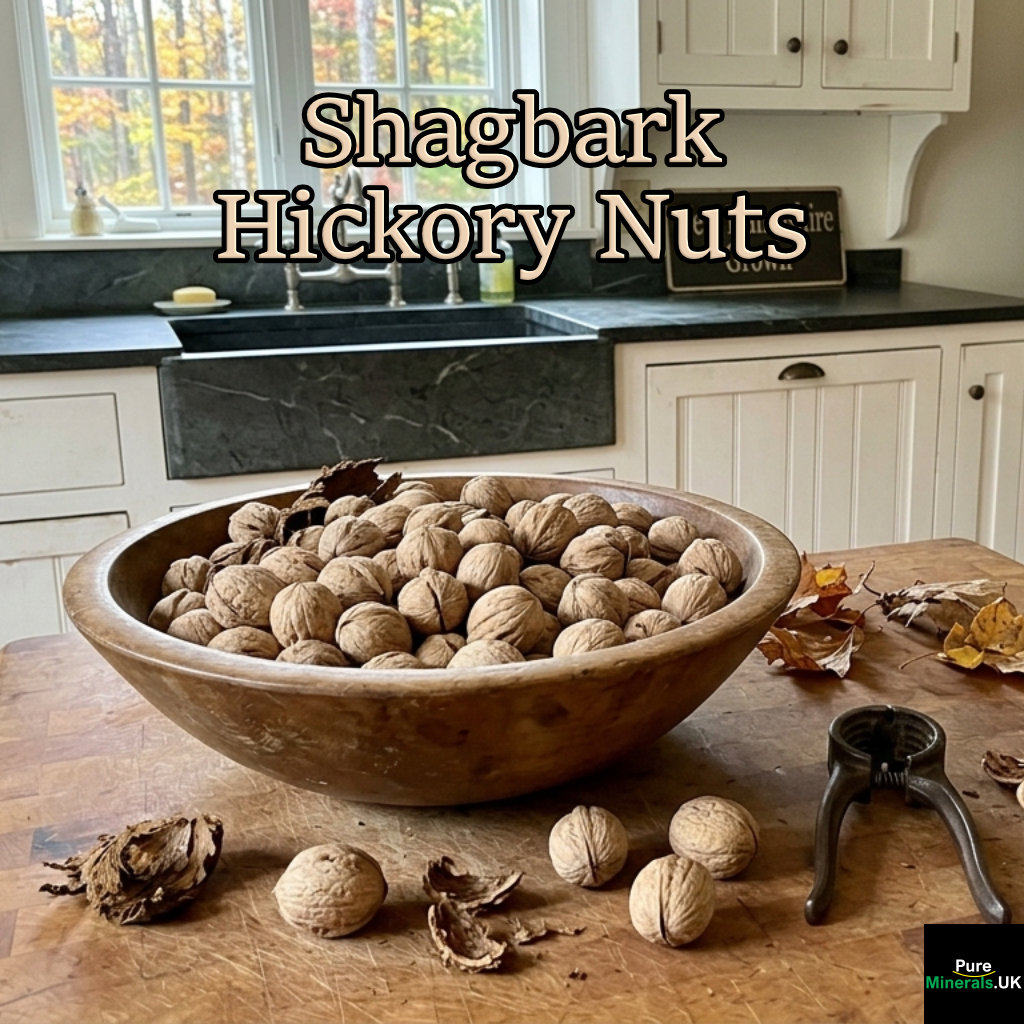
The shagbark hickory (Carya ovata) is the gold standard when it comes to edible hickory nuts. It gets its name from the distinctive shaggy, peeling bark that makes the tree easy to identify in the wild. The nuts are sweet, rich, and comparable in flavor to pecans, which makes sense, since pecans are technically a member of the hickory family.
Shagbark hickory nuts are the variety most likely to be sold commercially in sealed packages, and they are the ones most commonly referenced in nutritional studies. If you are new to hickory nuts, this is the variety to start with. For those interested in exploring other nut varieties, you might also consider trying Brazil nuts.
Shellbark Hickory: The Largest Hickory Nut
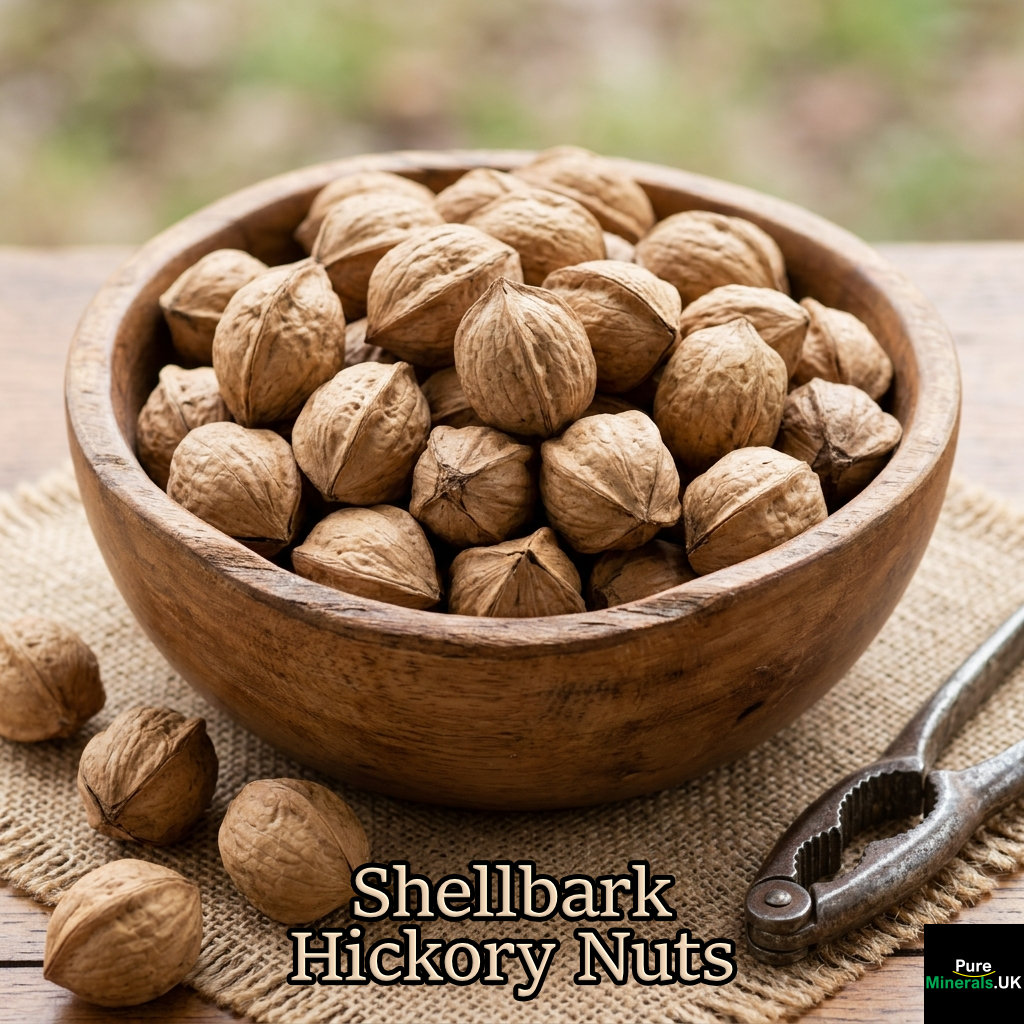
The shellbark hickory (Carya laciniosa) produces the largest nuts of any hickory species. The flavor is sweet and comparable to the shagbark, but the shell is significantly thicker, which means more effort is required to extract the edible meat inside.
- Also known as the “kingnut” hickory due to its impressive size
- Preferred by foragers who want maximum yield per nut
- Thrives in low, wet areas and river bottoms across the eastern United States
- The thick shell, while frustrating to crack, actually protects the nut and extends its shelf life
Shellbark hickory is less commonly found in stores but highly regarded among foragers and homesteaders who appreciate its generous meat-to-shell ratio once cracked correctly.
Pignut and Bitternut: The Varieties to Avoid
The pignut hickory (Carya glabra) and bitternut hickory (Carya cordiformis) are the two varieties most likely to ruin a first-time forager’s experience.
Both are astringent and intensely bitter due to high tannin content. While technically edible, they require extensive preparation — like leaching with water — to reduce bitterness to a tolerable level. For most people, the effort is not worth it when sweeter varieties are available.
Hickory Nut Nutritional Profile Per 100 Grams
A 100-gram serving of hickory nuts contains 657 calories, placing them firmly in the category of calorie-dense whole foods. That energy is not empty — it comes packaged with a substantial amount of healthy fat, a respectable amount of protein content, and a range of vitamins and minerals that support multiple systems in the body.
The macronutrient breakdown alone makes hickory nuts stand out from many commonly consumed nuts. With 64.37 grams of total fat, 12.72 grams of protein, and 18.25 grams of carbohydrates per 100 grams, hickory nuts deliver a well-rounded nutritional profile. The fat content, which is approximately 85% beneficial unsaturated fats, is particularly notable for cardiovascular and metabolic health.
Macronutrient Breakdown: Fat, Protein, and Carbohydrates
- Calories: 657 kcal per 100 grams
- Total Fat: 64.37 grams — primarily monounsaturated and polyunsaturated fats
- Protein: 12.72 grams — supports muscle repair and growth
- Total Carbohydrates: 18.25 grams — primarily complex carbohydrates for sustained energy
- Unsaturated fatty acids UFAs:
UFA | Mass Ratio | Content in CCS‐HE (mg/g) | Content in fresh hickory nuts (mg/g) | Concentration in cell culture (μM) |
|---|---|---|---|---|
Linolenic acid | 1 | 0.096 | 0.048 | 0.138 |
Linoleic acid | 8 | 0.754 | 0.377 | 1.080 |
Oleic acid | 16 | 1.460 | 0.730 | 2.070 |
Total | / | 2.310 | 1.155 | 3.288 |
The complex carbohydrates in hickory nuts are a key reason they are associated with sustained energy rather than the spike-and-crash pattern linked to simple sugars. Unlike refined carbohydrate sources, these carbs break down slowly, providing steady fuel without the sharp insulin fluctuations that lead to energy dips.
Key Minerals: Potassium, Phosphorus, Magnesium, and Calcium
Hickory nuts are particularly rich in minerals that are often under-consumed in modern diets. A 100-gram serving contains 436 mg of potassium, 173 mg of magnesium, and 61 mg of calcium. These three minerals work together to support bone density, muscle function, nerve signaling, and cardiovascular health — making hickory nuts a genuinely functional food, not just a calorie source.
Vitamins Present in Hickory Nuts
Hickory nuts are a solid source of several B vitamins that play essential roles in energy metabolism and nervous system function. They contain meaningful amounts of thiamine (vitamin B1), riboflavin (vitamin B2), vitamin B6, and pantothenic acid. Vitamin B6 is particularly significant because it directly supports protein metabolism — meaning the protein you eat is absorbed and utilized more efficiently when B6 levels are adequate. A small handful of hickory nuts contributes to your daily B vitamin needs without requiring a supplement.
The Real Health Benefits of Hickory Nuts
The nutritional density of hickory nuts translates directly into real, measurable health benefits. These are not vague wellness claims — they are logical outcomes of the specific vitamins, minerals, and macronutrients that hickory nuts deliver in every serving. From sustained energy to bone protection, here is what regular, moderate consumption can actually do for the body.
Sustained Energy Without the Crash
Hickory nuts are one of the better whole-food sources of lasting energy available. The combination of complex carbohydrates, healthy fats, and B vitamins means the body processes hickory nuts slowly and efficiently. There is no sudden glucose spike followed by a crash — instead, energy is released steadily over time. This makes hickory nuts an excellent snack choice for anyone with a physically demanding routine, long workdays, or athletic training schedules. Just a small handful provides around 200 calories of clean, functional fuel.
Bone Health and Osteoporosis Prevention
- Magnesium (173 mg per 100g): Directly involved in bone formation and the regulation of calcium transport into bone tissue
- Calcium (61 mg per 100g): The primary structural mineral in bones and teeth
- Potassium (436 mg per 100g): Helps neutralize acids in the body that would otherwise leach calcium from bones
- Phosphorus: Works alongside calcium to maintain bone density and structural integrity
The combination of these four minerals in a single food source is what makes hickory nuts particularly valuable for bone health. Most people think of dairy as the go-to for bone support, but hickory nuts offer a plant-based alternative that delivers multiple bone-protective minerals simultaneously.
Regular yet moderate consumption of hickory nuts has been associated with the prevention of degenerative bone diseases such as osteoporosis. This is especially relevant for older adults, whose ability to absorb calcium and maintain bone density naturally declines with age.
Many experts advise older men and women to incorporate mineral-rich whole foods like hickory nuts into their daily diet as a proactive strategy — not a reactive one. Waiting until bone loss is already significant makes recovery much harder. Prevention through consistent nutritional support is the smarter approach.
Cholesterol Balance and Heart Health
With approximately 85% of hickory nut fat coming from unsaturated sources, these nuts are well-positioned to support cardiovascular health. Monounsaturated and polyunsaturated fats are well-documented for their ability to help moderate LDL (bad) cholesterol while supporting HDL (good) cholesterol levels. A balanced cholesterol profile reduces arterial plaque buildup and lowers the risk of heart disease over time. The potassium content further supports the heart by helping regulate blood pressure — potassium is a natural counterbalance to sodium’s blood pressure-raising effects.
Weight Management: Both Gain and Loss
Hickory nuts occupy an interesting position when it comes to weight management — they can support both healthy weight gain and weight loss depending on how they are used. For those recovering from illness or injury, or anyone looking to gain lean mass, the calorie density and protein content make hickory nuts an efficient addition to the diet. Doctors have specifically recommended them for patients recovering from traumatic injuries who need energy-dense, nutrient-rich foods. On the other end of the spectrum, the high fiber content and healthy fats promote satiety, meaning a small portion goes a long way toward curbing hunger and reducing overall calorie intake throughout the day.
Traditional and Culinary Uses of Hickory Nuts
Long before hickory nuts appeared on any health food radar, they were a staple food source for Native American communities across eastern North America. The earliest recorded use dates back to preparations that required nothing more than boiling the nuts in water — a simple process that extracted a rich, oily liquid that served as both a calorie source and a cooking fat. This foundational use points to how well early cultures understood the energy value locked inside hickory nuts.
Savory Recipes That Use Hickory Nuts
Today, hickory nuts are used in both sweet and savory cooking. Their rich, buttery flavor — often compared to pecans — makes them versatile in the kitchen. They work well chopped into grain salads, pressed into crusts for roasted meats, or blended into sauces and pestos as a pecan substitute. Their fat content makes them ideal for recipes that benefit from a naturally creamy texture without dairy.
In baking, hickory nuts can replace walnuts or pecans in almost any recipe — from muffins and quick breads to pie fillings and granola bars. The flavor is slightly more robust and earthy than a pecan, which adds depth to baked goods. When lightly toasted before use, hickory nuts develop a caramel-like richness that intensifies their natural sweetness and makes them even more compelling as a culinary ingredient. If you’re interested in exploring other nut varieties, consider trying Brazil nuts for a different flavor profile.
How Native Cultures Historically Used Hickory Nuts
The most well-documented traditional use of hickory nuts comes from multiple Native American nations who relied on them as a critical food source each autumn. The oily liquid extracted from boiled hickory nuts was called “pawcohiccora” — a word that historians believe eventually gave the hickory tree its modern name. This liquid was used as a cooking fat, stirred into cornmeal dishes, and consumed directly as a high-energy drink during periods of physical labor or food scarcity. The nuts were also dried and ground into a paste that could be stored through winter, making them one of the earliest known examples of a shelf-stable, nutrient-dense food preparation in North American history. Learn more about butternuts and their uses.
Who Should Be Careful With Hickory Nuts
Hickory nuts are safe for most people when consumed in moderate amounts, but there are specific groups who should exercise caution. Because hickory nuts belong to the tree nut family, anyone with a known tree nut allergy — particularly to pecans, walnuts, or other members of the Carya genus — should consult a healthcare provider before trying them. The allergens present in hickory nuts can trigger reactions ranging from mild itching and hives to more serious anaphylactic responses in highly sensitive individuals.
Beyond allergies, the high fat content of hickory nuts is something to be mindful of for people who have been advised to limit dietary fat intake due to specific medical conditions. While the fats in hickory nuts are predominantly the beneficial unsaturated kind, quantity still matters. Eating large amounts regularly without accounting for the calorie density — 657 calories per 100 grams — can contribute to unintended weight gain.
People managing gallbladder conditions should also be cautious, as high-fat foods can aggravate symptoms. As with any calorie-dense whole food, moderation and awareness of your individual health context are the most sensible guidelines.
Hickory Nuts Are Worth the Extra Effort to Find
Hickory nuts will not be waiting for you in the snack aisle of your local grocery store — and that is exactly why most people miss out on them. The hard shell, limited commercial availability, and general unfamiliarity make them easy to overlook. But for anyone serious about whole-food nutrition, the payoff is real. Between the sustained energy from complex carbohydrates, the bone-protective mineral profile, the heart-healthy fats, and a history of traditional use stretching back centuries, hickory nuts earn their place as one of North America’s most nutritionally complete wild foods. Seek them out from specialty stores, foragers markets, or directly from the tree — the effort is worth it.
For more on the benefits of hickory nuts, explore this comprehensive guide.
Important note: Hickory Nuts
Only certain hickory species produce edible nuts, while others are bitter and not suitable for consumption. Proper identification is essential when foraging. Individuals with tree nut allergies should avoid hickory nuts. As with other nuts, intake should be moderate due to high energy density. This information is provided for educational purposes and is not intended as medical advice.
Frequently Asked Questions
Hickory nuts generate a lot of questions from first-timers and seasoned foragers alike. The tough shell, limited store availability, and variety confusion all contribute to the curiosity. Here are the most common questions answered directly.
What is the best way to crack open a hickory nut?
Cracking a hickory nut is genuinely one of the more challenging nut-cracking tasks you will encounter. The shell is exceptionally hard and thick, and a standard household nutcracker often will not be enough to get the job done cleanly. The right tools and techniques make a significant difference in how much usable nut meat you recover.
The most effective method used by experienced foragers is placing the nut on a flat, hard surface — like a concrete step or a large flat rock — and striking it firmly with a hammer or mallet. The goal is to crack the shell without pulverizing the nut meat inside, which requires a controlled strike rather than full force. Aim for the seam that runs along the side of the nut, as this is structurally the weakest point and will give way more cleanly than hitting the top or bottom.
Alternatively, a heavy-duty nut cracker specifically designed for hard-shelled varieties — such as the Texan Nut Sheller or a similar lever-style cracker — can make the process much more manageable, especially if you are processing large quantities. These tools apply targeted pressure rather than impact, which tends to produce larger, cleaner pieces of nut meat.
Once cracked, use a nut pick to extract the meat from the shell’s interior chambers. Hickory nuts have a complex internal structure with multiple chambers, so patience is required to get every usable piece out.
- Place the nut on a hard, flat surface with the seam facing up
- Use a hammer or mallet with a controlled, firm strike — not full force
- A lever-style nut cracker, like the Texan Nut Sheller, works well for larger batches
- Use a nut pick to extract meat from the interior chambers after cracking
- Soaking nuts in water for a few hours before cracking can slightly soften the shell and make extraction easier
Where can I buy hickory nuts if they are not in regular supermarkets?
Hickory nuts are not a mainstream commercial product, so you will need to look beyond the typical grocery store. Specialty health food stores, farmers’ markets in the eastern United States, and online retailers are your best options. Websites like Amazon, Etsy, food sellers, and dedicated wild food suppliers occasionally stock shagbark hickory nuts in small batches, typically during the fall harvest season when availability peaks.
Foraging is also a genuinely viable option if you live in an area where hickory trees grow naturally, which includes most of the eastern and midwestern United States. Shagbark and shellbark hickory trees are identifiable by their distinctive peeling bark, and nuts typically fall between September and November. Joining a local foraging group or using a plant identification app can help you locate trees near you and learn to distinguish edible varieties from bitter ones before you invest time in harvesting.
How many hickory nuts should I eat per day?
A modest handful — roughly 28 to 30 grams — is a sensible daily serving for most adults. At that portion size, you are getting approximately 185 to 200 calories along with a meaningful dose of healthy fats, minerals, and B vitamins without overconsumption. Because hickory nuts are calorie-dense, treating them the way you would any premium nut — as a complement to a balanced diet rather than a staple eaten in large quantities — is the most practical approach. People with specific health goals, such as weight gain during recovery, may benefit from slightly larger portions under the guidance of a healthcare provider.
Are hickory nuts safe for people with tree nut allergies?
No — hickory nuts are not safe for people with tree nut allergies without prior medical clearance. Hickory nuts are closely related to pecans, and cross-reactivity between the two is well-documented. Anyone who reacts to pecans, walnuts, or other tree nuts should treat hickory nuts as a potential allergen and avoid them until they have been formally evaluated by an allergist. Even people who have never had a reaction to other tree nuts should introduce hickory nuts cautiously if they are trying them for the first time, as allergies can develop at any point in life.
Can I grow my own hickory tree at home?
Yes, growing a hickory tree at home is entirely possible, but it requires patience — these are slow-growing trees that can take anywhere from 10 to 15 years to begin producing a meaningful nut harvest. That said, once established, hickory trees are remarkably long-lived and can produce nuts for decades, making them a worthwhile long-term investment for anyone serious about growing their own food.
Shagbark hickory (Carya ovata) is the most recommended variety for home planting due to its superior nut flavor and relatively wide adaptability to different soil types. Hickory trees prefer well-drained, loamy soil and full sun exposure, and they do best in USDA hardiness zones 4 through 8. Starting from a nursery sapling rather than direct seed planting will give you a modest head start on the long growing timeline.
Space is an important consideration — mature shagbark hickory trees can reach 60 to 80 feet in height with a canopy spread of 40 feet or more. They are not suitable for small urban lots but thrive on larger properties, homesteads, or rural land where they can develop without obstruction. If you are planning for the long term and have the space, planting a hickory tree is one of the most rewarding investments a natural food enthusiast can make in their own land.