

Published: 7 March 2026
Last Updated: 1 April 2026
This article is periodically reviewed and updated to reflect current scientific understanding by George Wesler.
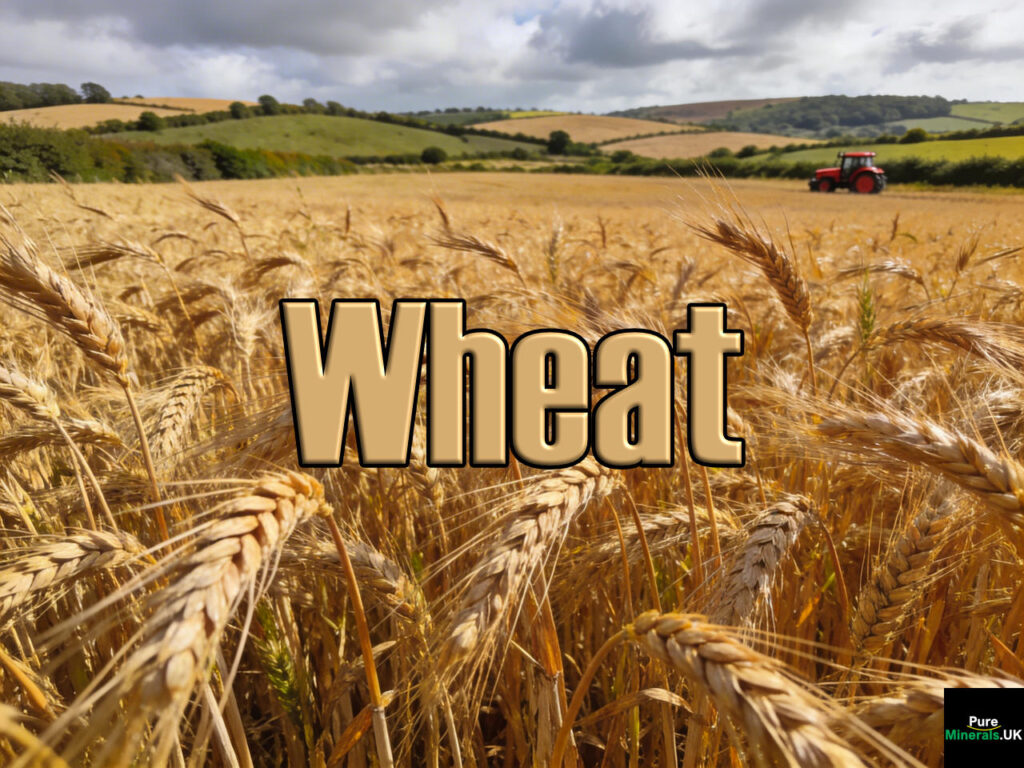
What Is Whole-Grain Wheat?
Whole-grain wheat is the intact kernel of the wheat plant (Triticum aestivum and related species) that retains all three anatomical components of the grain: the bran, germ, and endosperm. Because the entire kernel remains intact during processing, whole-grain wheat preserves its natural fiber, vitamins, minerals, and phytochemicals.
Definition
Whole-grain wheat is wheat that contains the entire grain kernel—bran, germ, and endosperm—without the removal of any structural component during milling or processing.
Extended Definition
Wheat is one of the most widely cultivated cereal grains in the world and belongs to the Poaceae grass family. The edible portion of the wheat plant is the grain kernel, which functions as the seed of the plant.
A whole wheat kernel consists of three primary components. The bran forms the outer protective layer and contains most of the fiber, B vitamins, and antioxidant compounds. The germ is the reproductive portion of the seed and is rich in essential fatty acids, vitamin E, B vitamins, and minerals. The endosperm is the largest portion of the kernel and primarily contains starch and protein.
Whole-grain wheat preserves all three components in their natural proportions. In contrast, refined wheat flour removes the bran and germ, leaving primarily the starchy endosperm. This refining process significantly reduces fiber, micronutrients, and bioactive plant compounds.
Nutritionally, whole-grain wheat provides complex carbohydrates, dietary fiber, plant-based protein, magnesium, selenium, iron, zinc, and B vitamins such as thiamine, niacin, and folate. These nutrients contribute to energy metabolism, cellular function, and structural maintenance in the body.
Whole wheat also contains various phytochemicals, including phenolic acids, lignans, and alkylresorcinols, which contribute to the grain’s antioxidant properties and structural defense mechanisms.
Whole-grain wheat is consumed in many forms, including whole wheat flour, cracked wheat, bulgur, and wheat berries.
Key Facts
Botanical name: Triticum aestivum (and related species)
Plant family: Poaceae
Common classification: Cereal grain
Origin: Fertile Crescent (Southwest Asia)
Edible part: Grain kernel (seed)
Kernel components: Bran, germ, endosperm
Primary nutrients: Complex carbohydrates, fiber, protein, B vitamins
Key minerals: Magnesium, selenium, iron, zinc
Key phytonutrients: Phenolic acids, lignans, alkylresorcinols
Energy density: Moderate to high
Common food forms: Whole wheat flour, bulgur, cracked wheat, wheat berries
Key Takeaways
- Whole grain wheat retains all three parts of the kernel — bran, germ, and endosperm — making it significantly more nutritious than refined white flour.
- Regular consumption of whole grain wheat is linked to reduced risk of heart disease, type 2 diabetes, and colorectal cancer, according to multiple large-scale studies.
- One serving of whole grain wheat provides meaningful amounts of fiber, B vitamins, iron, magnesium, and zinc — nutrients most people don’t get enough of daily.
- Not everyone tolerates wheat — people with celiac disease, wheat allergy, or non-celiac gluten sensitivity need to approach it differently, and that distinction matters.
- There’s a surprisingly simple way to tell if a product is truly whole grain at the store — and most shoppers miss it entirely.
Whole grain wheat is one of the most studied foods in nutrition science, and the evidence in its favor is hard to ignore. For anyone looking to make smarter food choices without overhauling their entire diet, this is one of the best places to start. Nutritionists highlight whole grains as a foundational element of evidence-based eating — and whole grain wheat sits at the top of that list for good reason.
Whole Grain Wheat Is One of the Most Nutrient-Dense Foods Available
Whole grain wheat has been a dietary staple for thousands of years, and modern nutrition research keeps confirming why. Unlike many foods that offer isolated benefits, whole grain wheat delivers fiber, protein, complex carbohydrates, and a broad spectrum of micronutrients in a single, affordable, widely available package. That combination is genuinely difficult to match.
What Makes Wheat “Whole Grain”
Whole grain wheat simply means the wheat kernel has been left intact — nothing removed, nothing stripped away. The term “whole grain” is a structural description, not a marketing claim. When wheat is milled into white flour, the outer bran layer and the inner germ are removed, leaving only the starchy endosperm. That process dramatically reduces the nutritional value of the final product.
The key distinction is preservation. A grain qualifies as “whole” only when all three of its original components — bran, germ, and endosperm — are present in their natural proportions. This applies whether the wheat is in the form of whole wheat flour, cracked wheat, bulgur, or intact wheat berries. The form can change; the composition cannot.
The Three Parts of a Wheat Kernel and Why They All Matter
Each part of the wheat kernel plays a distinct nutritional role, and losing any one of them means losing a significant portion of what makes wheat worth eating.
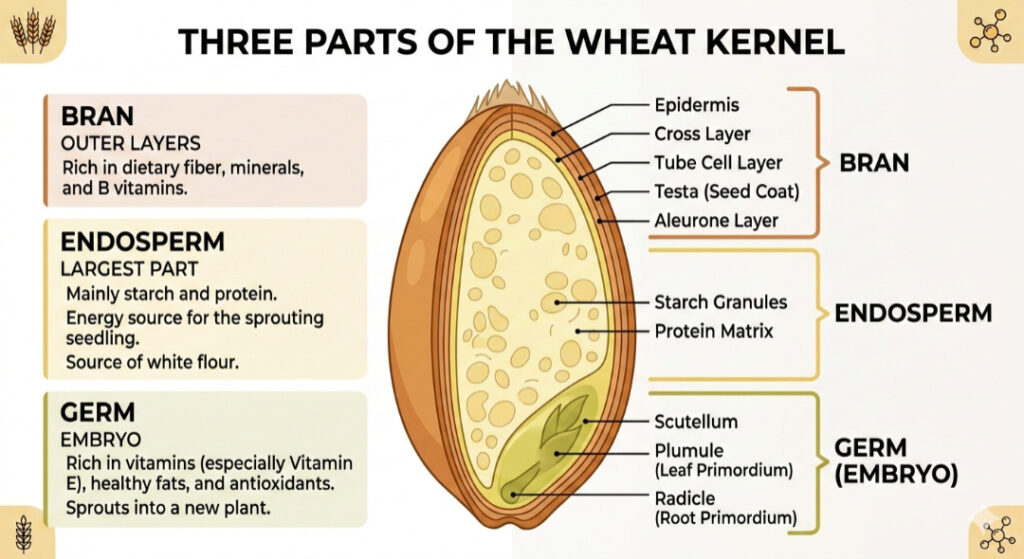
- Bran (outer layer): Rich in dietary fiber, B vitamins, and antioxidants. This is where most of the fiber content lives, including the insoluble fiber that supports digestive health and bowel regularity.
- Germ (inner embryo): The most nutrient-dense section. Contains vitamin E, folate, thiamine, phosphorus, zinc, magnesium, and healthy fats. It’s essentially the seed’s life-support system.
- Endosperm (starchy center): The largest portion of the kernel. Primarily composed of starchy carbohydrates and some protein, but relatively low in vitamins and minerals compared to the other two parts.
Refined white flour is almost entirely endosperm. That’s why comparing whole grain wheat to white flour isn’t just a preference debate — it’s a nutritional gap that shows up in health outcomes across populations.
The Nutritional Profile of Whole Grain Wheat
Understanding what whole-grain wheat actually contains makes it easier to appreciate why it comes up repeatedly in dietary guidelines worldwide. This isn’t a superfood trend — it’s a food with a deep, well-documented nutritional foundation.
Macronutrients: Carbohydrates, Protein, and Fiber Breakdown
A 100-gram serving of whole grain wheat flour contains approximately 72 grams of carbohydrates, 13 grams of protein, and 11 grams of dietary fiber. The carbohydrates in whole grain wheat are complex, meaning they digest more slowly than refined carbs and produce a steadier rise in blood glucose. The protein content is notable too — whole wheat contains more protein per serving than many other common grains. And the fiber content, at roughly 11 grams per 100 grams, is one of the most important factors behind its health benefits.
Key Vitamins Found in Whole Grain Wheat
Whole-grain wheat is particularly strong in B vitamins. A standard serving provides meaningful amounts of thiamine (B1), riboflavin (B2), niacin (B3), and folate (B9) — all essential for energy metabolism, red blood cell production, and neurological function. Vitamin E, found primarily in the wheat germ, acts as a fat-soluble antioxidant that helps protect cells from oxidative damage.
Minerals That Support Daily Body Functions
The mineral profile of whole grain wheat is equally impressive. It’s a solid source of:
- Magnesium — supports muscle function, blood pressure regulation, and over 300 enzymatic reactions
- Iron — critical for oxygen transport in the blood
- Zinc — essential for immune function and wound healing
- Phosphorus — supports bone health and energy production
- Selenium — a powerful antioxidant mineral tied to thyroid function
- Manganese — involved in bone formation and carbohydrate metabolism
How Whole Grain Wheat Compares to Refined White Flour
The difference in nutritional value between whole grain wheat and refined white flour is not subtle. Refining strips away approximately 25% of the protein and the majority of key micronutrients. While some white flours are enriched with a handful of B vitamins and iron after processing, this enrichment replaces only a fraction of what was removed. It does not restore the fiber, vitamin E, or the full range of phytonutrients found in the original grain.
| Nutrient (per 100g) | Whole Grain Wheat Flour | Refined White Flour |
|---|---|---|
| Dietary Fiber | ~11g | ~2.7g |
| Protein | ~13g | ~10g |
| Magnesium | ~138mg | ~22mg |
| Zinc | ~2.6mg | ~0.7mg |
| Vitamin E | ~1.4mg | ~0.1mg |
| Folate | ~44mcg | ~26mcg |
Whole-grain wheat is more nutritious than refined flour because it contains the entire grain kernel (bran, germ, and endosperm), while refined flour contains mostly the starchy endosperm.
Proven Health Benefits of Eating Whole Grain Wheat
The research on whole grain wheat isn’t just promising — it’s extensive. Large cohort studies involving hundreds of thousands of participants have consistently found that people who eat more whole grains have lower rates of several chronic diseases. These aren’t marginal effects, either. The associations are meaningful and show up across different populations, dietary patterns, and geographic regions.
Reduced Risk of Heart Disease
Whole grain wheat has one of the strongest evidence bases for cardiovascular protection of any single food. A landmark meta-analysis published in The BMJ found that people who consumed the most whole grains had a significantly lower risk of cardiovascular disease compared to those who ate the least. The fiber in whole grain wheat — particularly a soluble fiber called beta-glucan — helps reduce LDL cholesterol by binding to bile acids in the digestive tract and removing them from circulation. Over time, that mechanism translates into measurable reductions in heart disease risk.
Better Digestive Health Through Dietary Fiber
The insoluble fiber in whole grain wheat acts like a broom through the digestive system. It adds bulk to stool, speeds up transit time through the colon, and helps prevent constipation. For most adults who fall well short of the recommended 25–38 grams of daily fiber, whole grain wheat is one of the most practical ways to close that gap.
Beyond regularity, the fiber in whole grain wheat feeds beneficial gut bacteria — a process called fermentation that produces short-chain fatty acids like butyrate. Butyrate is a primary energy source for the cells lining the colon and plays a direct role in maintaining gut barrier integrity. A healthier gut microbiome is increasingly linked to better immune function, reduced inflammation, and even improved mood regulation through the gut-brain axis.
Blood Sugar Regulation and Lower Type 2 Diabetes Risk
Whole grain wheat has a significantly lower glycemic index than refined grain products. That means it raises blood sugar more slowly and more gradually — a key factor in managing insulin sensitivity. The fiber content delays glucose absorption in the small intestine, while the magnesium in whole wheat supports insulin receptor function at the cellular level. These two mechanisms work together to reduce the metabolic stress that, over the years, contributes to type 2 diabetes development.
Research published in Diabetes Care found that higher whole grain intake was associated with a lower risk of developing type 2 diabetes, with the association remaining significant even after adjusting for other dietary and lifestyle factors. Replacing just two servings of refined grains per day with whole grain alternatives has been shown to have a measurable impact on fasting blood glucose and insulin levels.
Weight Management and Satiety
Whole grain wheat keeps you fuller for longer — and that’s not just anecdotal. The combination of fiber, protein, and complex carbohydrates slows gastric emptying, meaning food stays in the stomach longer and hunger signals are delayed. Studies have consistently shown that people who eat more whole grains tend to have lower body mass indices and smaller waist circumferences than those who favor refined grains. The satiety effect is real, measurable, and practically useful for anyone managing their calorie intake without feeling deprived.
Lower Colorectal Cancer Risk
The World Health Organization’s International Agency for Research on Cancer classifies whole grain consumption as a probable protective factor against colorectal cancer. The fiber in whole grain wheat reduces the time that potentially carcinogenic compounds spend in contact with the colon lining, while the butyrate produced during fiber fermentation has demonstrated anti-tumor properties in cell studies. Regular whole grain intake — particularly from wheat — is consistently associated with a 10–20% reduction in colorectal cancer risk across major epidemiological studies.
Common Uses of Whole Grain Wheat in Everyday Foods
Whole grain wheat is one of the most versatile ingredients in any kitchen. It appears in dozens of familiar foods, works across both savory and sweet applications, and integrates into daily eating without requiring a dramatic lifestyle change. The real challenge isn’t finding whole grain wheat products — it’s identifying which ones are genuinely whole grain versus those that just look the part.
Whole Wheat Bread, Pasta, and Cereals
Whole wheat bread is the most common entry point for most people. A standard two-slice serving of 100% whole wheat bread provides around 4–6 grams of fiber and contributes meaningfully to daily magnesium and B vitamin intake. The key word is “100%” — bread labeled simply as “wheat bread” or “multigrain” may contain only a small percentage of whole grain flour, with refined flour making up the rest.
Whole wheat pasta is another practical swap. It has a slightly nuttier flavor and firmer texture than regular pasta, and it delivers roughly three times the fiber of its refined counterpart per serving. For breakfast, whole grain wheat cereals — specifically those listing whole wheat as the first ingredient — can be an efficient way to hit fiber targets early in the day. Products like Post Shredded Wheat Original are made from 100% whole grain wheat with no added sugar, making them one of the cleaner options on the market.
Beyond these staples, whole grain wheat shows up in crackers, tortillas, pita bread, muffins, and pancake mixes. Bulgur wheat — a form of whole grain wheat that has been parboiled and dried — is one of the fastest-cooking whole grains available, requiring only a 10–15 minute soak in boiling water. Wheat berries, the intact whole kernel, can be cooked like rice and used in grain bowls, soups, or salads for a chewier, more substantial texture.
How to Spot Genuine Whole Grain Products on Store Shelves
The single most reliable way to verify a product is truly whole grain is to check the ingredient list — not the front of the package. The first ingredient should read “whole wheat flour,” “whole grain wheat,” or “whole wheat.” If it says “enriched wheat flour,” “wheat flour,” or “unbleached flour,” the product is made primarily from refined grain regardless of what the packaging claims. The Whole Grain Stamp, issued by the Oldways Whole Grain Council, is a credible third-party indicator — products bearing the 100% Whole Grain Stamp must contain at least 16 grams of whole grain per serving.
Who Should Limit or Avoid Wheat
For the vast majority of people, whole grain wheat is a clear dietary positive. But wheat is not universally appropriate, and for a specific subset of the population, consuming it — whole grain or otherwise — can cause serious harm. Understanding these distinctions prevents both unnecessary avoidance and, more importantly, the genuine risks that come with undiagnosed intolerance.
The conditions that warrant limiting or avoiding wheat fall into three distinct categories, each with different underlying mechanisms, severity levels, and dietary implications. Grouping them together under the general label of “gluten issues” misrepresents how different they actually are from one another.
Celiac Disease and Gluten Intolerance Explained
Celiac disease is an autoimmune condition in which gluten — a protein found in wheat, barley, and rye — triggers an immune response that damages the lining of the small intestine. Specifically, it flattens the villi, the tiny finger-like projections responsible for nutrient absorption. Over time, this damage leads to malabsorption of critical nutrients, including iron, calcium, and folate, which can cause anemia, osteoporosis, and neurological complications if left unmanaged.
Celiac disease affects approximately 1% of the global population, though it is significantly underdiagnosed. Diagnosis is confirmed through blood tests measuring specific antibodies — most commonly anti-tissue transglutaminase (tTG-IgA) — followed by a small intestinal biopsy. There is no medical treatment other than a strict, lifelong gluten-free diet. Even trace amounts of gluten from cross-contamination can trigger an immune response in people with celiac disease.
Non-celiac gluten sensitivity (NCGS) is a separate condition in which individuals experience real symptoms — bloating, fatigue, brain fog, abdominal discomfort — after consuming gluten, without the autoimmune damage seen in celiac disease. The mechanisms behind NCGS are still being studied, and diagnosis is currently one of exclusion: celiac disease and wheat allergy must be ruled out first. Unlike celiac disease, NCGS does not cause intestinal damage, and the level of dietary restriction required varies from person to person.
Wheat Allergy vs. Gluten Sensitivity: Key Differences
A wheat allergy is an immune response to one or more proteins found in wheat, not exclusively gluten. It is mediated by IgE antibodies and can trigger symptoms ranging from hives and nasal congestion to anaphylaxis in severe cases. Wheat allergy is most common in children and is frequently outgrown by adulthood, unlike celiac disease, which is lifelong. It is diagnosed through skin prick tests or specific IgE blood tests, and management involves avoiding wheat specifically — not necessarily all gluten-containing grains like barley or rye.
The distinction between these three conditions matters enormously in practice. Someone with a wheat allergy may tolerate rye or barley without issue. Someone with celiac disease cannot have any gluten source, including spelt or kamut. Someone with NCGS may manage fine with occasional small amounts of wheat without any measurable intestinal consequence. Lumping all three together leads to unnecessary dietary restriction for some and inadequate restriction for others — both of which carry real health consequences.
Simple Ways to Add More Whole Grain Wheat to Your Diet
The most effective dietary changes are the ones that don’t feel like changes at all. Swapping refined grain products for whole grain equivalents is one of the lowest-friction upgrades in nutrition. Start by replacing white sandwich bread with a 100% whole wheat loaf — check the ingredient list to confirm whole wheat flour is listed first. Switch regular pasta to whole wheat pasta in dishes with robust sauces, where the slightly nuttier flavor blends naturally into the overall taste profile. Use whole wheat flour for up to half the flour in baking recipes like muffins, pancakes, or quick breads without significantly altering texture or flavor.
Beyond simple swaps, adding less common whole grain wheat formats opens up variety:
- Bulgur wheat — Ready in 10–15 minutes with just boiling water; use it as a base for tabbouleh, grain bowls, or as a side in place of rice
- Wheat berries — Cook like rice (1:3 ratio, ~45–60 minutes); add to soups, stews, or cold grain salads for a chewy, satisfying texture
- Whole wheat couscous — One of the fastest whole grain options at under 5 minutes prep time; pairs well with roasted vegetables and legumes
- Whole wheat crackers — A practical snack vehicle; look for products with whole wheat as the first ingredient and minimal added sodium
- Whole wheat pita or tortillas — Easy substitution for wraps, sandwiches, or as a base for quick flatbread pizzas
The goal is consistency over perfection. Even replacing one or two refined grain servings per day with whole grain alternatives creates cumulative benefits that research consistently backs up over time.
Whole Grain Wheat Is a Smart, Science-Backed Daily Staple
Few foods combine accessibility, affordability, versatility, and nutritional depth the way whole grain wheat does. The evidence connecting regular whole grain wheat consumption to lower rates of heart disease, type 2 diabetes, colorectal cancer, and obesity-related outcomes is among the most consistent in nutrition science. It’s not a trend food or a supplement — it’s a foundational dietary choice that fits into virtually any eating pattern. For anyone looking to build a health-supporting diet without complication, whole-grain wheat belongs on the plate every day.
Important note: Whole-grain Wheat
Whole-grain wheat is widely recognized as safe for consumption as a food for most individuals. However, wheat contains gluten proteins that may cause adverse reactions in individuals with celiac disease, wheat allergy, or non-celiac gluten sensitivity. This article is provided for educational purposes only and does not constitute medical advice. Individuals with specific dietary conditions should consult a qualified healthcare professional before making significant dietary changes.
Bread Wheat vs. The Other Wheats: Genetic Differences
| Feature | Einkorn | Emmer | Durum | Bread Wheat |
| Genetic Class | Diploid | Tetraploid | Tetraploid | Hexaploid |
| Genome | AA | AABB | AABB | AABBDD |
| Chromosome Count | 14 | 28 | 28 | 42 |
| Threshing | Hulled (Hard) | Hulled (Hard) | Free-threshing | Free-threshing |
| Gluten Quality | Very weak/brittle | Strong but “short” | Very strong/inelastic | Strong & Elastic |
| Hardness | Soft | Hard | Extremely Hard | Variable (Hard or Soft) |
| Best Culinary Use | Pastries & Cakes | Rustic Grains/Soup | Pasta & Couscous | Yeasted Breads |
The “D” Genome: Bread Wheat is the only one with the DD set of chromosomes. This set was contributed by a wild goat grass (Aegilops tauschii) and is responsible for the highly elastic gluten that allows modern bread to rise so high. Durum and Emmer lack this, which is why their doughs “snap back” or tear rather than stretching thin.
Threshing Evolution: Einkorn and Emmer represent the “Ancient” state, where the seed is trapped in a husk. Durum and Bread Wheat represent the “Modern” state, where humans have bred the plants to drop their skins easily during harvest.
The Hardness Paradox: Even though Bread Wheat has more chromosomes, Durum remains the physically “hardest” grain to mill. This is why Durum is ground into coarse semolina rather than a soft, powdery flour.
Frequently Asked Questions
Is whole grain wheat the same as whole wheat?
Yes — whole grain wheat and whole wheat refer to the same thing. Both terms indicate that the wheat kernel is intact, meaning the bran, germ, and endosperm are all present. The terminology is used interchangeably in most nutritional labeling and dietary guidelines, though “whole grain wheat” is sometimes used to emphasize the grain’s structural completeness.
How much whole grain wheat should you eat per day?
The 2020–2025 Dietary Guidelines for Americans recommend making at least half of all daily grain servings whole grains, which translates to a minimum of 3 ounce-equivalents of whole grains per day for most adults. One ounce-equivalent equals roughly one slice of whole wheat bread, half a cup of cooked whole wheat pasta, or a quarter cup of dry wheat berries. For optimal fiber intake and disease risk reduction, most research supports erring toward the higher end of that range.
Does whole grain wheat cause bloating?
It can, particularly when someone significantly increases their fiber intake over a short period. The gut microbiome needs time to adapt to higher fiber loads, and the fermentation of that fiber by intestinal bacteria can produce gas during the adjustment phase. The solution is a gradual introduction — increasing whole grain intake incrementally over two to three weeks while maintaining adequate hydration, which allows the digestive system to adapt without the discomfort. Persistent bloating after full adaptation may indicate a separate underlying issue, such as irritable bowel syndrome or non-celiac gluten sensitivity, which warrants evaluation by a healthcare provider.
Is whole grain wheat good for weight loss?
Whole grain wheat supports weight management through several mechanisms — primarily its high fiber and protein content, which promote satiety and reduce overall calorie intake without requiring deliberate restriction. Studies have found that higher whole grain consumption is associated with lower body weight and reduced abdominal fat over time, even without calorie counting.
That said, whole grain wheat is not inherently a weight loss food in isolation. Whole grain bread, pasta, and cereals still carry meaningful calorie loads, and portion size remains relevant. The advantage of whole grains over refined grains in a weight management context is their ability to deliver more nutritional value per calorie while keeping hunger more effectively under control — making it easier to maintain a sustainable calorie balance without feeling deprived.
What is the healthiest way to eat whole grain wheat?
The healthiest forms of whole grain wheat are those that have undergone the least processing. Intact wheat berries are the gold standard — cooked and eaten whole, they retain all the fiber, nutrients, and phytonutrients in their most bioavailable form. Cracked wheat and bulgur are close seconds, having been minimally processed while still cooking faster than intact berries.
When it comes to flour-based products, 100% whole wheat flour retains the full grain composition and is far preferable to any refined or “wheat blend” alternative. Pairing whole grain wheat with healthy fats — olive oil, avocado, nuts — can further improve the absorption of fat-soluble vitamins like vitamin E found in the wheat germ.
Preparation method also matters. Whole wheat products that are minimally processed, low in added sugar, and low in sodium deliver the most consistent health benefits. A bowl of cooked wheat berries with vegetables and a drizzle of olive oil is nutritionally superior to a heavily processed whole wheat muffin loaded with added sugar — even if both technically contain whole grain wheat on the label.
The practical takeaway: choose the least processed form of whole grain wheat you’ll realistically eat consistently. Nutritional perfection that doesn’t get eaten produces no benefit. The best whole grain wheat is the one that becomes a sustainable, everyday part of how you eat.