

Published: 15 April 2026
This article is periodically reviewed and updated to reflect current scientific understanding by Vic George.
Fact-Checked: 2 other authoritative medical/scientific references. See our Editorial Policy.
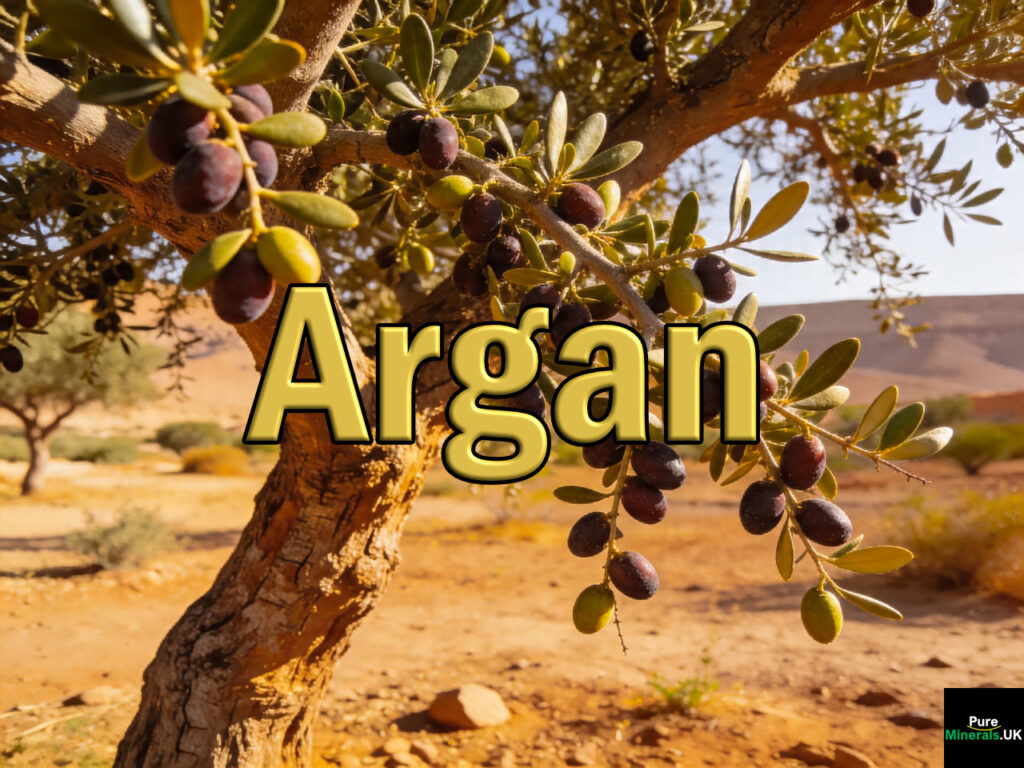
What Are Argan Nuts and Why Are They Traditionally Valued?
Argan nuts are the seeds found within the fruit of the argan tree (Argania spinosa), native to Morocco. They are primarily valued as the source of argan oil, widely used in both culinary and cosmetic applications due to its distinctive fatty acid profile and natural antioxidant content.
Definition
Argan nuts are the hard-shelled seeds extracted from the fruit of the argan tree (Argania spinosa), containing kernels that are pressed to produce argan oil.
Extended Definition
The argan tree (Argania spinosa) is a drought-resistant species endemic to southwestern Morocco, adapted to arid and semi-arid environments. Its fruit consists of a fleshy outer layer surrounding a tough nut, which typically contains one to three oil-rich kernels.
These kernels are the primary source of argan oil, a product traditionally extracted through mechanical pressing. Culinary argan oil is produced from lightly roasted kernels, giving it a characteristic nutty aroma, while cosmetic oil is typically made from raw kernels.
Nutritionally, argan oil is rich in monounsaturated and polyunsaturated fatty acids, particularly oleic and linoleic acids. It also contains vitamin E (tocopherols) and various phenolic compounds, which contribute to its oxidative stability and biological activity.
Whole argan nuts are not typically consumed directly due to their extremely hard shells and the processing required to access the kernels. Instead, their importance lies in oil production, which has been a central component of traditional Berber diets and regional economies for centuries.
Key Facts
- Botanical Name: Argania spinosa
- Plant Type: Evergreen tree (seed/nut)
- Edible Part: Kernel (inside the hard nut)
- Macronutrient Profile: High in fats (primarily unsaturated fatty acids)
- Notable Micronutrients: Vitamin E (tocopherols)
- Natural Compounds: Polyphenols, sterols, antioxidants
- Typical Preparation: Kernels extracted and pressed to produce oil
- Common Uses: Culinary oil, traditional dishes, cosmetic applications
- Taste Profile: Nutty and aromatic (culinary oil)
- Culinary Status: Regionally important; globally valued as specialty oil
Article-At-A-Glance: Argan Nuts & Their Nutritional Power
- Argan oil is composed of roughly 80% unsaturated fatty acids, making it one of the most nutritionally dense plant oils available.
- There are two distinct types of argan oil — food grade and cosmetic grade — and the difference comes down to one critical step in processing.
- Argan nuts contain a unique combination of polyphenols, tocopherols, squalene, CoQ10, and sterols that go far beyond basic nutrition.
- Traditional Moroccan culture has used argan oil for centuries, and modern European chefs have recently caught on to its culinary value.
- The argan tree supports an entire ecosystem and economy in Morocco — understanding this adds real weight to every drop of oil.
Argan nuts are quietly one of the most nutritionally sophisticated foods on the planet — and most people only know them as a hair product.
The argan tree (Argania spinosa) grows almost exclusively in the semi-arid regions of southwestern Morocco, and its nuts have been a dietary and medicinal staple for Berber communities for centuries. Today, argan oil is recognized globally — not just for cosmetic use, but as one of the rarest and most nutritionally complex culinary oils in the world.
Argan Nuts Are One of Nature’s Most Nutritious Foods
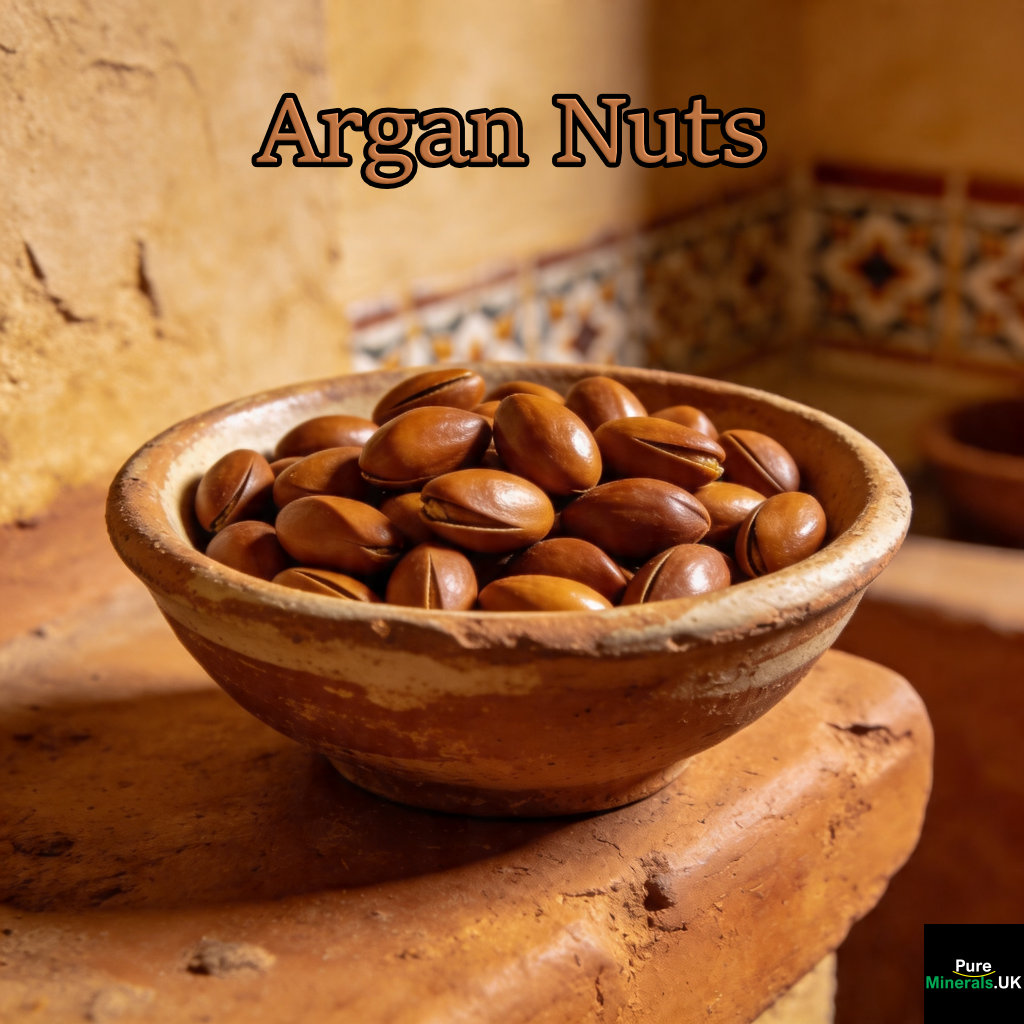
The nutritional value locked inside an argan nut isn’t accidental — it’s the result of a tree that has adapted to survive in one of the harshest environments on Earth. That resilience translates directly into the chemical density of the oil extracted from its kernels. What emerges is a golden oil packed with bioactive compounds that support cardiovascular health, skin integrity, and cellular function.
Scientific research spanning over 30 years has consistently highlighted argan oil’s promising role in human health. It stands out among vegetable oils because its benefits come not just from its fatty acid profile, but from an entire ecosystem of bioactive molecules working together.
Nutritional Composition of Argan Nuts
The nutritional power of argan nuts is almost entirely delivered through the oil extracted from their kernels. That oil’s profile is dominated by fatty acids — which account for the majority of its composition — but the real story is in the supporting cast of bioactive compounds that make argan oil nutritionally exceptional.
Fatty Acid Profile: High in Oleic and Linoleic Acid
Argan oil is composed of approximately 80% unsaturated fatty acids, with only around 19g per 100g coming from saturated fat. The dominant fatty acids are oleic acid (the same heart-healthy monounsaturated fat found in olive oil) and linoleic acid, an essential omega-6 fatty acid the body cannot produce on its own. This ratio is what gives argan oil its reputation as one of the most nutritious oils in the world.
The fatty acid composition is also directly tied to the oil’s stability, shelf life, and nutritional effectiveness. A higher unsaturated fat content means greater bioavailability of fat-soluble nutrients and stronger support for cardiovascular and inflammatory health markers, much like the benefits found in sunflower oil.
Polyphenols, Tocopherols, and Squalene Content
Beyond fatty acids, argan oil contains a dense concentration of polyphenols — plant compounds with well-documented antioxidant activity. These work alongside tocopherols (the vitamin E family), which protect cell membranes from oxidative damage. Squalene, another notable compound in argan oil, is a natural antioxidant also found in olive oil and human sebum, making it especially compatible with skin and gut health.
Together, these three compound classes make argan oil far more than a simple fat source. They contribute to its anti-inflammatory properties, its role in protecting against oxidative stress, and its long history of use in both dietary and topical applications.
Sterols and CoQ10: The Lesser-Known Compounds
Argan oil also contains plant sterols and Coenzyme Q10 (CoQ10) — two compounds that rarely get discussed but are nutritionally significant. Plant sterols are known to support healthy cholesterol levels, while CoQ10 plays a direct role in cellular energy production and acts as a powerful antioxidant at the mitochondrial level. The presence of xanthophyll, a carotenoid pigment, rounds out argan oil’s profile as a genuinely complex nutritional food.
Two Types of Argan Oil and How They Differ
Not all argan oil is the same. The end use — whether food or cosmetics — determines everything about how the kernels are processed before pressing. This single distinction changes the oil’s color, aroma, flavor, and even its nutritional profile.
Cosmetic Grade: Cold-pressed from unroasted kernels
Cosmetic argan oil (listed on product labels under the INCI name Argania spinosa kernel oil) is cold-pressed from unroasted argan kernels. Skipping the roasting step preserves certain compounds beneficial for topical application while producing a lighter, more neutral oil. This is the version you’ll find in serums, conditioners, and moisturizers.
Because it bypasses roasting, cosmetic argan oil has a milder scent and a lighter consistency — both desirable traits for skincare formulations. However, it lacks the rich, nutty flavor profile that makes food-grade argan oil so prized in culinary settings.
- Source: Unroasted argan kernels
- Pressing method: Cold-pressed
- Color: Pale yellow to golden
- Scent: Mild, neutral
- Primary use: Skin serums, hair treatments, cosmetic formulations
- Flavor: Not intended for consumption
This version is what most Western consumers encounter first, which is partly why argan oil’s reputation as a food ingredient has taken longer to gain mainstream traction outside Morocco.
Food-Grade: Cold-pressed from roasted kernels
Food-grade Argan oil is produced by cold pressing kernels that have been roasted for a few minutes before extraction. That short roasting window is what unlocks argan oil’s signature golden color and distinctive hazelnut-like flavor — sweet, rich, and deeply nutty. It’s this version that Moroccan families have used as a primary fat source for generations.
The roasting process also contributes to the oil’s complex aromatic compounds, which is why top European chefs began incorporating it into their kitchens as a premium finishing oil. Food-grade argan oil is sweet with a nutty flavor and is widely recognized as one of the most nutritious oils in the world — a reputation built on both its fatty acid composition and its remarkable bioactive content.
How Argan Oil Is Extracted
The extraction process for argan oil is one of the most labor-intensive of any culinary oil in the world, which explains both its rarity and its price. From fruit collection to final filtration, every step requires precision, and shortcuts at any stage can compromise the oil’s quality, flavor, and nutritional integrity.
Food argan oil extraction follows six distinct steps: fruit collection, sun-drying, dehulling, nut breaking (kernel collection), kernel roasting, and cold-pressing. Oil decantation and filtration are then added to remove any remaining solids or impurities before the oil reaches its final form. The process shares similarities with sunflower oil production, which also involves careful extraction and purification steps.
The Traditional Hand-Press Method Used by Moroccan Women
For centuries, Berber women in Morocco have been the primary producers of argan oil, using hand-grinding techniques passed down through generations. After the kernels are roasted, they are ground using a stone rotary hand mill — a slow, physically demanding process that can take hours to produce even a small quantity of oil. The resulting paste is then kneaded by hand with water added gradually, and the oil is slowly squeezed out through pressure alone.
This traditional method is still practiced today, particularly in rural Moroccan communities. It produces an oil with an exceptionally rich flavor and full retention of bioactive compounds, since no heat beyond the initial roasting is applied. The hand-press process is also deeply cultural — it’s a communal activity, often performed in groups, that has shaped Berber women’s economic and social identity for generations.
The tradeoff is yield and time. Traditional hand extraction is slow and produces less oil per kilogram of kernels compared to mechanical methods. However, many artisan producers and food purists argue that the resulting oil’s flavor complexity and nutrient density are worth the difference.
Traditional Argan Oil Extraction — Step by Step
Step 1 — Fruit Collection: Argan fruits are harvested by hand or collected after falling naturally from the tree.
Step 2 — Sun-Drying: Fruits are dried in the sun to allow the outer pulp to shrink and separate from the nut.
Step 3 — Dehulling: The dried outer shell is removed to expose the hard argan nut inside.
Step 4 — Nut Breaking: The hard nut is cracked open — traditionally by hand between two stones — to extract the kernels.
Step 5 — Kernel Roasting: Kernels are lightly roasted for a few minutes to develop flavor (food grade only).
Step 6 — Cold Pressing: Roasted kernels are ground and pressed to extract the oil, followed by decantation and filtration.
Modern Semi-Industrial Mechanical Extraction
Most commercially available argan oil today is produced by women’s cooperatives in Morocco using semi-industrial mechanical extraction. In this process, the roasted kernels are fed into hydraulic or mechanical presses that apply consistent, controlled pressure to extract the oil at scale. This approach significantly increases output while maintaining cold-press standards, meaning no external heat is used during the pressing stage itself. The result is a high-quality oil that retains the essential fatty acids and bioactive compounds that define argan oil’s nutritional value.
How Extraction Method Affects Oil Quality and Stability
The characteristics, stability, and nutritive value of argan oil depend strongly on its fatty acid composition, and both the roasting temperature and pressing method influence how well those fatty acids are preserved. Over-roasting can degrade tocopherols and polyphenols, while excessive mechanical heat during pressing can oxidize the unsaturated fatty acids that give argan oil its nutritional edge. Quality-controlled semi-industrial extraction, when done correctly, preserves the full bioactive profile while delivering consistency that traditional hand methods can’t always guarantee at scale.
Traditional Uses of Argan Oil in Moroccan Culture
In Morocco, argan oil isn’t a luxury product — it’s a pantry staple. Berber families have relied on it as their primary cooking fat for centuries, and it appears in everything from simple breakfasts to celebratory meals. The oil’s rich, nutty warmth makes it a natural fit for both drizzling and dipping, and its cultural significance runs as deep as its flavor.
Amlou: Morocco’s Answer to Peanut Butter
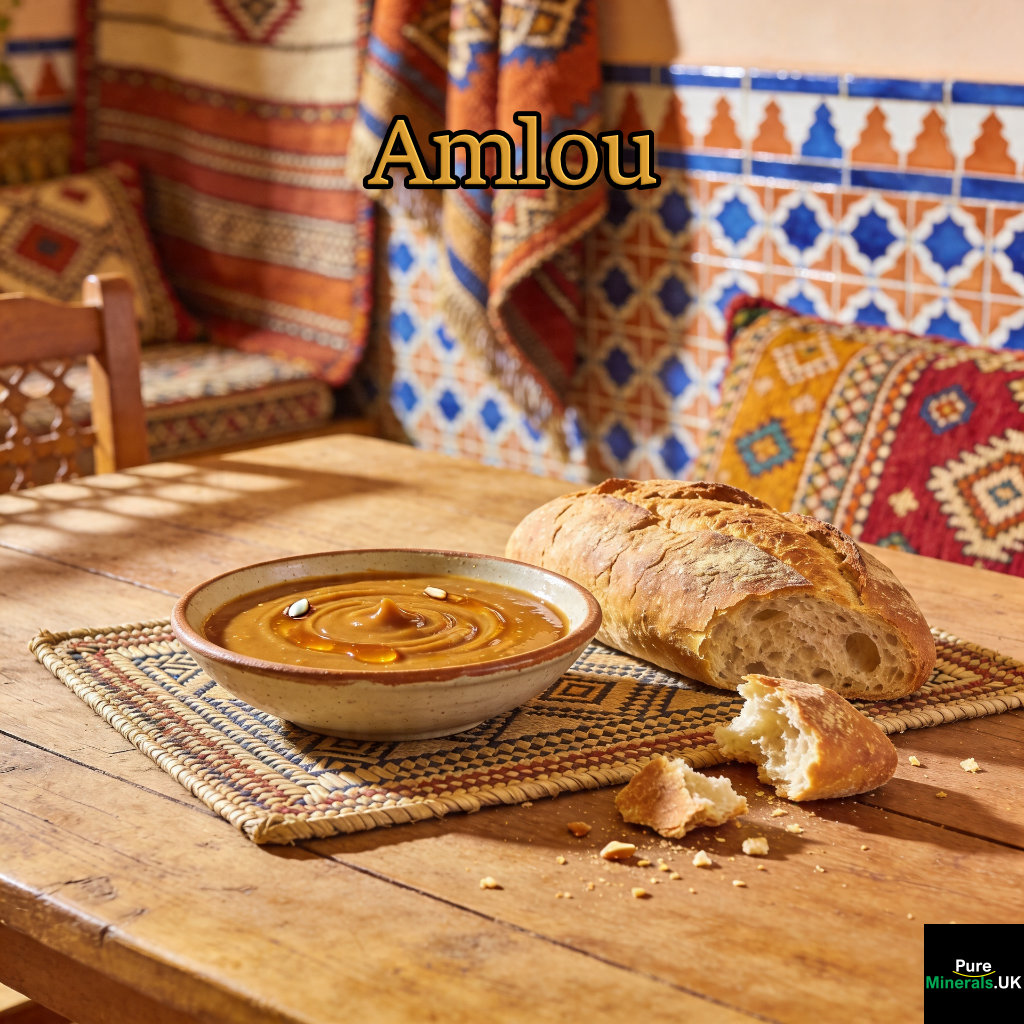
One of the most beloved traditional uses of food argan oil is in amlou — a thick, earthy paste made by combining argan oil with ground roasted almonds and honey. The texture is similar to natural peanut butter, but the flavor is deeper and more complex, with the argan oil lending a toasty, nutty richness that almonds alone can’t deliver. Amlou is traditionally eaten at breakfast, spread on fresh bread, and is considered both a comfort food and a source of sustained energy. It’s a perfect example of how Moroccan cuisine has long understood the nutritional value of argan before modern science confirmed it.
Argan Oil as a Finishing Oil for Savory Dishes
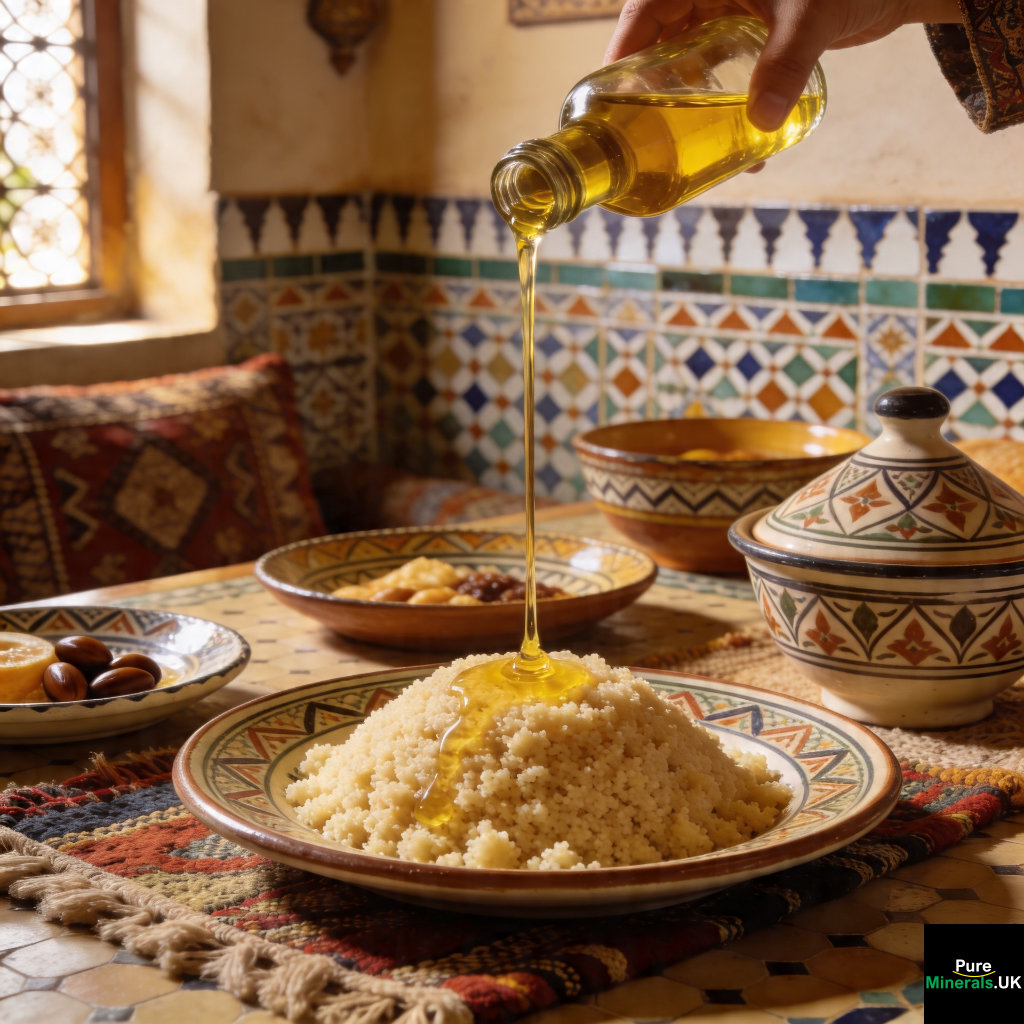
Food argan oil is not typically used for high-heat cooking — its rich flavor and delicate unsaturated fat composition make it best suited as a finishing oil, much like a premium extra-virgin olive oil. It’s drizzled over couscous, used to dress salads, and added as a final touch to tagines and grilled vegetables. A few years ago, argan oil gained significant traction among major European chefs who recognized its unique flavor profile as a premium culinary ingredient — one that could elevate simple dishes in the same way wild rice or aged balsamic does.
Argan Oil’s Role in Skin and Hair Wellness
Cosmetic argan oil has earned its place in high-end skincare and haircare for good reason. Its high tocopherol content delivers direct antioxidant protection to skin cells, while the squalene — a compound naturally found in human sebum — means the oil absorbs quickly without leaving a heavy residue. Linoleic acid helps maintain the skin’s barrier function, making cosmetic argan oil particularly useful for dry, damaged, or irritated skin. In hair care, it reduces frizz, adds shine, and helps protect against heat damage, largely due to the same fatty acid profile that makes food argan oil so nutritionally valuable when consumed.
The Argan Tree’s Ecological and Economic Value
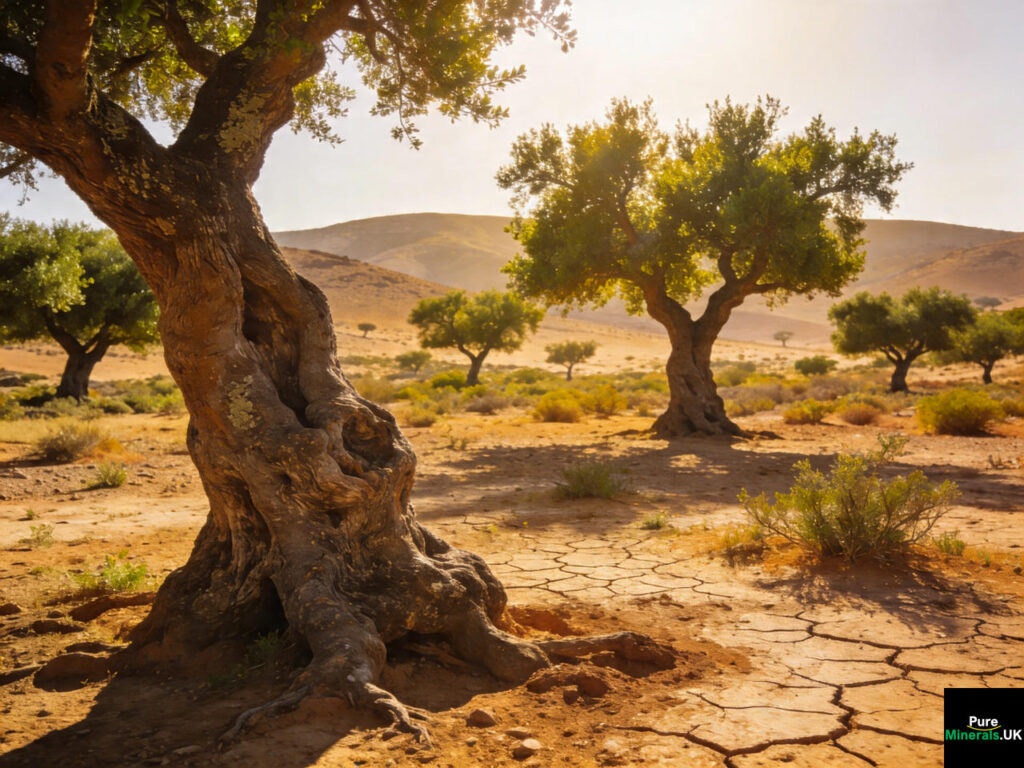
The argan tree (Argania spinosa) is as remarkable as the oil it produces. It is drought-resistant, lives for up to 200 years, and has an extraordinary deep root system that anchors soil in the arid and semi-arid landscapes of Morocco’s Souss Valley. This makes the tree a critical barrier against desertification — without it, large swaths of southwestern Morocco would be at serious risk of becoming barren. UNESCO recognized the argan forest ecosystem as a Biosphere Reserve, acknowledging its irreplaceable ecological role.
Economically, the argan industry has become a lifeline for rural Moroccan women. Women’s cooperatives handle the majority of argan oil production, giving thousands of women access to income, financial independence, and community standing in regions where formal employment opportunities are limited. These cooperatives operate under fair-trade principles and have become models for sustainable, community-based production. Every bottle of certified argan oil sold internationally is, in a very direct way, connected to this broader story of ecological preservation and women’s economic empowerment.
How the Tree Fights Soil Erosion in Arid Regions
The argan tree’s root system runs extraordinarily deep — deep enough to tap groundwater sources that most desert vegetation can’t reach. This anchors topsoil in place across Morocco’s Souss Valley, where wind and drought constantly threaten to strip the land bare. Without the argan forest acting as a natural buffer, the Sahara Desert would advance significantly further north, swallowing agricultural land and displacing communities that have farmed the region for centuries. UNESCO’s designation of the argan forest as a Biosphere Reserve wasn’t symbolic — it was a recognition that this tree is doing critical ecological work that nothing else in the region can replicate.
Women’s Cooperatives and the Economy Behind Argan Oil
The argan oil industry in Morocco is built almost entirely on the labor of Berber women, organized through cooperatives that handle everything from nut cracking to bottling and export. These cooperatives operate under fair-trade frameworks, ensuring that the women who perform the most demanding work in the production chain — hand-cracking the notoriously hard argan nuts — receive fair compensation. For many women in rural southwestern Morocco, cooperative membership represents their first access to independent income and financial decision-making outside the household.
The semi-industrial mechanical extraction model adopted by most cooperatives today has increased output substantially without eliminating the hand-labor steps that require skilled workers. The result is a production system that balances efficiency with community benefit. As global demand for argan oil has grown — driven by both the cosmetic and culinary markets — these cooperatives have expanded, creating a direct economic link between international consumers and rural Moroccan women’s livelihoods.
Argan Nuts Are Worth Adding to Your Wellness Routine
Few natural ingredients combine ecological rarity, cultural depth, and genuine nutritional science the way argan nuts do. Whether you’re using the food-grade oil as a finishing drizzle over roasted vegetables, incorporating it into a traditional amlou-style spread, or applying cosmetic-grade oil to support skin barrier function, you’re working with a compound that delivers on multiple levels — fatty acid balance, antioxidant protection, and anti-inflammatory support all in one. The science behind argan oil’s 80% unsaturated fat composition, its tocopherol and CoQ10 content, and its polyphenol density makes a compelling case that this is one natural ingredient genuinely worth the investment.
Important note: Argan Nuts
Argan oil is generally recognized as safe for culinary use when produced and stored correctly. Whole argan nuts are not typically consumed due to their hardness and processing requirements. As with all oils, intake should be moderate due to high energy density. Individuals with nut sensitivities should exercise caution. This information is provided for educational purposes and is not intended as medical advice.
Frequently Asked Questions
Here are answers to the most common questions people ask when exploring argan nuts and argan oil for the first time.
What Are Argan Nuts Made Of Nutritionally?
Argan nuts are the source of argan oil, which is composed of approximately 80% unsaturated fatty acids — primarily oleic acid and linoleic acid — alongside around 19g per 100g of saturated fat. Beyond the fatty acid profile, argan oil contains a rich array of bioactive compounds, including polyphenols, tocopherols (vitamin E), squalene, plant sterols, CoQ10, and xanthophyll. This combination of essential fats and antioxidant molecules is what distinguishes argan oil from most other plant oils nutritionally.
The presence of CoQ10 is particularly notable since it is rarely found in significant concentrations in plant-based oils. Together, these compounds contribute to cardiovascular support, cellular protection, and anti-inflammatory activity — all from a single cold-pressed oil.
Can You Eat Argan Nuts Directly or Only as Oil?
The argan kernel itself is not typically eaten raw or whole in the way you might snack on almonds or walnuts. The nutritional compounds in argan nuts are most bioavailable — and most palatable — when consumed as cold-pressed oil. Food-grade argan oil is the primary way the kernel’s nutrition is delivered in both traditional Moroccan diets and modern culinary applications.
What Is the Difference Between Food and Cosmetic Argan Oil?
The key difference is whether the kernels are roasted before pressing. Food-grade argan oil is cold-pressed from roasted kernels, giving it a golden color and rich hazelnut flavor. Cosmetic argan oil is cold-pressed from unroasted kernels, producing a lighter, more neutral oil designed for topical application to skin and hair. Cosmetic argan oil carries the INCI name Argania spinosa kernel oil on product labels. While both types share a similar base fatty acid composition, they are not interchangeable — food-grade oil is intended for consumption, and cosmetic oil is formulated for external use.
How Is Traditional Argan Oil Made in Morocco?
Traditional argan oil production follows six core steps: fruit collection, sun-drying, dehulling, nut breaking to extract the kernels, kernel roasting (for food grade), and cold pressing. In the traditional hand method, Berber women grind the roasted kernels using a stone rotary mill, then knead the resulting paste by hand while gradually adding water to coax out the oil. The process is slow — hours of labor for a relatively small yield — but produces an oil with deep flavor complexity and full retention of bioactive compounds. Today, most commercial production uses semi-industrial mechanical pressing by women’s cooperatives, which maintains cold-press standards while significantly increasing output.
What Makes Argan Oil One of the Rarest Culinary Oils in the World?
Argan oil’s rarity comes down to geography, biology, and labor. The argan tree grows almost exclusively in a specific region of southwestern Morocco, and it cannot simply be cultivated at scale elsewhere. The nuts must be harvested and processed largely by hand, with the most labor-intensive step — cracking open the famously hard argan nut — still done manually even in semi-industrial operations.
The yield is also low relative to the input required. It takes a significant quantity of argan nuts to produce even a small bottle of oil, and the entire process from fruit collection to finished product involves multiple skilled steps that can’t be rushed without degrading quality. This makes authentic, food-grade argan oil genuinely scarce compared to oils like sunflower or olive.
That rarity is exactly what drew elite European chefs to argan oil once they encountered its flavor — a sweet, nutty, hazelnut-like depth that no other culinary oil replicates. Combined with its extraordinary nutritional profile, argan oil occupies a unique position as both a functional food and a premium culinary ingredient.