

Published: 26 November 2025
Last Updated: 23 April 2026
This article is periodically reviewed and updated to reflect current scientific understanding by Vic George.

What Is Silicon and Why Is This Structural Trace Mineral Important for Collagen Formation, Bone Strength, and Healthy Hair, Skin, and Nails?
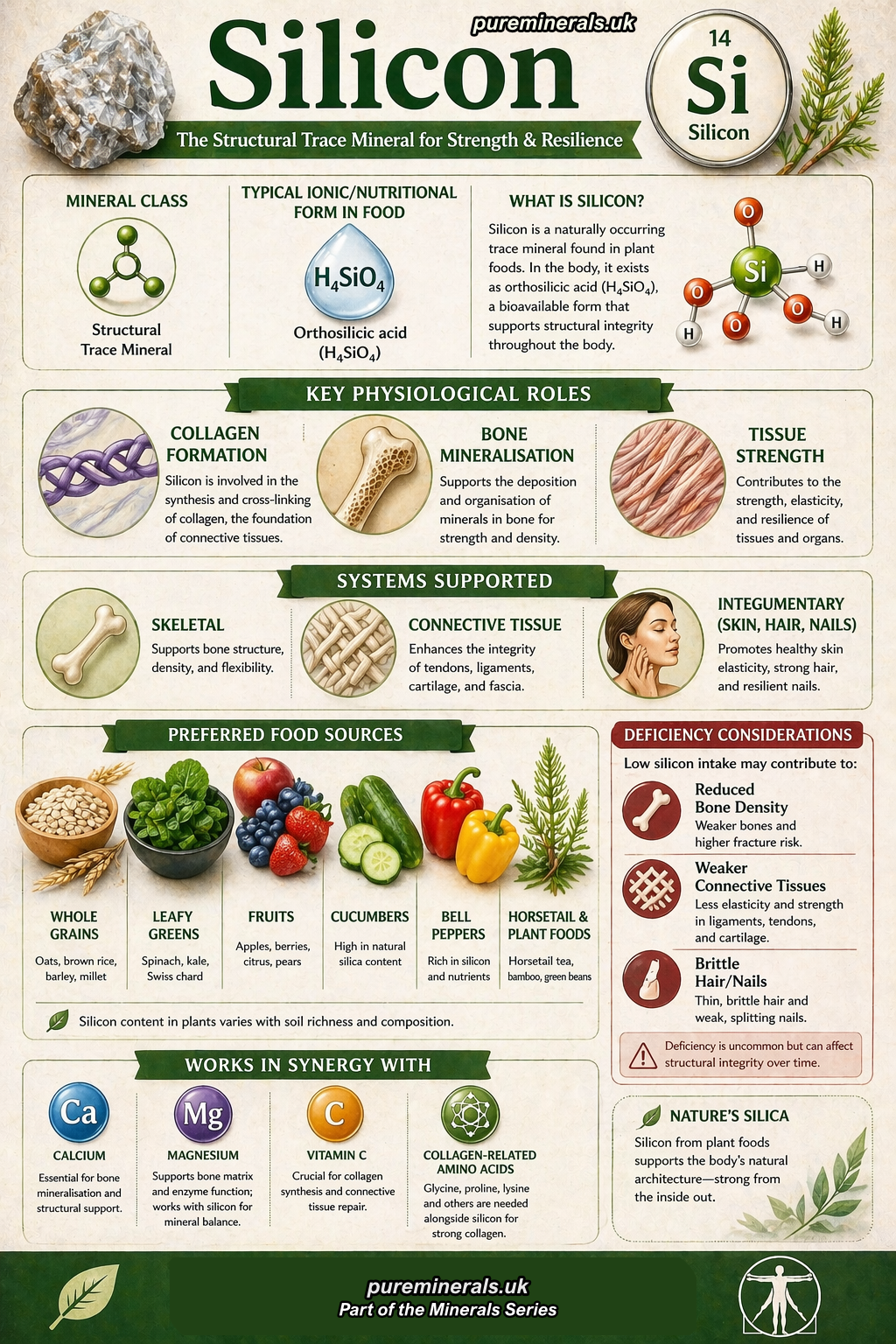
Silicon is a structural trace mineral involved in collagen formation, bone density, connective tissue strength, and healthy hair, skin, and nails. In foods, silicon appears mainly as orthosilicic acid (OSA), the bioavailable form that the body readily absorbs. Adequate silicon supports skeletal development, joint flexibility, and the maintenance of strong, resilient tissues.
Definition:
Silicon is a naturally occurring trace element found in plant foods, especially grains, leafy greens, fruits, and horsetail extract. It contributes to the formation of collagen and glycosaminoglycans—key components of skin, bones, and connective tissues. Orthosilicic acid is its primary bioavailable dietary form.
Silicon plays a structural role within the body, supporting collagen synthesis, bone mineralisation, and the integrity of hair and nails. The mineral occurs in foods largely as orthosilicic acid (H₄SiO₄), a soluble form that is absorbed through the digestive tract. Silicon enhances the deposition of calcium into bone, aids in maintaining joint and cartilage health, and contributes to skin elasticity and strength. Plant-based diets typically provide consistent and safe amounts of bioavailable silicon, especially from whole grains and vegetables.
Key Facts:
- Chemical symbol: Si
- Mineral class: Structural trace mineral
- Typical ionic/nutritional form in food: Orthosilicic acid (H₄SiO₄)
- Key physiological roles: Collagen formation, bone mineralisation, tissue strength
- Systems supported: Skeletal, connective tissue, integumentary (skin, hair, nails)
- Preferred sources: Whole grains, leafy greens, fruits, cucumbers, bell peppers, horsetail-containing plant foods
- Deficiency considerations: Reduced bone density, weaker connective tissues, brittle hair/nails
- Interactions: Works with calcium, magnesium, vitamin C, and collagen-related amino acids
Key Takeaways
- Silicon is a vital structural mineral that strengthens skin by boosting collagen production and improving elasticity and hydration.
- Studies show higher silicon content in hair correlates with reduced hair loss and increased shine and strength.
- Silicon makes up a significant portion of nail composition, helping to prevent brittleness and promote faster growth.
- This essential mineral supports connective tissue health throughout the body, improving joint flexibility and bone density.
- Both dietary sources and topical applications of silicon can help achieve healthier skin, hair, and nails naturally.
Silicon: The Beauty Mineral Your Body Craves
Silicon is the second most abundant element on Earth and the third most abundant trace mineral in the human body. Despite its prevalence, many are unaware of silicon’s crucial role in maintaining beautiful skin, strong hair, and healthy nails. This essential structural mineral works silently behind the scenes to support collagen production, enhance tissue elasticity, and strengthen connective tissues throughout your body.
Unlike silicone (the synthetic polymer used in cosmetic procedures), natural silicon is a fundamental building block for healthy tissues. Your body contains approximately 7 grams of silicon, with the highest concentrations found in connective tissues, bones, tendons, the aorta, trachea, and skin. As we age, our natural silicon levels decline significantly, which directly correlates with the visible signs of aging we experience in our skin, hair, and nails.
How Silicon Strengthens Your Skin From Within
Silicon doesn’t just superficially improve your skin—it works at the structural level to enhance skin health from the inside out. This mineral is integral to skin strength and integrity, playing key roles in several biological processes that maintain youthful, resilient skin. By supporting the skin’s underlying structure, silicon helps create the foundation for a radiant, healthy complexion that topical products alone cannot achieve.
Silicon’s Role in Collagen Production
Collagen is the protein responsible for skin’s firmness and structure, and silicon is essential for its formation. Research shows that silicon activates hydroxylation enzymes that are crucial for collagen network formation. In simple terms, silicon helps your body combine the necessary nutrients to generate new collagen and prevent the breakdown of existing collagen fibers.
Physiological concentrations of orthosilicic acid have been shown to stimulate fibroblasts to secrete collagen type I, the most abundant collagen in skin tissue. This process becomes increasingly important as we age since natural collagen production declines by about 1% annually after age 20. By supporting optimal collagen synthesis, silicon helps maintain skin thickness, strength, and resilience against environmental damage.
Why Silicon Keeps Skin Elastic and Firm
Beyond collagen, silicon is also associated with the synthesis of glycosaminoglycans, complex molecules that help maintain skin’s structural integrity and moisture balance. These compounds, including hyaluronic acid, provide the skin with its plump, youthful appearance and ability to bounce back when stretched or compressed.
Silicon strengthens the connections between collagen, elastin, and glycosaminoglycans—the critical trio that determines skin elasticity. This improved cross-linking creates a stronger matrix that resists sagging and maintains firmness even as environmental factors and aging attempt to break it down. The result is skin that appears more lifted, toned, and structurally sound at any age.
The Silicon-Skin Hydration Connection
Proper hydration is essential for healthy skin, and silicon plays a surprising role in maintaining optimal moisture levels. Silicon helps skin cells retain water by supporting the production and maintenance of glycosaminoglycans, the skin’s natural moisture-binding molecules. These compounds can hold up to 1,000 times their weight in water, creating a natural reservoir of hydration within the dermis.
Additionally, silicon strengthens the skin barrier function, which prevents transepidermal water loss—the evaporation of moisture through the skin’s surface. By maintaining this protective barrier, silicon helps your skin retain essential moisture and nutrients while keeping irritants out. Well-hydrated skin appears more plump, smooth, and radiant, with fine lines and wrinkles becoming less noticeable.
Silicon vs. Silicone: Understanding the Difference
Silicon (Si) is a natural element essential for human health.
Silicone is a synthetic polymer used in beauty products and medical devices.
Silicon benefits skin from within through biological processes.
Silicone creates temporary cosmetic effects without addressing underlying skin health.
Silicon’s Amazing Benefits for Hair Growth and Strength
Just as silicon supports skin health, it also plays a fundamental role in hair vitality. Silicon is deposited in the hair shaft during formation, becoming an integral component of strong, healthy hair. Scientific studies suggest that higher silicon content in hair fibers correlates directly with several desirable hair qualities, making this mineral essential for anyone looking to improve their hair naturally.
How Silicon Reduces Hair Loss
Research has demonstrated a fascinating connection between silicon levels and hair retention. Strands with higher silicon content have been shown to have lower falling rates, suggesting that this mineral helps anchor hair more securely in the follicle. Silicon strengthens the connective tissue around hair follicles, providing a more stable environment for healthy growth cycles.
How Silicon Reduces Hair Loss
Research has demonstrated a fascinating connection between silicon levels and hair retention. Strands with higher silicon content have been shown to have lower falling rates, suggesting that this mineral helps anchor hair more securely in the follicle. Silicon strengthens the connective tissue around hair follicles, providing a more stable environment for healthy growth cycles.
Silicon also supports the blood vessels that supply nutrients to the hair follicles, ensuring they receive adequate nourishment for optimal growth. This improved circulation delivers essential vitamins, minerals, and oxygen directly to the follicle, creating the ideal conditions for strong hair growth. For those experiencing thinning hair, increasing silicon intake may help address one of the fundamental structural causes of hair loss. Learn more about other essential nutrients like phosphorus that support hair health.
Silicon’s Impact on Hair Thickness and Shine
Beyond preventing hair loss, silicon significantly enhances hair quality. Hair strands containing optimal levels of silicon appear noticeably thicker, with increased diameter and tensile strength. This increased thickness isn’t just an optical illusion—silicon actually strengthens the protein structure of each strand, making hair more resistant to breakage and damage.
Perhaps the most visible benefit of silicon for hair is increased brightness and shine. Silicon helps smooth the outer cuticle layer of the hair shaft, creating a more reflective surface that bounces light more effectively. This smoothing effect also reduces frizz and improves manageability, making silicon a true multitasker for hair health. The resulting glossy finish gives hair a healthy, vibrant appearance that’s impossible to achieve with styling products alone.
Stronger Nails Start With Silicon
Nail health often serves as a visible indicator of overall nutritional status, and silicon plays a particularly significant role in nail formation and strength. Silicon is one of the predominant minerals in nail composition, helping to create the hard, protective keratin structure. Understanding silicon’s relationship with nail health reveals why this mineral is essential for anyone struggling with brittle, weak nails.
Say Goodbye to Brittle Nails
Brittle, splitting nails are often a sign of silicon deficiency. Silicon creates cross-links between keratin proteins in the nail plate, forming a tight, durable structure that resists breaking and peeling. When silicon levels are insufficient, these cross-links become compromised, resulting in nails that split, chip, and break easily.
Supplementing with bioavailable silicon has been shown to significantly improve nail brittleness within just a few months. As new nail tissue grows with proper silicon incorporation, the visible portion of the nail becomes noticeably stronger and more flexible. This enhanced flexibility is particularly important, as it allows nails to bend slightly under pressure rather than breaking immediately.
How Silicon Speeds Up Nail Growth
Beyond strengthening existing nail tissue, silicon accelerates the growth of new, healthy nails. The mineral supports the metabolic processes in the nail matrix—the area where new nail cells are produced. With optimal silicon levels, these cells multiply more efficiently, pushing forward new nail growth at an increased rate.
The combination of faster growth and improved strength means that silicon can transform problematic nails relatively quickly. While the complete replacement of a fingernail takes about 6 months, many people notice improvements within just 4-8 weeks of increasing their silicon intake. This makes silicon supplementation one of the most effective natural approaches for addressing chronic nail problems.
Silicon’s Critical Role in Connective Tissue Health
While the beauty benefits of silicon for skin, hair, and nails are impressive, this mineral’s impact extends throughout the entire body. Silicon is essential for maintaining the integrity of all connective tissues, including tendons, ligaments, cartilage, and blood vessels. This widespread influence makes silicon truly foundational for overall health and vitality, with benefits that extend far beyond cosmetic improvements.
Joint Health and Silicon
Healthy joints require strong, flexible connective tissues, and silicon is essential for maintaining these structures. Silicon supports the formation of collagen and elastin in joint cartilage, helping to cushion movement and prevent painful bone-on-bone contact. This mineral also strengthens the ligaments that hold joints together, improving stability and reducing the risk of injury.
Research has linked higher silicon intake with improved joint comfort and mobility, particularly in those with age-related joint concerns. By supporting the body’s natural repair processes, silicon helps maintain the structural integrity of joints even as they face daily wear and tear. For active individuals, adequate silicon levels may help maintain joint flexibility and comfort during exercise, potentially extending years of mobility.
How Silicon Supports Bone Density
Silicon plays a crucial role in bone formation, particularly in the early stages of mineralization. This essential element helps initialize the calcification process, creating sites where calcium and other minerals can be deposited to form strong, dense bone tissue. Studies have shown positive associations between higher silicon intake and improved bone mineral density, especially in the hip and spine regions most vulnerable to age-related decline.
Beyond simply facilitating calcium deposition, silicon improves the quality of bone architecture at the microscopic level. Silicon-rich bones demonstrate better collagen content and cross-linking, creating a more flexible, fracture-resistant structure. This combination of strength and flexibility is the hallmark of truly healthy bones that can withstand both chronic stress and sudden impacts without breaking.
The Silicon-Artery Connection
Perhaps one of silicon’s most overlooked functions is its critical role in maintaining arterial health. Silicon is a major structural component of arterial walls, providing the elasticity needed for proper blood flow and pressure regulation. Adequate silicon helps arteries maintain their flexibility while preventing calcium from depositing in arterial walls—a balance essential for cardiovascular health.
Signs You May Need More Silicon
Silicon requirements increase with age as natural levels decline, yet many people remain unaware of the signs that indicate insufficient intake. Unlike some nutrients with obvious deficiency symptoms, silicon depletion often manifests gradually across multiple systems. Recognizing these subtle indicators can help you address silicon insufficiency before more serious consequences develop.
Modern diets and lifestyle factors further complicate silicon status, as refined foods contain significantly less silicon than whole, natural options. Environmental factors like excessive aluminum exposure may also increase silicon requirements, as silicon helps protect the body from aluminum’s potentially harmful effects. Understanding these interactions makes monitoring for signs of silicon insufficiency even more important.
Skin Changes That Signal Silicon Deficiency
Declining skin elasticity is often one of the first signs of insufficient silicon intake. When skin loses its ability to snap back quickly after being stretched, it may indicate that the collagen and elastin networks aren’t receiving adequate silicon support. This manifests as sagging around the jawline, under the eyes, and along the neck. You may also notice skin that appears thinner and more fragile, with fine lines developing even in younger individuals. For more information on related nutrients, you can explore the benefits of magnesium nutrition in maintaining skin health.
Chronically dry, rough skin that doesn’t respond well to topical moisturizers can signal silicon deficiency as well. Without adequate silicon, the skin’s natural moisture barrier becomes compromised, leading to increased transepidermal water loss. Additionally, poor wound healing and prolonged recovery from skin injuries may indicate insufficient silicon levels, as this mineral is essential for tissue repair and regeneration.
Hair and Nail Problems Linked to Low Silicon
Hair that breaks easily, appears dull, or falls out in greater quantities than normal often reflects inadequate silicon status. Since silicon strengthens the hair shaft from within, its absence leads to structurally weaker strands that cannot withstand normal styling stress. You might notice increased hair in your brush or shower drain, along with hair that feels thinner and lacks natural shine despite using quality hair care products.
Nail problems provide perhaps the most visible indicators of silicon deficiency. Nails that peel in layers, break easily, or fail to grow to desired lengths suggest insufficient silicon for proper keratin formation. Longitudinal ridges, white spots, and nails that bend or tear rather than maintain their shape all point to a potential need for increased silicon intake. If your nails have deteriorated despite adequate protein and calcium intake, silicon may be the missing nutrient.
Joint and Bone Concerns
Joint discomfort that develops or worsens with age may partially stem from insufficient silicon. As a critical component of cartilage and connective tissue, silicon depletion can accelerate the natural wear and tear on joint surfaces. Pay attention to stiffness upon waking, decreased range of motion, or discomfort during activities that previously caused no issues, as these may indicate declining silicon levels affecting joint structures. For more information on minerals essential for joint health, explore the role of manganese nutrition.
While not immediately apparent without medical testing, reduced bone density often correlates with lower silicon status. Postmenopausal women and older adults should be particularly attentive to potential silicon insufficiency, as age-related bone density changes accelerate during these life stages. If you’ve experienced height loss, fractures from minimal trauma, or have been diagnosed with decreasing bone density, increasing silicon intake may provide valuable structural support. Additionally, maintaining adequate levels of other minerals like copper can also play a role in supporting bone health.
The Best Food Sources of Silicon
Nature provides abundant sources of bioavailable silicon, though modern food processing often removes this vital mineral. Whole foods contain silicon in forms that the body can utilize effectively, making dietary intake the preferred method for maintaining optimal levels. Understanding which foods contain the most bioavailable forms of silicon allows you to strategically enhance your body’s silicon stores through everyday eating.
Plant-Based Silicon Powerhouses

Green beans, spinach, bananas, and whole grains like oats and brown rice contain significant amounts of bioavailable silicon. These plant foods provide silicon primarily in the form of orthosilicic acid, which is readily absorbed by the human digestive system. Vegetables grown in silicon-rich soil typically contain more of this essential mineral, making locally grown, organic produce a particularly good source when available. For those interested in other minerals, consider exploring the benefits of manganese nutrition.

Herbs and botanical supplements often provide concentrated silicon sources. Horsetail extract (Equisetum arvense) stands out as one of nature’s richest sources of bioavailable silicon, containing up to 10% silicon by dry weight. Nettle, oatstraw, and bamboo extracts also provide substantial amounts. These botanicals can be consumed as teas or taken as supplements to significantly boost silicon intake beyond what’s typically available from everyday foods.
Beverages Rich in Bioavailable Silicon

Beer contains surprisingly high levels of soluble silicon, derived from the barley and hops used in brewing. The fermentation process makes this silicon particularly bioavailable, though moderation is obviously important when considering alcohol as a silicon source. For those who prefer non-alcoholic options, mineral waters often contain significant silicon levels, though the content varies considerably depending on the water source and filtration methods.

Traditional bone broths provide collagen and silicon in forms that directly support connective tissue health. The slow simmering of bones, joints, and attached tissues extracts silicon compounds that benefit skin, hair, nails, and joints. Adding silicon-rich vegetables and herbs to broths further enhances their nutritional value, creating a therapeutic food that directly addresses structural tissue needs.
Foods to Avoid That Deplete Silicon
Refined carbohydrates and heavily processed foods typically contain little silicon, as refining removes the silicon-rich outer portions of grains. The standard Western diet, with its emphasis on processed convenience foods, provides substantially less silicon than traditional diets based on whole foods. Simply shifting toward more whole, unprocessed options can significantly increase your silicon intake without requiring special supplements.
Excessive consumption of phosphoric acid, found in many carbonated beverages, may interfere with silicon absorption and utilization. Similarly, aluminum-containing antacids and processed foods with aluminum additives can compete with silicon in biological processes. Minimizing these potential antagonists while increasing silicon-rich foods creates the ideal conditions for optimizing this mineral’s benefits for skin, hair, and connective tissues.
Silicon Supplements: What You Need to Know
When dietary sources alone don’t provide sufficient silicon, supplements offer a concentrated alternative. The supplement market includes various forms of silicon, each with different bioavailability and effectiveness profiles. Understanding these differences helps you select the option most likely to deliver real benefits for skin, hair, and connective tissue health rather than passing through the body unutilized.
Different Forms of Silicon Supplements
Silicon supplements come in several forms, including orthosilicic acid, silicon dioxide, colloidal silicon, and plant-derived silicon like bamboo extract and horsetail. Each form has distinct characteristics that affect how well the body can absorb and utilize the silicon content. Some forms require conversion in the digestive tract before absorption, while others provide silicon in forms ready for immediate biological use.
Stabilized orthosilicic acid stands out as particularly effective, as it closely resembles the natural form of silicon found in the human body. This form has demonstrated superior absorption in scientific studies compared to other supplement types. Silicon bonded to other compounds, like choline-stabilized orthosilicic acid, further enhances bioavailability by protecting the silicon molecules from premature conversion to non-absorbable forms during digestion.
Finding the Most Bioavailable Silicon
Bioavailability—how efficiently your body can absorb and utilize a nutrient—varies dramatically between silicon supplement forms. Research indicates that liquid and gel-based silicon supplements typically provide better absorption than solid tablets or capsules containing silicon dioxide. The size of silicon particles also matters significantly, with nanoparticle and monomeric forms demonstrating superior absorption compared to larger silicon aggregates.
When evaluating silicon supplements, look for products that specifically address bioavailability in their formulation. Terms like “bioactive,” “stabilized,” or “solubilized” silicon suggest attempts to overcome the absorption challenges inherent in many silicon forms. Products combining silicon with supportive nutrients like vitamin C, biotin, and zinc may offer additional benefits, as these nutrients work synergistically with silicon to support collagen synthesis and tissue formation.
Proper Dosage Guidelines
Optimal silicon supplementation depends on individual factors, including age, gender, current silicon status, and specific health goals. Most research showing benefits for skin, hair, and connective tissue has used dosages ranging from 10-40mg of bioavailable silicon daily. Starting at the lower end of this range and gradually increasing allows you to assess your body’s response while minimizing the risk of digestive discomfort that occasionally occurs with higher doses.
Who Should Be Extra Careful With Silicon Supplements
While silicon is generally considered safe for most adults, certain populations should approach supplementation cautiously. Those with kidney conditions should consult healthcare providers before taking concentrated silicon supplements, as impaired kidney function can affect mineral metabolism. Individuals with silica hypersensitivity or a history of silica-related respiratory conditions should also exercise caution, though oral silicon supplements rarely trigger the same reactions as airborne silica particles.
Silicon-Based Beauty Products That Actually Work
Beyond internal supplementation, topical silicon products offer direct benefits for skin and hair. The cosmetic industry has embraced silicon in various forms, though product quality and effectiveness vary considerably. Understanding how silicon functions in topical applications helps you select products that deliver genuine structural improvements rather than temporary cosmetic effects.
Topical Silicon for Skin Rejuvenation
Silicon-based skincare products work by reinforcing the skin’s natural silicon content, supporting collagen networks, and enhancing hydration. Look for products containing stabilized orthosilicic acid, silanol derivatives, or silicon-rich botanical extracts like bamboo or horsetail. These ingredients penetrate beyond the skin surface to strengthen the dermal matrix, unlike silicones (dimethicone, cyclomethicone) that simply coat the skin without biological activity.
The most effective silicon skincare formulations combine bioavailable silicon with complementary ingredients like hyaluronic acid, peptides, and antioxidants. This multi-faceted approach addresses multiple aspects of skin aging simultaneously, supporting both immediate hydration and long-term structural improvements. For optimal results, apply silicon-rich products to clean, slightly damp skin to maximize absorption and penetration into the deeper dermal layers where silicon exerts its primary effects.
Hair Products With Silicon That Deliver Results
Hair care products containing bioactive silicon forms can strengthen hair from the cuticle inward, unlike silicone-based products that merely coat the hair shaft. Look for shampoos, conditioners, and treatments containing orthosilicic acid, silicon amino acid complexes, or botanical silicon sources. These ingredients can penetrate the hair shaft to reinforce its protein structure rather than creating temporary smoothness that washes away.
Leave-in treatments and scalp serums with bioavailable silicon offer particularly impressive results, as they allow extended contact time for silicon to interact with hair and follicle structures. Products combining silicon with keratin, panthenol, and amino acids provide synergistic benefits by supporting multiple aspects of hair formation and strength. For thinning hair, scalp treatments containing silicon along with circulation-enhancing ingredients may help create optimal conditions for healthy new growth.
Weekly silicon-infused hair masks can deliver intensive repair for damaged or weakened hair. These concentrated treatments typically contain higher concentrations of active silicon compounds along with conditioning agents that help the silicon penetrate the hair shaft more effectively. Regular use of such treatments can progressively improve hair strength and appearance, with benefits that accumulate over time rather than disappearing after shampooing.
Top Silicon-Rich Hair Products Worth Trying
Silica-infused shampoos without harsh sulfates
Orthosilicic acid leave-in treatments
Bamboo extract hair masks
Horsetail-based scalp serums
Silicon amino acid complex conditioners
How to Spot Effective Silicon in Product Labels
Navigating product labels to identify truly effective silicon forms requires understanding specific terminology. Look for “orthosilicic acid,” “monomethylsilanetriol,” “silanol,” or “bioavailable silicon” on ingredient lists—these indicate active forms that can interact with biological tissues. Avoid products that list only “silica” or “silicon dioxide” as these larger particles typically cannot penetrate skin or hair to provide structural benefits, functioning instead as thickening agents or exfoliants.
Make Silicon Work For Your Beauty and Health
Integrating silicon-rich foods, appropriate supplements, and effective topical products creates a comprehensive approach to structural tissue support. This three-pronged strategy addresses silicon needs from multiple angles, optimizing delivery of this essential mineral to the tissues that need it most. Start with dietary improvements, adding silicon-rich foods to your daily meals before considering supplementation for additional support.
Remember that silicon works synergistically with other nutrients, particularly vitamin C, zinc, and amino acids involved in collagen production. Ensuring adequate intake of these complementary nutrients maximizes silicon’s effectiveness for skin, hair, and connective tissue health. With consistent attention to silicon intake, most people notice significant improvements in skin elasticity, hair strength, and nail quality within 2-3 months, with benefits continuing to accumulate over longer periods.
Silicon Infographic
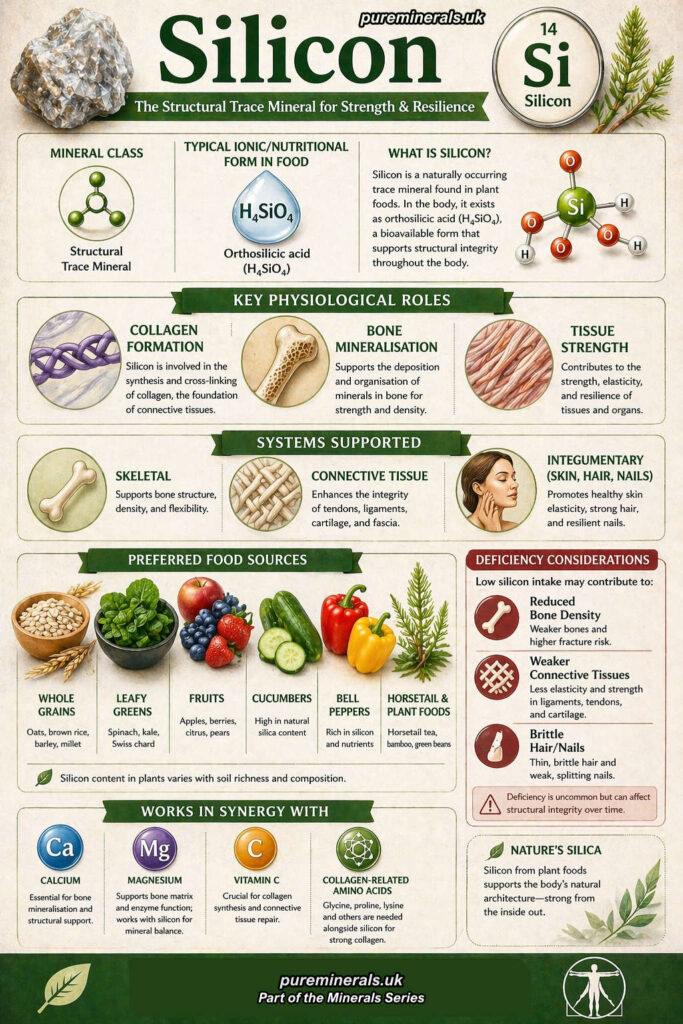
Download the full high-resolution Silicon infographic for offline reference.
Explore more minerals in the full Minerals Hub
Frequently Asked Questions
As interest in silicon’s beauty benefits grows, so do questions about its use, safety, and effectiveness. These frequently asked questions address common concerns and misconceptions, providing evidence-based answers to help you make informed decisions about incorporating silicon into your health and beauty regimen.
Is silicon the same as silicone used in cosmetic procedures?
No, silicon and silicone are fundamentally different substances. Silicon (Si) is a natural element found throughout the human body and is essential for healthy connective tissue. Silicone, in contrast, is a synthetic polymer containing silicon, oxygen, and other elements, used in medical devices and cosmetic fillers. The confusion between these terms often leads people to mistakenly associate natural silicon with artificial cosmetic interventions.
While both substances contain the element silicon, their biological activity differs dramatically. Natural silicon participates in essential biochemical processes that strengthen tissues from within, while silicone creates physical volume or barriers without biological activity. Understanding this distinction helps clarify why dietary silicon supports natural beauty rather than creating artificial cosmetic effects.
How long does it take to see results from increasing silicon intake?
Most people notice initial improvements in nail strength and growth within 4-6 weeks of increasing silicon intake, as nails grow relatively quickly and incorporate new silicon during formation. Hair benefits typically become apparent after 2-3 months, while skin improvements may take 3-6 months to become clearly visible, reflecting the slower turnover rate of skin collagen. Full results develop gradually as tissues incorporate silicon during their natural regeneration cycles.
Can children and teenagers benefit from silicon supplements?
Young people generally obtain sufficient silicon from diet alone when consuming whole foods, as their silicon absorption remains efficient and natural levels are typically higher than in adults. Focused supplementation is rarely necessary unless specific deficiency symptoms are present. For teenagers with acne or problematic skin, ensuring adequate dietary silicon through whole foods may support skin healing and resilience, but supplements should only be considered with a healthcare provider’s guidance. Additionally, maintaining balanced levels of other minerals like magnesium can also contribute to overall skin health.
Does cooking affect the silicon content in foods?
Cooking methods have minimal impact on silicon content in most foods, as silicon compounds remain stable under normal cooking temperatures. However, excessive boiling may leach some soluble silicon compounds into cooking water. To preserve maximum silicon content, consider steaming, roasting, or sautéing silicon-rich vegetables rather than boiling them extensively, or incorporate the cooking liquid into soups and sauces to retain any silicon that transfers into the water.
Can too much silicon be harmful to health?
Silicon from dietary sources and appropriate supplements presents minimal risk of toxicity, as excess silicon is readily excreted through the kidneys. The upper tolerable limit hasn’t been officially established, but research suggests that intakes up to 700-1,750mg daily appear safe for most adults. However, extremely high supplemental doses may potentially burden the kidneys, particularly in those with existing kidney conditions. As with most nutrients, moderation and appropriate dosing, based on individual needs, yield optimal results without unnecessary risks.
Understanding silicon’s fundamental role in structural tissues reveals why this often-overlooked mineral deserves attention in any comprehensive beauty and wellness plan. By supporting the basic building blocks of skin, hair, and connective tissues, silicon helps create beauty that radiates from genuine structural health rather than temporary cosmetic fixes. Whether through dietary improvements, targeted supplements, or effective topical products, increasing your silicon intake offers some of the most fundamental support possible for lifelong structural tissue health.
For natural beauty that truly stands the test of time, few nutrients offer the comprehensive structural support that silicon provides. From strengthening skin’s collagen matrix to enhancing hair’s natural shine and resilience, silicon works at the most fundamental level to support your body’s innate beauty-building processes. By giving your body the silicon it needs, you’re not just addressing surface appearances—you’re nurturing the essential foundation from which true radiance emerges.
- Focus on whole, unprocessed foods rich in natural silicon
- Consider liquid silicon supplements for optimal absorption
- Use silicon-rich topical products that contain bioavailable forms
- Allow 2-3 months for noticeable improvements to develop
- Combine silicon with synergistic nutrients like vitamin C and zinc
The journey toward optimal structural health with silicon exemplifies the power of working with your body’s natural processes rather than against them. By supporting the fundamental building blocks of beautiful skin, hair, and nails, silicon helps create results that improve with time rather than requiring constant maintenance or intervention. This gentle yet powerful approach aligns perfectly with the principles of natural beauty—enhancing what nature already designed rather than attempting to override it. For more insights, explore the benefits of silica for skin.
For those seeking the natural solution to structural tissue concerns, silicon stands as one of nature’s most effective answers. The Natural Silica Company provides premium, bioavailable silicon supplements specifically formulated to support skin elasticity, hair strength, and connective tissue health naturally.