

Published: 26 November 2025
Last Updated: 21 April 2026
This article is periodically reviewed and updated to reflect current scientific understanding by Vic George.
Fact-Checked: 1 other authoritative medical/scientific reference. See our Editorial Policy.

What Is Potassium and Why Is This Essential Electrolyte Critical for Heart Rhythm, Nerve Function, and Fluid Balance?
Potassium is an essential electrolyte that supports heart rhythm, nerve signalling, muscle contraction, and fluid balance. In foods, potassium appears as the readily absorbed K⁺ ion, especially abundant in fruits, vegetables, legumes, and leafy greens. Adequate potassium intake promotes cardiovascular stability, blood pressure regulation, and overall cellular function across the body.
Definition:
Potassium is a major intracellular electrolyte found widely in plant foods. It maintains electrical gradients across cell membranes, supports normal muscular and neural activity, and helps regulate hydration and blood pressure. The K⁺ ion is highly bioavailable and essential for metabolic homeostasis.
Potassium plays a central role in maintaining the body’s electrical activity. As K⁺, it balances sodium to regulate nerve impulses, muscle contraction, and heartbeat rhythm. High-potassium diets, particularly those rich in unprocessed plant foods, support healthy blood pressure and reduce strain on the cardiovascular system. The body uses potassium to maintain intracellular fluid levels, assist kidney filtration, and activate metabolic enzymes. Plant-based potassium is efficient, safe, and crucial for electrolyte balance, especially in active individuals.
Key Facts:
- Chemical symbol: K
- Mineral class: Essential electrolyte
- Typical ionic form in food: K⁺
- Key physiological roles: Heart rhythm, nerve signalling, muscle contraction, hydration balance
- Systems supported: Cardiovascular, nervous, muscular, renal
- Preferred sources: Fruits, vegetables, legumes, leafy greens, potatoes, bananas, dried fruits
- Deficiency considerations: Muscle weakness, irregular heartbeat, fatigue, elevated blood pressure
- Interactions: Works closely with sodium, magnesium, and chloride to regulate electrolytes and nerve activity
Key Takeaways
- Potassium actively lowers blood pressure by balancing sodium levels and relaxing blood vessel walls, with studies showing reductions of 4.7 mm Hg in systolic and 3.5 mm Hg in diastolic pressure.
- Your heart’s electrical system relies on potassium for proper rhythm and function, making adequate intake crucial for preventing arrhythmias.
- Most Americans consume only half the recommended daily potassium intake (3,500-4,700 mg), increasing their risk of hypertension and cardiovascular issues.
- Potassium maintains proper fluid balance between cells, working alongside sodium to prevent dehydration and support optimal heart function.
- Natural food sources like avocados, leafy greens, and bananas provide potassium in forms that your body can efficiently use for heart health benefits.
Why Your Heart Desperately Needs Potassium
Your heart is silently begging for more potassium. This essential mineral, often overshadowed by discussions about calcium and magnesium, is actually one of your cardiovascular system’s greatest allies. Potassium works behind the scenes to maintain proper heart rhythm, regulate blood pressure, and ensure efficient muscle contractions with every beat. Yet according to research, most Americans consume only about half of the recommended daily intake of potassium, creating a dangerous mineral imbalance that puts unnecessary strain on the heart.
What makes potassium particularly valuable is its unique ability to counteract the harmful effects of excess sodium in our diets. While sodium causes your body to retain water and increase blood volume (raising blood pressure), potassium helps your kidneys eliminate excess sodium through urine and relaxes blood vessel walls. This balancing act is so powerful that researchers have found increasing potassium intake can lower blood pressure readings by 4.7 mm Hg systolic and 3.5 mm Hg diastolic on average – comparable to the effects of some prescription medications but without the side effects.
Beyond blood pressure management, potassium serves as an essential component in your heart’s electrical system. Each heartbeat begins with an electrical impulse that depends on the precise movement of electrolytes – including potassium – across cell membranes. When potassium levels fall too low, this electrical signaling becomes disrupted, potentially causing irregular heartbeats (arrhythmias) that can range from harmless to life-threatening. The heart’s desperate need for potassium becomes most evident during physical exertion, when depleted stores can lead to weakness, fatigue, and increased cardiovascular strain.
How Potassium Regulates Blood Pressure Naturally
Blood pressure regulation might be potassium’s most impressive heart-protecting feature. When your potassium levels are optimal, your blood vessels remain more flexible and dilated, allowing blood to flow through with less resistance. This natural vasodilation effect means your heart doesn’t need to work as hard to pump blood throughout your body.
The Sodium-Potassium Balance That Controls Your Blood Pressure
Think of sodium and potassium as opposing forces in a delicate balancing act that determines your blood pressure. While sodium increases blood pressure by causing water retention and arterial constriction, potassium counteracts these effects. Your body maintains this balance through specialized pumps in cell membranes called sodium-potassium pumps, which actively move sodium out of cells while bringing potassium in. When you consume adequate potassium, these pumps function optimally, helping maintain healthy blood pressure.
Meta-analyses of clinical trials have consistently shown that increasing potassium intake significantly reduces blood pressure in both hypertensive and normotensive individuals. The effect is particularly pronounced in people who consume high-sodium diets or who already have elevated blood pressure. Studies show the greatest benefits occur when baseline potassium intake is less than 3,510 mg per day – a level that unfortunately describes the majority of the American population, who typically consume just 2,500 mg daily.
Interestingly, the blood pressure-lowering effects of potassium appear to be dose-dependent, meaning greater intake correlates with greater reductions in blood pressure (within safe ranges). This relationship makes potassium a powerful tool for natural blood pressure management, especially when combined with other heart-healthy practices like reducing sodium intake, regular exercise, and stress management.
How Potassium Relaxes Blood Vessel Walls
Potassium’s ability to relax blood vessel walls (vasodilation) represents one of its most direct impacts on heart health. When potassium levels in the bloodstream increase, specialized potassium channels in the smooth muscle cells of your arteries open, allowing potassium to flow into cells. This triggers a cascade of reactions that ultimately leads to muscle relaxation and wider blood vessels.
The science behind this process is fascinating: when potassium channels open, they cause hyperpolarization of the cell membrane, making it harder for calcium channels to open. With less calcium entering the cells, the smooth muscle can’t contract as forcefully, resulting in relaxation of the vessel walls. This widening of the blood vessels reduces peripheral resistance and lowers the pressure needed to push blood through your circulatory system.
For people with hypertension, this vasodilation effect is particularly valuable. Studies have shown that supplemental potassium at doses between 2,340 and 2,535 mg daily can produce significant reductions in blood pressure. However, whole food sources of potassium typically provide additional benefits through complementary nutrients and compounds that support overall cardiovascular health.
Why Most Blood Pressure Medications Don’t Replace Proper Potassium Levels
While many blood pressure medications effectively lower readings, they often fail to address the underlying electrolyte imbalances that contribute to hypertension. In fact, several common blood pressure medications, particularly diuretics, can actually deplete potassium levels further by increasing urinary excretion of this vital mineral. This creates a problematic situation where medication temporarily lowers blood pressure while potentially worsening the mineral imbalance that contributed to high blood pressure in the first place.
Why Most Blood Pressure Medications Don’t Replace Proper Potassium Levels
While many blood pressure medications effectively lower readings, they often fail to address the underlying electrolyte imbalances that contribute to hypertension. In fact, several common blood pressure medications, particularly diuretics, can actually deplete potassium levels further by increasing urinary excretion of this vital mineral. This creates a problematic situation where medication temporarily lowers blood pressure while potentially worsening the mineral imbalance that contributed to high blood pressure in the first place.
Cardiologists sometimes prescribe potassium supplements alongside certain blood pressure medications, but this approach doesn’t provide the same comprehensive benefits as obtaining potassium naturally through food. The body absorbs and utilizes potassium from whole foods more efficiently, and these foods contain complementary nutrients that support cardiovascular health through multiple pathways. Additionally, the dose control and bioavailability of potassium from natural sources typically poses less risk of adverse effects than supplements. For instance, magnesium found in many potassium-rich foods plays a crucial role in maintaining heart health.
For those taking blood pressure medications, working with healthcare providers to monitor potassium levels becomes especially important. Regular blood tests can detect imbalances before they cause symptoms, and dietary adjustments offer a gentle way to support optimal potassium levels without interfering with medication effectiveness. The goal should be creating synergy between proper nutrition and medical treatment rather than relying exclusively on either approach. Additionally, understanding the role of magnesium nutrition can further enhance this balance.
Potassium’s Critical Role in Heart Rhythm and Function
Your heart beats about 100,000 times daily, requiring precise electrical coordination that depends heavily on potassium. This mineral plays a fundamental role in generating and conducting the electrical impulses that trigger each heartbeat. Without sufficient potassium, this finely-tuned system can malfunction, potentially leading to irregular heartbeats, palpitations, and in severe cases, life-threatening arrhythmias.
How Electrical Signals in Your Heart Depend on Potassium
Every heartbeat begins with an electrical impulse generated by specialized cells called pacemaker cells. These impulses travel through the heart muscle, causing it to contract in a coordinated sequence that efficiently pumps blood. Potassium, along with other electrolytes, creates the electrical potential necessary for these signals to function properly by moving across cell membranes through specialized channels.
During each heartbeat’s resting phase (diastole), potassium concentrations increase inside heart muscle cells, establishing the proper electrical charge needed for the next contraction. Then, during contraction (systole), the balance shifts again. This constant movement of potassium ions in and out of cells creates the electrical current that powers your heart’s rhythm. Even minor disruptions to this process can alter the heart’s timing and efficiency.
Medical professionals monitor potassium levels closely in cardiac patients because both high and low levels can destabilize heart function. ECG readings often show characteristic changes when potassium levels fall outside the normal range, providing an early warning system for potentially dangerous imbalances. For individuals with existing heart conditions, maintaining optimal potassium levels becomes even more critical for preventing complications.
Warning Signs Your Heart May Be Suffering from Low Potassium
Your body often sends subtle signals when potassium levels drop below optimal ranges. Heart palpitations—feelings of your heart fluttering, racing, or skipping beats—can be early warning signs that your heart’s electrical system is struggling due to insufficient potassium. These sensations might come and go, sometimes triggered by stress or physical activity, but should never be ignored, especially if they’re recurrent.
Fatigue that seems disproportionate to your activity level may indicate your heart isn’t functioning efficiently due to low potassium. This happens because cardiac output can decrease when the heart muscle can’t contract properly, reducing oxygen delivery throughout your body. Some people also experience lightheadedness or dizziness when standing quickly, as the heart struggles to adjust blood pressure rapidly enough during position changes.
More severe potassium deficiency can manifest as muscle weakness or cramping, which reflects the same electrical disruption occurring in skeletal muscles that affects the heart. In advanced cases, dangerous heart rhythm abnormalities can develop, sometimes without obvious symptoms until they trigger serious events. Regular cardiovascular check-ups that include electrolyte testing can catch these imbalances before they progress to symptomatic stages.
The Hydration Connection: How Potassium Maintains Fluid Balance
Proper hydration extends far beyond simply drinking water—it requires maintaining the right balance of fluids and electrolytes both inside and outside your cells. Potassium plays a central role in this delicate balancing act, working alongside sodium to control fluid distribution throughout your body. This fluid regulation directly impacts blood volume, blood pressure, and ultimately, heart function.
Why Water Alone Isn’t Enough for True Hydration
Drinking water certainly helps replace lost fluids, but without adequate electrolytes like potassium, that water can’t be properly distributed and retained where your body needs it. Potassium helps draw water into cells, ensuring they remain properly hydrated and functional. Without sufficient potassium, cells can become dehydrated even when you’re drinking plenty of water, as the fluid remains predominantly in the spaces between cells rather than entering them.
This cellular hydration aspect is particularly important for heart cells, which require precise fluid balance to maintain electrical conductivity and contractile strength. When heart cells become dehydrated due to insufficient potassium, their function deteriorates, potentially leading to rhythm disturbances and reduced pumping efficiency. For individuals with heart conditions, this connection between potassium, hydration, and cardiac function becomes even more critical.
Many commercial sports drinks contain some potassium for this very reason, but they often provide far less than you’d get from whole foods and may contain unnecessary sugars and additives. A more effective approach combines adequate water intake with potassium-rich foods that provide this essential mineral in forms your body can readily use for optimal hydration.
How Potassium Moves Fluids Between Cells
Potassium’s role in fluid balance operates through a mechanism called osmosis—the movement of water across semipermeable membranes from areas of lower solute concentration to areas of higher solute concentration. Because potassium is the main positively charged ion (cation) inside cells, its concentration helps determine how much water moves into cells. When potassium levels rise inside cells, water naturally follows, helping maintain proper cellular volume and function.
Dehydration Risks When Your Potassium Levels Drop
When potassium levels decline, your body’s ability to retain and distribute fluids deteriorates rapidly. This creates a dangerous cycle where dehydration and potassium deficiency reinforce each other. During dehydration, the kidneys attempt to conserve water by concentrating urine, but this process can inadvertently increase potassium losses, further worsening the electrolyte imbalance.
The symptoms of potassium-related dehydration often differ from simple fluid deficiency. Along with thirst and reduced urination, you might experience irregular heartbeat, muscle weakness, and pronounced fatigue that doesn’t improve with drinking water alone. This happens because your cells remain dehydrated even as you attempt to rehydrate, due to the inability to properly transport water without sufficient potassium.
For heart health, this combination of dehydration and potassium deficiency creates a perfect storm of risk factors. Decreased blood volume forces your heart to work harder, while electrolyte imbalances simultaneously compromise its electrical function. This dual stress on the cardiovascular system can trigger or worsen existing heart conditions and increase vulnerability to heat-related illnesses, particularly in older adults and those with chronic conditions.
The Athlete’s Guide to Potassium and Hydration
Athletes face unique challenges maintaining potassium balance due to increased losses through sweat during intense exercise. A single hour of heavy sweating can deplete hundreds of milligrams of potassium, creating a deficit that water alone cannot address. This explains why many endurance athletes experience cramping and fatigue even when drinking plenty of fluids—they’re missing the critical electrolytes needed for proper muscle function and hydration.
Smart rehydration strategies combine fluid replacement with potassium-rich foods or beverages. Natural options like coconut water (600+ mg potassium per cup), bananas (422 mg each), or orange juice (496 mg per cup) provide readily available potassium along with other beneficial nutrients. These natural sources typically outperform commercial sports drinks in both potassium content and overall nutritional value.
For cardiovascular health, proper potassium-balanced hydration before, during, and after exercise helps prevent dangerous drops in blood pressure that can occur when dehydration reduces blood volume. Regular intake of potassium-rich foods as part of daily nutrition ensures that baseline levels remain optimal, reducing the risk of exercise-induced imbalances that could stress the heart.
7 Best Food Sources of Potassium for Heart Health
While supplements exist, food remains the safest and most effective way to boost potassium levels for heart health. Natural food sources provide potassium alongside complementary nutrients and plant compounds that work synergistically to support cardiovascular function. Unlike supplements, which can cause dangerous spikes in blood potassium if taken incorrectly, foods deliver this mineral in forms your body can regulate more effectively. For more information on how potassium supports heart health, you can visit this resource on potassium.
1. Avocados: The Heart-Healthy Fat with Bonus Potassium

Avocados deliver an impressive 975 mg of potassium per fruit—more than twice what you’d get from a banana. This potassium powerhouse combines its mineral content with heart-healthy monounsaturated fats that help reduce LDL cholesterol while raising beneficial HDL levels. The combination makes avocados particularly valuable for cardiovascular health, addressing multiple risk factors simultaneously.
Adding just half an avocado to your daily diet can provide about 20% of your daily potassium needs while delivering fiber, vitamins E and K, and folate—all nutrients that support heart health through different mechanisms. Try spreading avocado on whole-grain toast, adding slices to salads, or blending it into smoothies for easy incorporation into your daily meals.
2. Spinach and Leafy Greens: Potassium Powerhouses

Dark leafy greens like spinach (840 mg potassium per cooked cup) offer exceptional potassium content alongside antioxidants, nitrates, and vitamin K that support vascular health. These greens help reduce inflammation and oxidative stress while promoting healthy blood pressure through multiple nutritional pathways.
For maximum benefit, aim for at least one cup of leafy greens daily, either raw in salads or lightly cooked to preserve nutrients. Other excellent options include Swiss chard (961 mg per cooked cup) and kale (296 mg per cup), which provide variety while still delivering substantial potassium amounts.
3. Beans and Lentils: Budget-Friendly Potassium Sources

Legumes offer exceptional nutritional value for heart health, with white beans leading the category at 829 mg potassium per cup. Lentils (730 mg per cup) and kidney beans (713 mg per cup) follow closely behind, making all legumes excellent choices for boosting potassium intake economically. Their high fiber content provides the additional benefit of helping lower cholesterol levels and stabilize blood sugar—both important factors for cardiovascular health.
Incorporating beans into your diet three to four times weekly can significantly improve your potassium intake while reducing reliance on animal proteins that may contain saturated fats. Try adding them to soups, salads, or whole grain dishes for heart-healthy meals that support optimal potassium levels.
4. Bananas: The Classic Potassium-Rich Fruit

Though not the highest in potassium content, bananas (422 mg each) earn their reputation through convenience and versatility. Their natural packaging, year-round availability, and mild flavor make them an accessible potassium source for people of all ages. Beyond potassium, bananas provide vitamin B6, manganese, and resistant starch that supports gut health—an increasingly recognized factor in cardiovascular wellness.
For heart health benefits, pair bananas with protein sources like yogurt or nut butter to slow sugar absorption while still benefiting from their potassium content. This approach makes bananas a heart-healthy snack option that supports electrolyte balance without causing rapid blood sugar fluctuations.
5. Sweet Potatoes: Better Than Regular Potatoes

Sweet potatoes provide 855 mg of potassium per large potato along with beta-carotene, vitamins C and B6, and fiber that support overall heart health. Their lower glycemic impact compared to white potatoes makes them a superior choice for maintaining healthy blood sugar levels—an important consideration for cardiovascular health.
The versatility of sweet potatoes allows for numerous heart-healthy preparation methods, from simple baking to adding them to stews, soups, or grain bowls. Their natural sweetness and satisfying texture make them an excellent replacement for less nutritious side dishes while significantly boosting potassium intake.
6. Salmon: Omega-3s Plus Potassium

Wild-caught salmon provides approximately 772 mg of potassium per 6-ounce fillet while delivering omega-3 fatty acids that reduce inflammation and support a healthy heart rhythm. This dual action makes salmon particularly valuable for cardiovascular health, addressing both electrolyte balance and inflammatory pathways that contribute to heart disease risk.
Aim for two servings of fatty fish like salmon weekly to maintain both optimal potassium levels and omega-3 intake. Baking, grilling, or poaching preserves the nutritional integrity while allowing you to limit added sodium that could counteract potassium’s blood pressure-lowering effects.
7. Coconut Water: Nature’s Sports Drink

Coconut water provides about 600 mg of potassium per cup, along with naturally occurring electrolytes that support hydration without added sugars or artificial ingredients. This makes it an excellent choice for rehydration after exercise or during hot weather when potassium losses through sweat increase.
When choosing coconut water, look for unsweetened varieties without added flavors or preservatives to maximize health benefits. While not a replacement for whole foods in your diet, coconut water offers a convenient way to supplement potassium intake while supporting proper hydration—both essential factors for heart health.
Signs You Might Be Potassium Deficient
Recognizing potassium deficiency early can help prevent serious cardiovascular complications. Unfortunately, mild to moderate deficiency often produces subtle symptoms that might be attributed to other causes, delaying appropriate intervention. Understanding these warning signs enables proactive steps to restore optimal potassium balance before heart function becomes compromised.
Common Physical Symptoms
Muscle cramps, particularly in the legs during night hours, often signal falling potassium levels. These cramps occur because potassium is essential for proper muscle contraction and relaxation cycles. When levels drop, muscles may contract involuntarily or fail to relax properly after contracting. Accompanying weakness or heaviness in the limbs frequently develops alongside cramping as muscle function deteriorates.
Digestive disturbances, including constipation, bloating, and abdominal discomfort, may also indicate potassium deficiency. This happens because potassium helps maintain normal muscle function throughout your digestive tract, facilitating proper peristalsis (the wave-like muscle contractions that move food through your system). Without sufficient potassium, these movements become sluggish and inefficient.
Fatigue that seems disproportionate to your activity level or persists despite adequate rest often signals cellular energy production issues related to potassium deficiency. Because potassium plays a crucial role in cellular metabolism and nutrient transport, inadequate levels can compromise your cells’ ability to produce and utilize energy efficiently. This systemic energy deficit typically manifests as persistent tiredness that doesn’t improve with rest alone.
Hidden Cardiovascular Signs
Beyond obvious physical symptoms, potassium deficiency creates subtle cardiovascular changes that may go unnoticed until they trigger significant problems. Blood pressure elevations, especially those resistant to standard treatments, often indicate underlying potassium insufficiency. This connection is so well established that many cardiologists now evaluate potassium status when traditional blood pressure medications prove ineffective.
Heart rhythm irregularities, from barely noticeable palpitations to more concerning arrhythmias, frequently stem from potassium imbalances. These rhythm disturbances develop because potassium helps regulate the electrical impulses that coordinate heartbeats. When levels fall below optimal ranges, these electrical signals become erratic, potentially disrupting the heart’s natural rhythm and efficiency.
Increased sensitivity to sodium’s blood pressure-raising effects also signals potential potassium deficiency. Research shows that inadequate potassium intake enhances the hypertensive response to sodium, meaning even moderate salt consumption produces exaggerated blood pressure increases. This “salt sensitivity” often indicates that potassium levels need attention to restore proper electrolyte balance. For those interested in understanding more about essential minerals, exploring magnesium nutrition can provide additional insights into maintaining a healthy balance.
Medical Tests That Confirm Low Potassium
Standard Potassium Blood Tests
One way to confirm low potassium levels is through standard blood tests, which measure the concentration of potassium in your blood. Potassium plays a crucial role in various bodily functions, including maintaining proper heart and muscle function. If you’re interested in how other minerals affect your health, you might want to explore more about magnesium nutrition and its benefits.
Normal range: 3.5-5.0 mEq/L
Mild deficiency (hypokalemia): 3.0-3.5 mEq/L
Moderate deficiency: 2.5-3.0 mEq/L
Severe deficiency: Below 2.5 mEq/L (medical emergency)
Blood testing provides the most common method for assessing potassium status, but it’s important to understand its limitations. Since 98% of body potassium resides inside cells rather than in the bloodstream, standard blood tests may show normal results even when total body potassium is depleted. For this reason, doctors sometimes use additional assessments or consider symptoms alongside blood test results to evaluate true potassium status.
Electrocardiogram (ECG) readings often reveal characteristic changes when potassium levels fall, sometimes before blood tests show abnormalities. These changes include flattened T waves, prominent U waves, and prolonged QT intervals—patterns that experienced practitioners recognize as indicators of potassium deficiency. For patients with heart conditions or those taking medications that affect potassium levels, regular ECG monitoring provides valuable insights into electrolyte status.
Urinary potassium tests sometimes complement blood work by measuring how much potassium your kidneys excrete. Inappropriately high urinary potassium despite low blood levels may indicate excessive losses rather than inadequate intake. This distinction helps healthcare providers determine appropriate interventions, focusing either on increasing consumption or addressing excessive losses through medication adjustments or treatment of underlying conditions. For more detailed information, you can read about potassium’s role in health.
The Right Amount: How Much Potassium Do You Need Daily?
Determining optimal potassium intake involves balancing physiological needs with safety considerations. While higher intakes generally produce greater cardiovascular benefits, certain conditions require careful monitoring to prevent dangerous potassium elevations. Understanding your personal requirements helps maximize heart health benefits while avoiding potential risks. For those interested in other essential minerals, exploring the role of magnesium in nutrition can also be beneficial for maintaining overall health.
Research consistently shows that most Americans consume far less potassium than recommended—typically just 2,500 mg daily compared to the recommended 3,500-4,700 mg. This chronic shortfall contributes significantly to the prevalence of hypertension and cardiovascular disease in the population. Closing this “potassium gap” represents one of the most accessible yet underutilized strategies for improving heart health nationwide.
Standard Daily Requirements for Adults
The National Academy of Medicine establishes 3,500-4,700 mg daily as the adequate intake for healthy adults, with requirements slightly higher for those who exercise regularly or live in hot climates due to increased potassium losses through sweat. This recommendation aims to support optimal blood pressure regulation, heart rhythm, muscle function, and fluid balance throughout the body.
Special Needs for Those with Heart Conditions
People with existing cardiovascular conditions often benefit from potassium intakes at the higher end of the recommended range (closer to 4,700 mg daily) to help manage blood pressure and support heart rhythm stability. Several studies show that increasing potassium intake can reduce blood pressure by 4-5 mm Hg in hypertensive individuals—an effect comparable to some blood pressure medications but without pharmaceutical side effects.
For those with heart failure, atrial fibrillation, or a history of heart attack, maintaining optimal potassium levels becomes even more critical for preventing complications. In these conditions, even small fluctuations in potassium can trigger dangerous rhythm disturbances or compromise cardiac function. Regular monitoring through blood tests helps maintain levels within the ideal range, typically between 4.0 and 5.0 mEq/L for most cardiac patients.
Medication Interactions That Affect Your Potassium Needs
Several common medications significantly impact potassium balance, either by increasing losses or reducing excretion. Thiazide and loop diuretics (water pills) increase urinary potassium excretion, potentially causing deficiency without adequate dietary compensation. Conversely, potassium-sparing diuretics, ACE inhibitors, ARBs, and certain pain relievers can reduce potassium excretion, sometimes leading to elevated levels that require dietary adjustments or medication changes. For a deeper understanding of mineral balance, explore the role of manganese nutrition in overall health.
Put This Mineral to Work for Your Heart Today
Implementing a potassium-rich eating pattern doesn’t require dramatic diet overhauls—small, consistent changes yield meaningful cardiovascular benefits over time. Start by adding just one additional serving of potassium-rich food daily, gradually increasing as your palate and habits adjust. This incremental approach supports sustainable dietary changes that benefit your heart for years to come.
- Replace processed snacks with fresh fruits like bananas, oranges, or avocado toast
- Add beans or lentils to soups and salads for potassium and fiber
- Include leafy greens in at least one meal daily
- Choose sweet potatoes instead of regular potatoes when possible
- Use unsweetened coconut water as a natural sports drink after exercise
Track your progress by monitoring how you feel rather than obsessing over exact potassium amounts. Improved energy, reduced muscle cramps, better exercise recovery, and more stable blood pressure readings all indicate that your increased potassium intake is benefiting your cardiovascular system. For those with existing health conditions, periodic blood tests provide objective confirmation that levels remain in the optimal range.
Remember that potassium works alongside other heart-healthy nutrients, so focus on overall dietary quality rather than single nutrients. The DASH (Dietary Approaches to Stop Hypertension) eating pattern, which emphasizes potassium-rich fruits, vegetables, and low-fat dairy while limiting sodium and processed foods, consistently demonstrates significant blood pressure reductions and improved cardiovascular outcomes.
For lasting heart benefits, view potassium-rich foods as daily necessities rather than occasional health boosters. Your heart requires a consistent mineral balance to function optimally, meaning regular consumption matters more than occasional high-potassium meals. This steady-state approach supports the electrical, muscular, and regulatory systems that keep your heart beating strong throughout your lifetime.
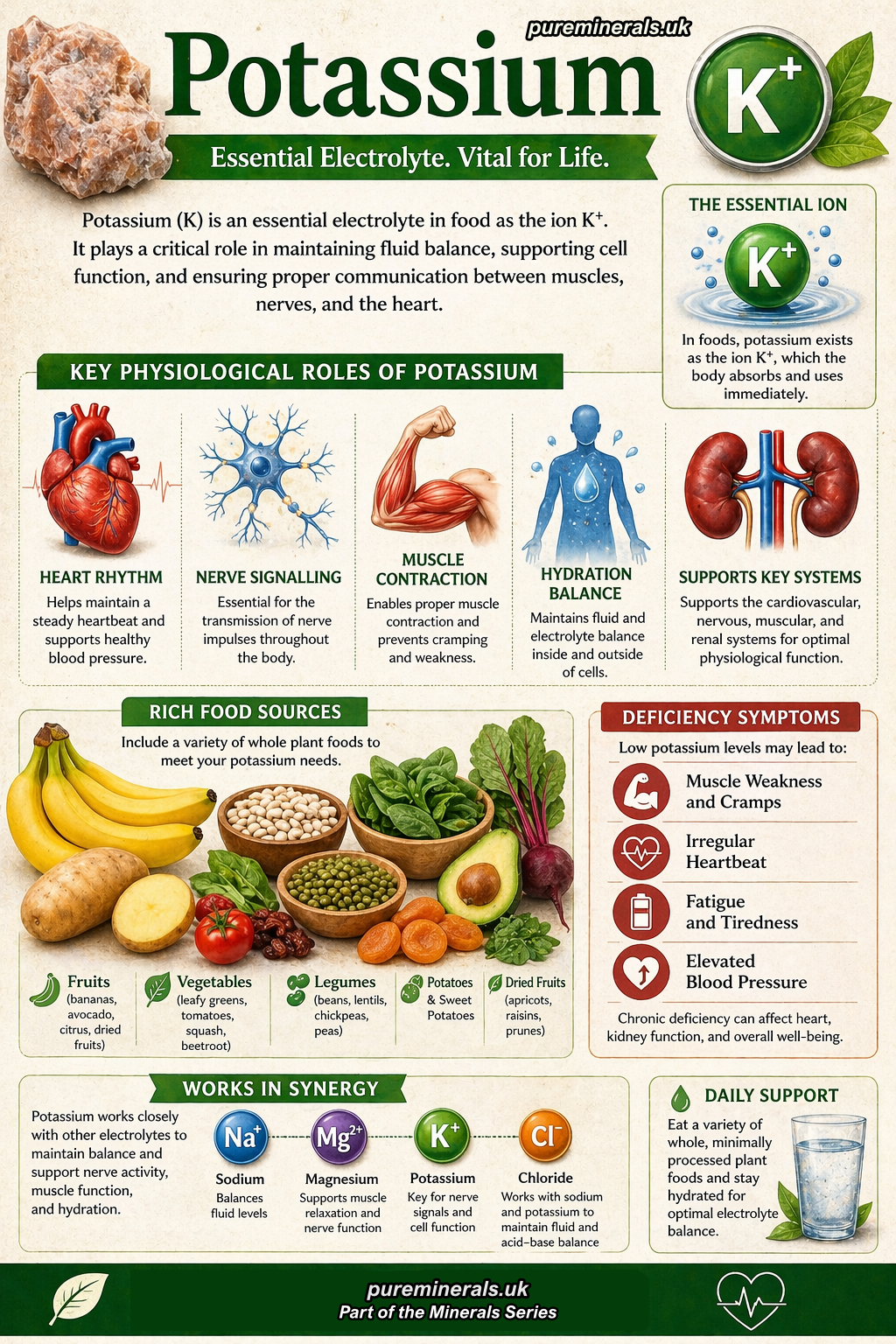
Potassium Infographic
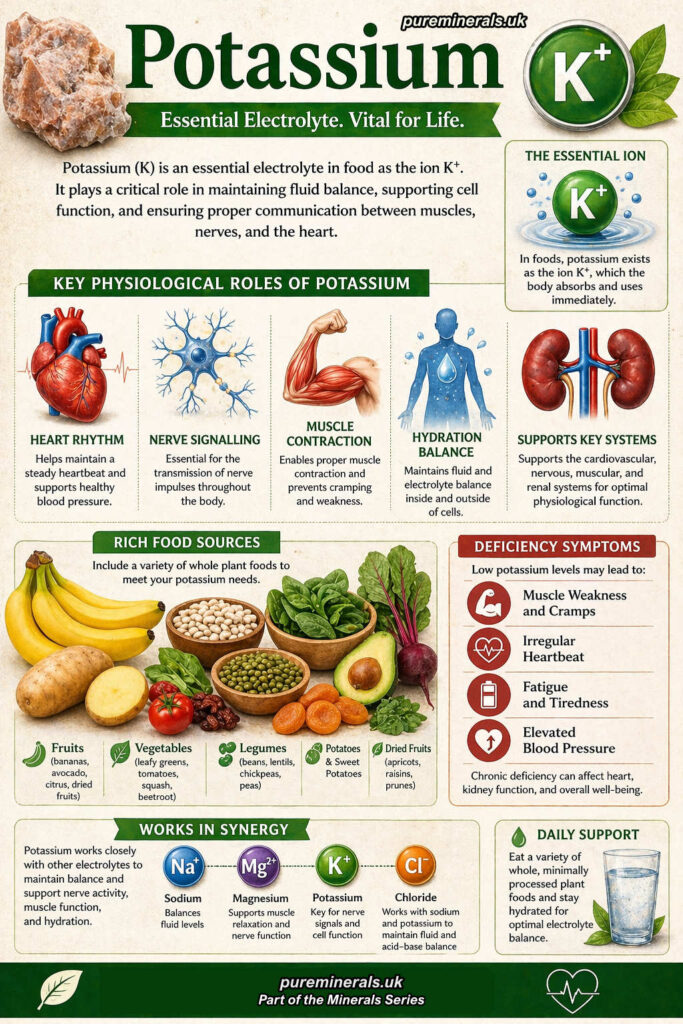
Download the full high-resolution Potassium infographic for offline reference.
Explore more minerals in the full Minerals Hub
Frequently Asked Questions
Many questions arise when people begin focusing on potassium for heart health. These answers address common concerns while providing practical guidance for safely optimizing potassium intake in various situations.
Can I take potassium supplements instead of getting it from food?
Potassium supplements should only be taken under medical supervision due to potential risks of hyperkalemia (dangerously high potassium levels). Unlike dietary sources, supplements can cause rapid increases in blood potassium that may trigger heart rhythm disturbances. Additionally, the FDA limits over-the-counter potassium supplements to just 99 mg per serving—far below therapeutic doses—because of these safety concerns.
Foods provide potassium in forms that your body can regulate more effectively, releasing this mineral gradually during digestion and absorption. This natural time-release mechanism allows your kidneys to maintain proper balance while preventing dangerous spikes. Food sources also provide complementary nutrients that support potassium’s cardiovascular benefits through multiple mechanisms.
If your healthcare provider does recommend supplements, follow dosing instructions precisely and report any unusual symptoms immediately. Common side effects of supplemental potassium include nausea, vomiting, abdominal discomfort, and diarrhea—often early warning signs that levels may be increasing too rapidly.
- Never take potassium supplements with potassium-sparing diuretics
- Avoid taking supplements with ACE inhibitors or ARB medications
- Don’t use salt substitutes (which often contain potassium chloride) alongside supplements
- Take supplements with plenty of water and with food to minimize digestive discomfort
Will eating more potassium-rich foods lower my blood pressure immediately?
Blood pressure improvements from increased potassium intake typically develop gradually over 2-4 weeks of consistent consumption, rather than occurring immediately after single high-potassium meals. The most significant reductions occur when higher potassium intake combines with moderate sodium restriction, creating an improved sodium-potassium ratio that supports healthier blood vessel function and fluid balance over time.
Is it possible to get too much potassium in my diet?
Healthy kidneys efficiently eliminate excess potassium from food sources, making it extremely difficult to consume dangerous amounts through diet alone. Even consuming 8,000-10,000 mg daily from foods poses minimal risk for people with normal kidney function and who aren’t taking medications that affect potassium levels. However, individuals with kidney disease, diabetes, severe heart failure, or those taking certain medications should work with healthcare providers to determine appropriate intake levels.
How does potassium interact with blood pressure medications?
Several blood pressure medications significantly impact potassium levels. Thiazide and loop diuretics increase potassium excretion, potentially causing a deficiency that requires dietary compensation. Conversely, potassium-sparing diuretics, ACE inhibitors, ARBs, and beta-blockers can reduce potassium excretion, sometimes necessitating moderation of high-potassium foods.
Never adjust medications on your own based on dietary changes. Instead, work with healthcare providers to monitor your response to increased potassium intake through regular blood tests. This collaborative approach ensures medications and nutrition work together safely to support optimal heart health.
Should I avoid potassium if I have kidney problems?
Potassium Guidelines Based on Kidney Function
Normal kidney function: 3,500-4,700 mg potassium daily
Stage 1-2 CKD: Usually no restriction unless potassium levels elevated
Stage 3 CKD: Often limited to 2,000-3,000 mg daily
Stage 4-5 CKD: Typically restricted to 1,500-2,000 mg daily
Dialysis: Individualized restrictions based on blood levels
Kidney disease significantly alters potassium requirements because compromised kidneys cannot efficiently eliminate excess amounts. The appropriate intake varies based on disease stage, individual kidney function, medications, and current blood potassium levels. Always follow a nephrologist’s recommendations regarding potassium restrictions, as these guidelines are specifically tailored to your kidney function and overall health status.
When following potassium restrictions, focus on food preparation techniques that can reduce the content in high-potassium foods you enjoy. Leaching vegetables by soaking diced pieces in warm water for several hours, then boiling in fresh water, can remove 50-75% of their potassium content. This technique allows greater dietary variety while still maintaining appropriate restrictions. Additionally, learning about other minerals like molybdenum can provide insights into maintaining a balanced diet.
Regular monitoring becomes especially important when kidney function is compromised. Blood tests every 1-3 months help detect changes in potassium levels before they cause symptoms, allowing timely adjustments to diet or medications. Between tests, watch for warning signs like unusual fatigue, muscle weakness, or heart palpitations, which may indicate changing potassium levels requiring medical attention.
Remember that kidney function can fluctuate based on hydration, medication changes, and overall health status. This variability means potassium needs may change over time, requiring ongoing communication with healthcare providers to adjust dietary approaches accordingly. A registered dietitian specializing in renal nutrition can provide invaluable guidance for maintaining optimal nutrition while respecting potassium limitations.
Maintaining heart health through proper potassium balance represents one of the most accessible yet powerful strategies for cardiovascular wellness. Whether you’re managing existing heart conditions or working to prevent future problems, this essential mineral deserves attention in your daily nutrition plan. For personalized guidance on optimizing your potassium intake for your specific health situation, consult with a healthcare provider who can consider your complete medical history and current medications.