

Published: 19 November 2025
Last Updated: 15 January 2026
This article is periodically reviewed and updated to reflect current scientific understanding by George Wesler.
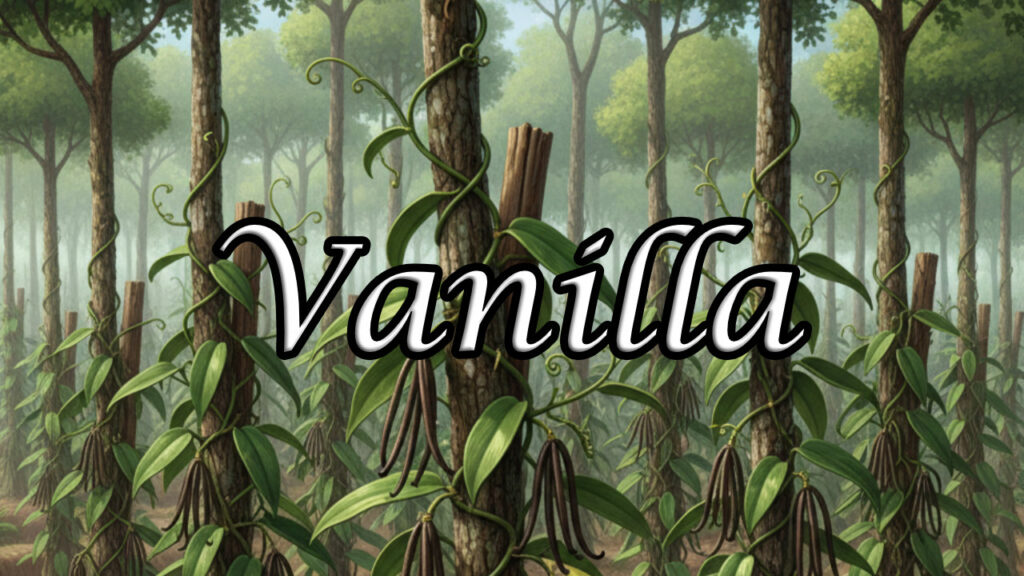
Updated 19 November 2025 with further information about vanilla.
What Is Vanilla and Why Is It Valued for Its Sweet, Warm Aroma and Traditional Calming and Digestive Benefits?
Vanilla (Vanilla planifolia) is an aromatic orchid pod prized for its sweet, warm, and creamy flavour. Rich in vanillin and other aromatic compounds, vanilla has long been used to support gentle relaxation, enhance mood, and add depth to culinary dishes. It is one of the world’s most cherished flavorings, appearing in desserts, beverages, perfumes, and herbal preparations.
Definition:
Vanilla is the cured seed pod of Vanilla planifolia, a climbing orchid in the Orchidaceae family. After hand-pollination, the pods undergo a complex curing process that develops vanillin, p-hydroxybenzaldehyde, and other flavour compounds. Vanilla is used in baking, confections, aromatherapy, and traditional tonics, with Madagascar bourbon vanilla being the most renowned variety.
Key Facts:
- Botanical name: Vanilla planifolia (also V. tahitensis)
- Family: Orchidaceae
- Parts used: Cured pods (“vanilla beans”) and extracts
- Primary compounds: Vanillin, p-hydroxybenzaldehyde, tannins
- Flavour/aroma profile: Sweet, warm, creamy, floral
- Primary functions: Gentle calming effects, digestive support, aromatic enrichment
- Traditional regions: Central America; major cultivation in Madagascar, Mexico, Tahiti
Key Takeaways
- Vanilla comes from the seed pods of a tropical orchid, not a bean plant, making it one of the most labor-intensive and precious spices in the world.
- The Totonac people of Mexico were the first to cultivate vanilla around 1185, using it in religious ceremonies, as medicine, and as a flavoring long before Europeans discovered it.
- For centuries, vanilla wouldn’t produce fruit outside its native habitat until the 12-year-old enslaved boy Edmond Albius developed a hand-pollination technique in 1841 that revolutionized global vanilla production.
- Different growing regions produce distinct vanilla varieties with unique flavor profiles: Bourbon (sweet, rum-like), Tahitian (floral), Mexican (spicy, woody), and Indonesian (smoky).
- Natural vanilla requires painstaking cultivation with each flower being hand-pollinated, followed by a 9-month curing process, explaining why it remains the second most expensive spice after saffron.
The Surprising Origin Story of Vanilla
The sweet, intoxicating flavor that has captivated the world for centuries isn’t from a bean at all. Vanilla comes from the seed pods of a tropical orchid, making it the only commercially important food product derived from orchids. This climbing vine with its heart-shaped leaves and delicate flowers has a history as rich and complex as its flavor profile. From ancient Mesoamerican forests to modern kitchens worldwide, vanilla’s journey represents one of humanity’s most remarkable botanical love affairs.
The vanilla orchid’s native habitat stretches through the tropical forests of Mesoamerica, where it once grew wild, climbing trees and producing its precious fruits only with the help of specialized native pollinators. This dependence on specific ecological conditions would later become one of vanilla’s most challenging cultivation hurdles. Understanding vanilla’s true nature as an orchid rather than a bean helps explain why it remains one of the world’s most labor-intensive and precious spices.
Vanilla’s Secret Identity as an Orchid, Not a Bean
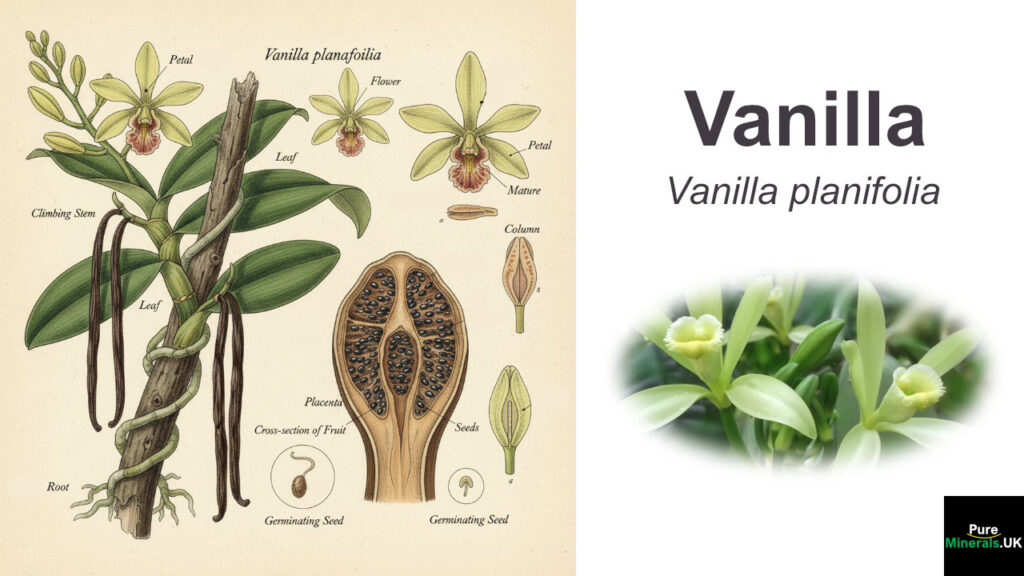
Despite being commonly called “vanilla beans,” the long, dark pods we associate with vanilla are actually the fruit of the Vanilla planifolia orchid. These fruits develop from the orchid’s pale greenish-yellow flowers, which bloom for just one day, opening in the morning and closing by afternoon. This brief window for pollination is the first hint at why vanilla cultivation proves so challenging. The flower’s unique structure keeps its male and female parts separated by a membrane called the rostellum, making natural pollination impossible without specific assistance.
When successfully pollinated, the orchid produces elongated pod-like fruits containing thousands of tiny black seeds. These seeds are surrounded by an oily substance containing vanillin, the primary compound responsible for vanilla’s distinctive aroma and flavor. The entire pod undergoes extensive curing after harvest, developing over 250 flavor and aroma compounds that create vanilla’s complex profile. This biological complexity explains why artificial vanilla (containing only synthetic vanillin) can never fully replicate the depth and nuance of real vanilla.
The Totonac People: First Vanilla Cultivators
The Totonac people of what is now Veracruz, Mexico, hold the distinction of being the first to domesticate the vanilla orchid. Historical records indicate they had been cultivating vanilla since at least 1185, developing specialized techniques to grow this demanding plant. The Totonacs called vanilla “tlilxochitl” (black flower) and incorporated it deeply into their cultural and religious practices.
For the Totonacs, vanilla was far more than a flavoring. They used it as a fragrance in temples, incorporated it into religious ceremonies, and carried it in amulets as a good-luck charm. Vanilla was also used medicinally, treating various ailments from fevers to digestive issues. This comprehensive integration into Totonac life demonstrates an advanced understanding of vanilla cultivation centuries before European contact. The Totonacs’ knowledge of vanilla cultivation remained relatively contained to their region, keeping vanilla production a low-profile affair for generations. Interestingly, other plants like sweet cicely have also been used historically for their medicinal properties.
“The cultivation of vanilla was a low-profile affair, long before Europeans took to vanilla’s taste. The creeping vine grew wild in tropical forests throughout Mesoamerica. While the Totonac people of modern-day Veracruz, Mexico, are credited as the earliest growers of vanilla, the oldest reports of vanilla usage come from the pre-Columbian Maya.”
Ancient Civilizations’ Love Affair with Vanilla
Long before vanilla became a global commodity, it held special significance for the great civilizations of Mesoamerica. Archaeological evidence and historical records suggest vanilla’s use predates even the Totonac cultivation, with the earliest documented usage traced to the Maya civilization. These sophisticated ancient cultures recognized vanilla’s unique properties and incorporated it into their most prestigious beverages and sacred rituals.
Maya and Aztec Royal Connection to Vanilla
The Maya were among the first to document vanilla usage, incorporating it into a special beverage made with cacao and other precious spices. This drink, reserved primarily for royalty and elites, combined the bitter complexity of cacao with the sweet aroma of vanilla, creating a luxurious concoction that signified status and power. Maya hieroglyphs and pottery depictions show these beverages being served at royal courts and during important ceremonial occasions.
When the Aztecs rose to power in central Mexico, they adopted vanilla as a prized ingredient, further elevating its status. The Aztec emperor Montezuma is famously reported to have enjoyed a vanilla-infused chocolate beverage called “xocolatl” served in golden goblets. This royal endorsement cemented vanilla’s position as a marker of prestige. The Aztecs obtained vanilla through tribute payments from conquered territories and through their extensive trade networks, demonstrating its significant economic value even in pre-colonial times.
Sacred Uses Beyond Food in Mesoamerica
Beyond its culinary applications, vanilla held profound spiritual significance for Mesoamerican civilizations. The Totonacs believed vanilla was born when the beautiful Princess Tzacopontziza was forbidden by her father to marry a young man of lower social status. The lovers fled to the forest, where they were captured and beheaded. According to legend, from the spot where their blood touched the ground, a climbing vine grew – the first vanilla orchid.
Vanilla was frequently used in religious ceremonies, its intoxicating aroma considered a bridge between the earthly and divine realms. Temple offerings would often include vanilla pods alongside other precious materials like jade and feathers. Shamans and healers incorporated vanilla into medicinal preparations, using it to treat everything from digestive ailments to spiritual maladies. The aromatic pods were also burned as incense during important rituals, their distinctive fragrance believed to please the gods and facilitate communication with the spiritual world, much like angelica was used in various cultures.
The Pollination Mystery That Stumped Scientists for Centuries
When Spanish conquistador Hernán Cortés encountered vanilla during his conquest of the Aztec Empire in the early 16th century, he was captivated by its unique flavor. Vanilla soon made its way back to Europe along with cacao, quickly becoming a sensation among European elites. Despite intense interest in cultivating this valuable spice, European botanists encountered a frustrating mystery: vanilla plants grew well in greenhouses but refused to produce fruit.
For nearly 300 years after vanilla’s introduction to Europe, this botanical puzzle remained unsolved. European colonial powers established vanilla plantations throughout their tropical territories, but everywhere outside Mesoamerica, the plants grew vigorously yet remained stubbornly fruitless. This geographical limitation kept Mexico as the world’s sole vanilla producer for centuries, controlling a lucrative monopoly that Europeans were desperate to break.
Why Vanilla Refused to Grow in Europe
The mystery of vanilla’s refusal to fruit outside its native habitat perplexed botanists and frustrated colonial agricultural efforts. Plants transported to colonial greenhouses and tropical plantations would grow, flower, and then—nothing. The flowers would simply wither and fall off without producing pods. This peculiar behavior maintained Mexico’s exclusive production capabilities and kept vanilla prices extraordinarily high.
The answer to this centuries-long puzzle lay in vanilla’s highly specialized pollination requirements. In its native Mesoamerican habitat, the vanilla orchid evolved alongside specific pollinators, particularly the Melipona bee native to Mexico and parts of Central America. This small, stingless bee possessed the exact size and behavior needed to navigate the orchid’s complex flower structure and transfer pollen between the male and female parts. Without these specialized bees, vanilla flowers remained unpollinated and fruitless, a biological dependency that protected Mexico’s monopoly for centuries.
Charles Morren’s 1836 Bee Discovery
The first breakthrough in understanding vanilla’s pollination came in 1836 when Belgian botanist Charles François Antoine Morren observed Melipona bees pollinating vanilla orchids in Mexico. Morren documented how these specialized bees would enter the flower and inadvertently bypass the membrane (rostellum) separating the male and female parts of the flower, allowing pollination to occur naturally. This critical observation finally explained why vanilla plants refused to produce fruit outside their native range.
Based on this discovery, Morren developed the first artificial pollination technique for vanilla, manually transferring pollen between the orchid’s male and female parts. While successful in theory, his method proved too cumbersome and impractical for commercial application. Though Morren had solved the scientific mystery, a practical solution for large-scale vanilla cultivation remained elusive for several more years. His work, however, laid the foundation for the revolutionary development that would eventually transform vanilla production forever.
Edmond Albius: The Enslaved Boy Who Changed Vanilla Forever
The true breakthrough in vanilla cultivation came from an unexpected source in 1841. Edmond Albius, a 12-year-old enslaved boy on the French colony of Réunion (then called Île Bourbon), developed an ingeniously simple and effective hand-pollination technique that revolutionized global vanilla production. Using a simple blade of grass or a thin piece of bamboo, Albius discovered how to quickly fold back the rostellum membrane and press the flower’s male and female parts together, achieving pollination in seconds.
Albius’ method was so efficient that a single worker could pollinate up to 1,000 flowers per day. This technique finally broke Mexico’s monopoly on vanilla production and transformed the global spice trade. The simplicity and effectiveness of his method remain essentially unchanged today, still used by vanilla farmers worldwide. Despite his monumental contribution, which created an industry worth billions, Albius remained enslaved until the abolition of slavery in French colonies in 1848 and died in poverty in 1880. His legacy lives on in every hand-pollinated vanilla orchid across the globe.
Vanilla’s Global Journey After Hand-Pollination
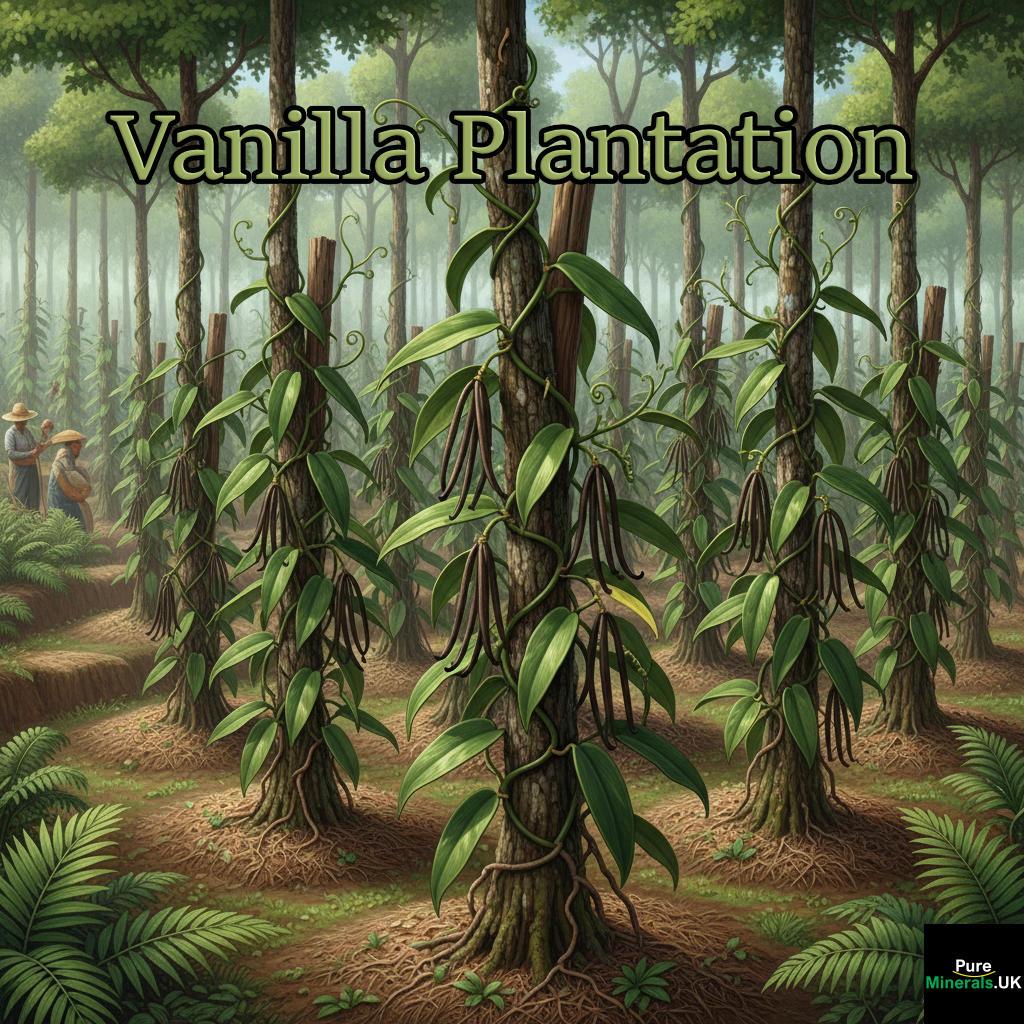
Once the secret of hand-pollination was unlocked, vanilla cultivation spread rapidly throughout suitable tropical regions. The technique developed by Edmond Albius sparked a global transformation of vanilla production, breaking Mexico’s centuries-old monopoly. French colonial authorities quickly recognized the economic potential and began establishing vanilla plantations across their tropical territories, beginning a new chapter in vanilla’s history that would reshape its production forever.
How Vanilla Spread from Réunion to Madagascar
From Réunion, vanilla cultivation quickly spread to nearby Madagascar, which offered ideal growing conditions with its tropical climate, rich soil, and suitable rainfall patterns. French colonial planters brought cuttings and Albius’ pollination technique to Madagascar in the 1840s and 1850s, establishing what would eventually become the world’s most significant vanilla-producing region. The industry grew rapidly, with plantations expanding across Madagascar’s northeastern coastal regions, particularly around Sava.
Madagascar’s vanilla industry flourished under French colonial rule and continued to expand after the country gained independence in 1960. Today, Madagascar produces approximately 80% of the world’s vanilla, with the distinctive “Bourbon vanilla” (named after Réunion’s former name, Île Bourbon) recognized as the gold standard for quality. The island’s combination of perfect growing conditions and generations of cultivator expertise has created a product with unmatched flavor complexity and aromatic richness.
The Birth of Modern Vanilla Cultivation
Following the breakthrough in hand-pollination, vanilla cultivation expanded beyond Madagascar to other tropical regions across the globe. By the late 19th century, vanilla plantations had been established in Indonesia, Tahiti, Uganda, Mexico (which regained production capabilities), India, and parts of the Caribbean. Each region developed slightly different cultivation and processing methods, resulting in unique varieties with distinctive flavor profiles, much like the diverse uses of turmeric in various cuisines.
The modern vanilla industry has evolved sophisticated cultivation systems, with farmers developing specialized trellising methods to support the climbing vines and carefully controlled shade management to optimize growth. The labor-intensive nature of vanilla farming has changed little since the 19th century, with each plant requiring individual attention throughout its lifecycle. The farming practices that emerged during this period of global expansion established the foundation for today’s vanilla industry, which continues to rely on traditional methods despite various attempts at mechanization and modernization.
The World’s Most Labor-Intensive Spice
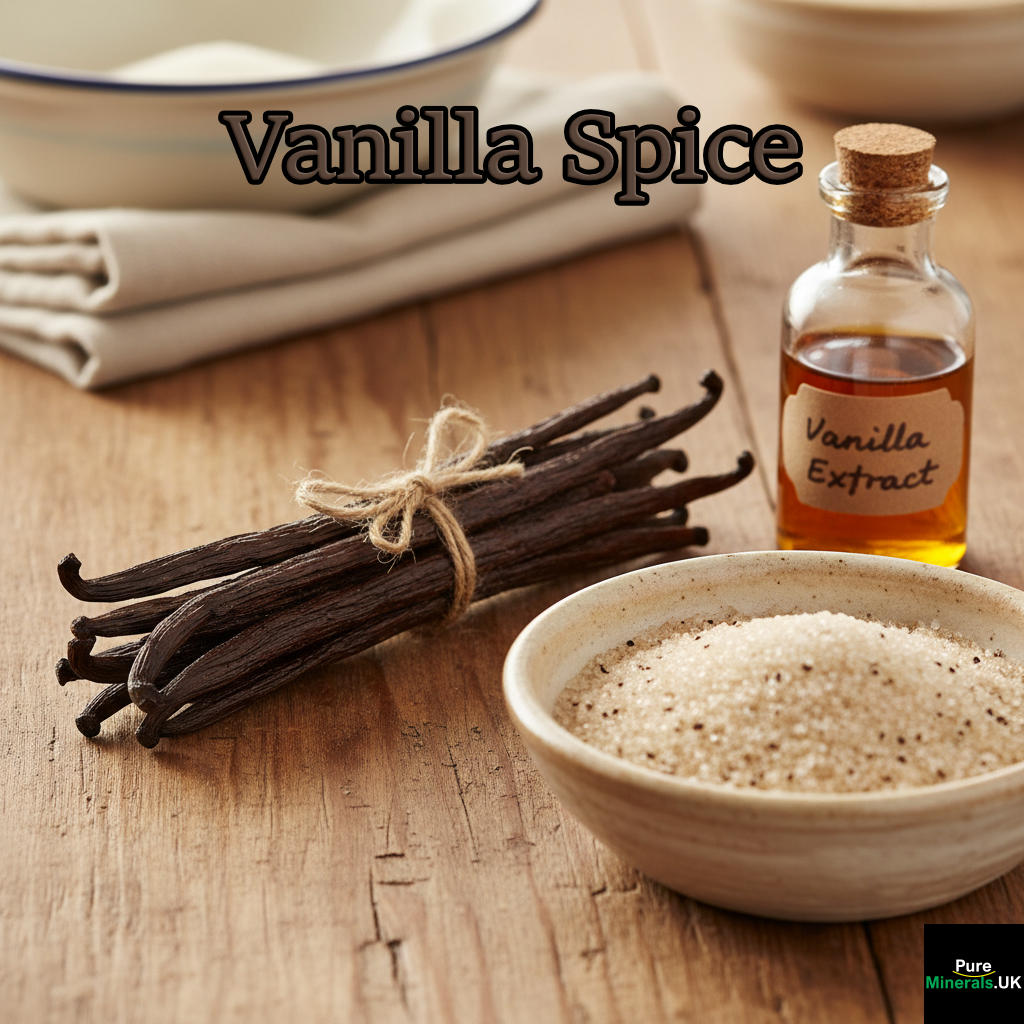
Vanilla’s reputation as the second most expensive spice in the world (after saffron) stems directly from the extraordinary amount of human labor required to produce it. Every step in vanilla cultivation demands meticulous attention and skilled manual work that cannot be meaningfully automated. This labor intensity, combined with vanilla’s long production timeline, creates significant challenges for producers and explains the spice’s premium market position.
The Painstaking Hand-Pollination Process
The most labor-intensive aspect of vanilla cultivation is pollination. Because natural pollinators exist only in Mexico, every commercial vanilla flower worldwide must be pollinated by human hands. The process remains essentially unchanged from Edmond Albius’ 1841 technique. Workers begin before sunrise when the flowers open, using a small tool to fold back the rostellum membrane and press the anther (male part) against the stigma (female part), completing in seconds what specialized bees would do naturally.
This process must be completed within hours of the flower opening, as each vanilla blossom remains receptive for just one day before withering. Skilled workers can pollinate up to 1,000-1,500 flowers per day, moving methodically through plantations during the flowering season. Timing is crucial—miss a flower’s brief window of opportunity, and that potential vanilla pod is lost for the year. This irreplaceable human element in vanilla production represents one of the most direct connections between human craftsmanship and natural botanical processes in any agricultural industry.
9-Month Curing Process After Harvest
Once pollinated, vanilla pods require 9-10 months to develop and mature on the vine before harvest. But harvesting marks only the beginning of an equally labor-intensive transformation process. Fresh vanilla pods contain no vanilla flavor or aroma—these develop only through a complex curing process that demands constant attention and precise timing.
The traditional curing process begins with “killing” the beans by briefly immersing them in hot water to stop vegetation and initiate enzymatic reactions. The beans are then wrapped in cloth and “sweated” in wooden boxes for several days, during which they develop their characteristic brown color and begin releasing their aroma. Following this, beans undergo a complex drying regimen, being laid in the sun during the day and returned to airing boxes at night for several weeks. During this period, workers must constantly inspect and massage each pod to ensure even curing and prevent mold. The final conditioning phase requires additional months of slow drying and aging to develop vanilla’s full flavor profile.
Why Vanilla Remains So Expensive Today
The extraordinary labor requirements and extended production timeline create significant economic challenges for the vanilla industry. From planting to final market-ready product, vanilla production spans nearly four years, with plants requiring three years to mature before producing flowers, followed by nine months for pod development and another three to six months for curing. This extended timeline means producers must invest years of labor before seeing returns, increasing financial risk and market vulnerability. For more on unique plants, you might explore the Angelica plant, known for its own distinct cultivation process.
Market volatility further complicates the vanilla economy. When prices drop too low, farmers often abandon vanilla cultivation for more immediately profitable crops, leading to supply shortages that dramatically spike prices. Conversely, high prices encourage new producers to enter the market, eventually creating oversupply situations that crash prices. This boom-and-bust cycle has characterized the vanilla market for decades, with prices fluctuating from $20 to $600 per kilogram within just a few years. Climate challenges, including increasingly frequent cyclones in Madagascar, add another layer of uncertainty to this fragile supply chain.
Distinct Vanilla Varieties and Their Flavor Profiles
While most commercial vanilla comes from the same species (Vanilla planifolia), growing conditions, cultivation methods, and processing techniques create distinct regional varieties with unique flavor profiles. Understanding these differences helps herbalists and culinary practitioners select the most appropriate vanilla type for specific applications. Each variety offers different therapeutic properties and flavor nuances that can significantly impact the final product. For more information, you can explore this comprehensive guide on vanilla.
Bourbon Vanilla: Sweet and Rum-Like
Bourbon vanilla, primarily from Madagascar and Réunion (formerly Île Bourbon), represents approximately 80% of global vanilla production and is considered the industry’s gold standard. Its flavor profile features deep, sweet, creamy notes with pronounced rum-like undertones and subtle chocolate accents. The high vanillin content (around 2-2.5%) creates a rich, long-lasting flavor that stands up well to cooking and baking.
In natural healing traditions, Bourbon vanilla is particularly valued for its calming properties, often used in aromatherapy to reduce stress and anxiety. Its strong flavor makes it economical in use, as smaller amounts deliver a pronounced vanilla character. The consistent quality and reliable supply of Bourbon vanilla have made it the preferred choice for commercial food production, pharmaceutical applications, and premium perfumery.
Tahitian Vanilla: Floral and Delicate
Tahitian vanilla (Vanilla tahitensis), cultivated primarily in French Polynesia, develops a distinctly different flavor profile with pronounced floral, fruity notes featuring hints of cherry, anise, and licorice. Physically, Tahitian vanilla pods are shorter and broader than Bourbon vanilla, with a higher moisture content and plumper appearance. Their lower vanillin content is offset by higher concentrations of other aromatic compounds that create its distinctive character.
This variety’s delicate, complex aroma makes it particularly suited for cold preparations where heat won’t dissipate its subtle notes. Perfumers prize Tahitian vanilla for its sophisticated scent profile, while herbalists value it for its sensual properties and ability to enhance other botanical ingredients. In traditional Polynesian medicine, Tahitian vanilla has been used to elevate mood and as an aphrodisiac, properties that modern aromatherapists continue to recognize and utilize.
Mexican Vanilla: Spicy and Woody Notes
Mexican vanilla, grown in vanilla’s ancestral homeland, develops a distinctive profile characterized by deep, woody notes with spicy clove and nutmeg accents. Genuine Mexican vanilla has a complex, multidimensional character reflecting the region’s unique growing conditions and traditional processing methods that have evolved over centuries of cultivation experience.
Unfortunately, Mexican vanilla’s reputation has been damaged by counterfeit products containing coumarin, a potentially harmful compound extracted from tonka beans. Authentic Mexican vanilla, however, remains highly prized by herbalists and chefs seeking its unique spicy character. In traditional Mexican healing practices, this vanilla variety has been used to enhance mental clarity and stimulate digestive function, applications supported by its complex aromatic profile.
Indonesian Vanilla: Smoky Characteristics
Indonesian vanilla, accounting for approximately 25% of global production, develops distinctive smoky, woody characteristics stemming from its traditional quick-curing process. Rather than the gradual sun-drying method used elsewhere, Indonesian producers often dry vanilla over fire or in direct sun, creating a more rapid curing process that imparts pronounced smoky notes while reducing curing time.
This variety’s robust profile makes it particularly well-suited for applications where vanilla must compete with other strong flavors, such as chocolate productions, coffee infusions, and savory applications. In traditional Indonesian medicine, the smoky qualities of this vanilla variety have been associated with grounding properties, used to treat insomnia and restore balance. Its affordability compared to Bourbon and Tahitian varieties makes it accessible for larger-scale therapeutic applications, similar to other affordable herbs like sage.
Beyond Flavoring: Vanilla’s Scientific Impact
Vanilla’s significance extends far beyond its role as a beloved flavoring. Modern scientific research has validated many of the therapeutic applications that traditional healers have recognized for centuries. The complex biochemistry of vanilla, featuring over 250 different compounds, creates multifaceted effects on human physiology and psychology. From pharmaceutical applications to aromatherapy, vanilla continues to reveal new potential as researchers explore its molecular secrets.
The Chemistry Behind Vanilla’s Complex Aroma
The primary compound responsible for vanilla’s characteristic scent and flavor is vanillin (4-hydroxy-3-methoxybenzaldehyde), which constitutes about 2% of cured vanilla pods by weight. However, vanillin alone cannot explain vanilla’s complex sensory profile. Complementary compounds, including vanillic acid, p-hydroxybenzaldehyde, p-hydroxybenzoic acid, and numerous other aromatics, create vanilla’s full-bodied character through synergistic interactions. This biochemical complexity explains why synthetic vanilla (containing only vanillin) lacks the depth and nuance of the natural product.
Research into vanilla’s neurological effects has revealed fascinating connections between its aroma compounds and brain function. Studies show that vanilla scent can reduce startle reflexes, decrease anxiety, and even alleviate claustrophobia during MRI procedures. These effects appear connected to vanillin’s influence on neurotransmitter systems, particularly those involving dopamine and serotonin. The molecular structure of vanillin bears similarities to catecholamines (including dopamine), potentially explaining its mood-enhancing properties that herbalists and aromatherapists have long observed. For more information on the history and science of vanilla, you can explore this article from Smithsonian Magazine.
Medicinal Uses Throughout History
Vanilla’s therapeutic applications span cultures and centuries, with traditional healers incorporating it into remedies for various ailments. The Totonacs used vanilla preparations to treat fever, insomnia, and anxiety, while Aztec physicians prescribed vanilla-infused preparations for digestive complaints and as an energizing tonic. European apothecaries later adopted vanilla as a treatment for nervous conditions, digestive disorders, and as an aphrodisiac – applications that reflect vanilla’s complex effects on multiple body systems.
Modern scientific research has validated many of these traditional uses, identifying specific mechanisms behind vanilla’s therapeutic effects. Studies have demonstrated vanilla extract’s antioxidant, anti-inflammatory, and antimicrobial properties. Research also suggests potential applications for vanilla compounds in treating digestive disorders, reducing inflammation, and even as adjunctive therapy in certain metabolic conditions. Vanilla’s gentle yet effective properties make it particularly valuable in holistic healing approaches that seek to balance bodily systems rather than target isolated symptoms.
Vanilla Recipes
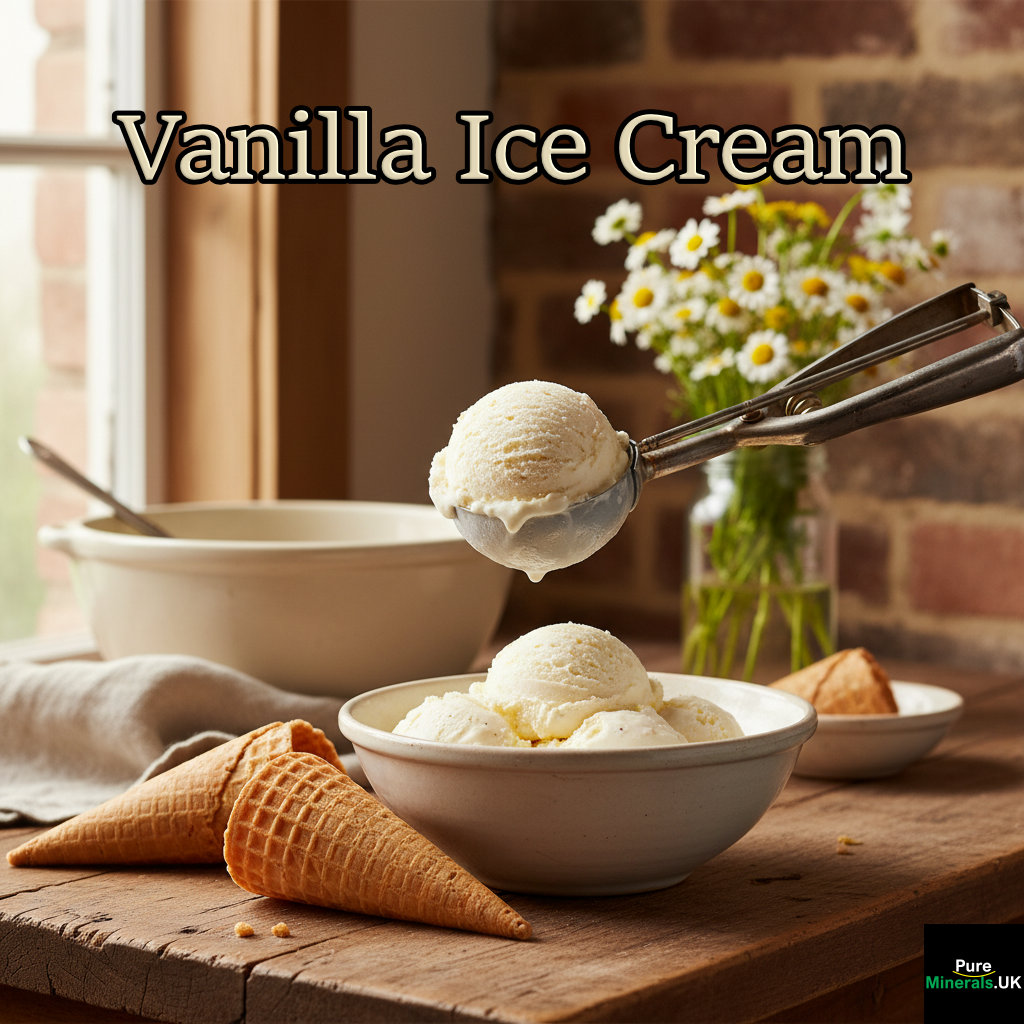
1. Vanilla Ice Cream (Classic Custard Method)
Ingredients
- 500 ml whole milk
- 250 ml double cream
- 150 g caster sugar
- 1 vanilla pod (or 2 tsp pure vanilla extract)
- 4 large egg yolks
- Pinch of salt
Method
1. Prepare the vanilla base
- Split the vanilla pod lengthways and scrape out the seeds.
- Place the milk, cream, half the sugar, the vanilla seeds and pod into a saucepan.
- Gently heat until steaming, just below simmering. Remove from the heat and let it infuse for 10–15 minutes.
2. Make the custard
- In a bowl, whisk the egg yolks with the remaining sugar and a pinch of salt until pale and slightly thickened.
- Remove the vanilla pod from the warm milk mixture.
- Slowly pour the warm mixture into the egg yolks while whisking constantly (to avoid scrambling).
- Return the combined mixture to the saucepan.
3. Cook until thickened
- Stir constantly over low heat until the custard thickens enough to coat the back of a spoon (around 82–84°C if using a thermometer).
- Do not let it boil.
- Once thickened, immediately remove from the heat and strain through a fine sieve into a clean bowl.
4. Chill thoroughly
- Allow the custard to cool to room temperature.
- Cover the surface with cling film to prevent a skin forming.
- Chill in the refrigerator for at least 4 hours, preferably overnight—cold mixture churns far better.
5. Churn and freeze
If using an ice-cream machine:
- Pour the chilled custard into the machine and churn until it reaches a soft-serve consistency.
- Transfer to a lidded container and freeze for 3–4 hours.
If making by hand (no machine):
- Pour custard into a shallow freezer-safe tray.
- Freeze for 45 minutes, then beat vigorously with a whisk or fork.
- Return to the freezer and repeat the beating every 30 minutes for 2–3 hours to break up ice crystals.
- Freeze until firm.
Serving
Let the ice cream soften at room temperature for 5–10 minutes before scooping. Serve with fresh fruit, warm pie, or simply enjoy it on its own.
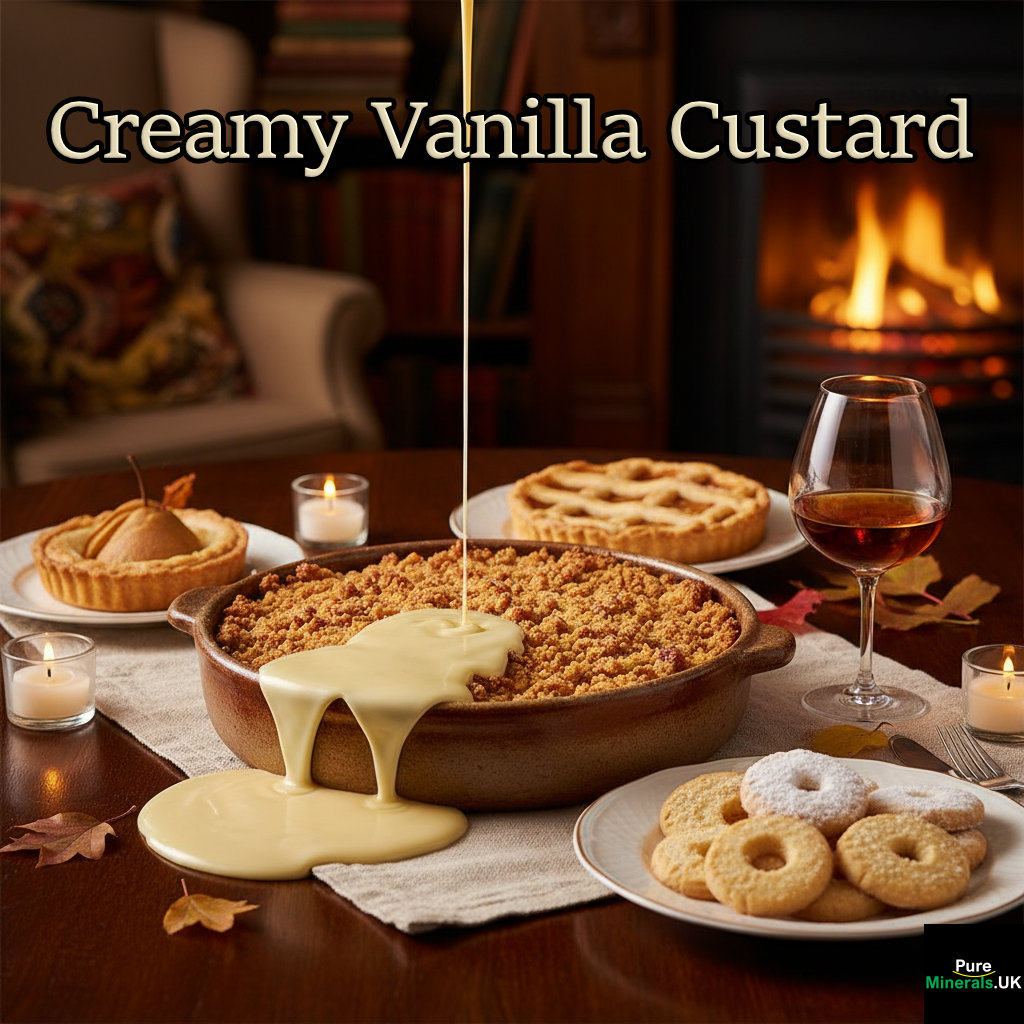
2. Creamy Vanilla Custard
Ingredients
- 500 ml whole milk
- 1 vanilla pod (or 2 tsp pure vanilla extract)
- 4 large egg yolks
- 2 tbsp cornflour (cornstarch)
- 60 g caster sugar
- 150 ml double cream
- Pinch of salt
Method
1. Infuse the vanilla
- Split the vanilla pod and scrape out the seeds.
- Place the milk, vanilla seeds, and the pod into a saucepan.
- Heat gently until steaming, then remove from the heat and leave to infuse for 10–15 minutes.
2. Whisk the egg mixture
- In a bowl, whisk the egg yolks, sugar, cornflour, and a pinch of salt until smooth.
3. Combine with the warm milk
- Remove the vanilla pod from the infused milk.
- Slowly pour the warm milk into the egg mixture, whisking continuously.
4. Cook the custard
- Return the mixture to the saucepan.
- Cook on a low heat, stirring constantly, until the custard thickens enough to coat the back of a spoon.
- Do not boil; this prevents curdling.
5. Add the cream
- Remove from the heat and stir in the double cream for extra richness and silkiness.
- If you like, strain through a fine sieve for an ultra-smooth finish.
Serving
Use warm over puddings, pies, steamed sponges, crumbles, or trifles.
Chill in the refrigerator if a cold, thicker custard is preferred.
The Future of This Precious Spice
The vanilla industry today stands at a critical crossroads, facing challenges of climate change, market volatility, and sustainability concerns. Rising global temperatures threaten traditional growing regions, while extreme weather events increasingly damage crops in major production areas like Madagascar. Simultaneously, synthetic biology companies are developing lab-grown vanillin that mimics natural vanilla’s complex chemistry, potentially disrupting traditional supply chains. Despite these challenges, a renewed appreciation for natural ingredients and traditional agricultural knowledge is creating opportunities for vanilla’s sustainable future, with innovative partnerships between producers, scientists, and conservation organizations working to preserve this precious botanical resource.
Important Note:
Vanilla is safe as a food flavouring. No known contraindications in culinary use. This information is for educational purposes only and is not intended to diagnose, treat, cure, or prevent disease.
Frequently Asked Questions
The mysterious nature of vanilla cultivation and its unique botanical characteristics generate many questions from those interested in this remarkable spice. The following answers address some of the most common inquiries about vanilla’s production, uses, and properties.
Why is real vanilla extract so expensive compared to artificial vanilla?
Real vanilla’s high cost stems directly from its extraordinarily labor-intensive production process. Every vanilla flower must be hand-pollinated during its single day of bloom, followed by months of pod development and an additional 3-6 months of specialized curing. From planting to final product, the process spans nearly four years, with constant human attention required throughout.
Market volatility further affects pricing, with supply disruptions from weather events or political instability in growing regions causing dramatic price spikes. The 2017 cyclone that devastated Madagascar’s vanilla-growing region sent prices soaring from approximately $80 to over $600 per kilogram within months. While artificial vanilla flavoring (containing only synthetic vanillin) can be mass-produced in laboratories for pennies per ounce, it lacks the complexity of natural vanilla’s 250+ flavor compounds.
The environmental impact of traditional vanilla cultivation also factors into its value proposition, as properly managed vanilla plantations contribute to forest conservation by providing economic incentives to maintain tree cover needed for vanilla vines to thrive. Additionally, exploring the role of other plants like sweet cicely in agroforestry can further enhance biodiversity and sustainability in these ecosystems.
- Labor requirements: Each vanilla orchid flower must be hand-pollinated
- Production timeline: 3-4 years from planting to final product
- Complex processing: 3-6 month curing process requiring daily attention
- Limited growing regions: Vanilla requires specific tropical conditions
- Supply vulnerabilities: Susceptibility to weather events and political instability
Can vanilla be grown at home or does it only grow in tropical regions?
While vanilla orchids require tropical conditions to thrive outdoors, dedicated enthusiasts can cultivate them as houseplants in temperate climates with proper care. The plants need high humidity (70-80%), warm temperatures (70-85°F/21-29°C), filtered light, and support structures for climbing. Home cultivation requires significant patience—plants typically need 3-5 years to mature enough to flower, and even then, successful pollination requires manual intervention during the brief window when flowers open. For those willing to invest the time, however, growing vanilla offers a fascinating glimpse into one of horticulture’s most challenging and rewarding endeavors.
How can you tell the difference between real and artificial vanilla?
Distinguishing real vanilla extract from artificial alternatives involves examining both the product’s appearance and label. Genuine vanilla extract contains visible vanilla seed specks and displays a rich amber-brown color that artificial versions often attempt to mimic with caramel coloring. The aroma offers another clear indicator—real vanilla presents a complex, multidimensional scent with woody, floral, and spicy notes, while artificial vanilla typically delivers a one-dimensional sweetness lacking depth. For those interested in exploring more complex flavors, sweet cicely offers an intriguing alternative with its own unique profile.
Label examination provides the most definitive evidence: pure vanilla extract must contain vanilla extractives, alcohol, and water by FDA standards. Products labeled “vanilla flavor” or “artificial vanilla” contain synthetic vanillin derived from wood pulp, petroleum, or even coal tar. Price often serves as a reliable indicator—if a vanilla product seems surprisingly affordable, it likely contains primarily artificial ingredients, as the economics of real vanilla production necessarily translate to higher consumer costs.
What makes Madagascar vanilla so special and sought-after?
Madagascar’s unique combination of ideal growing conditions, traditional processing techniques, and generational expertise creates vanilla with an unmatched flavor profile. The island’s northeastern regions, particularly the Sava area, feature the perfect balance of rainfall, temperature, humidity, and soil composition for vanilla orchids to thrive. Additionally, Madagascar’s producers have refined curing techniques over generations, developing methods that maximize vanillin content while preserving the full spectrum of complementary flavor compounds. For more about the vanilla plant and its history, visit this detailed overview.
Madagascar’s vanilla industry also maintains strong connections to traditional agricultural practices, with small-scale farmers tending vanilla as part of diverse agroforestry systems that support biodiversity while producing exceptional vanilla quality. This combination of environmental factors and human expertise has established Madagascar Bourbon vanilla as the industry benchmark, with its rich, creamy, rum-like flavor profile serving as the standard against which other varieties are measured.
“Vanilla is not just related to orchids—it IS an orchid. The vanilla plant (primarily Vanilla planifolia in commercial production) belongs to the Orchidaceae family, making it one of approximately 25,000 orchid species worldwide. Unlike most ornamental orchids, vanilla grows as a climbing vine that can reach lengths of up to 300 feet in natural settings. Its flowers display the characteristic orchid structure with modified petal arrangements and complex reproductive mechanisms that necessitate specialized pollinators or human intervention for successful reproduction.”
Understanding vanilla’s identity as an orchid explains many of its unique cultivation challenges. Like other orchids, vanilla plants form symbiotic relationships with specific fungi in the soil, particularly during early growth stages. These mycorrhizal associations help vanilla access nutrients and establish themselves in their growing environment. Commercial propagation typically bypasses the seed stage (vanilla seeds are microscopic) in favor of stem cuttings, which develop into new plants while maintaining the genetic characteristics of the parent.
Vanilla represents the only orchid widely used in food production, making it a botanical bridge between the ornamental and culinary worlds. Its evolutionary history as an orchid shaped both its distinctive reproductive strategy and the complex biochemistry that produces its prized aromatic compounds, including the vanillin that gives it its characteristic flavor.
The vanilla orchid’s flowers exemplify the family’s sophisticated reproductive structures, featuring modifications that separate male and female parts to prevent self-pollination. This reproductive strategy, designed to encourage genetic diversity through cross-pollination, created the very challenge that kept vanilla production exclusively in Mexico for centuries until human innovation intervened.
Modern research into vanilla’s genomics continues to reveal new insights into its evolutionary relationships within the orchid family. These studies help breeders develop more resistant varieties while also deepening our understanding of the complex biological processes that create vanilla’s unique aromatic profile.
As you explore natural healing approaches and culinary applications with vanilla, appreciating its true nature as an orchid helps explain both its remarkable properties and the extraordinary human effort required to bring it from flower to extract. This knowledge deepens our connection to one of nature’s most precious botanical gifts.