

Published: 14 December 2025
Last Updated: 25 February 2026
This article is periodically reviewed and updated to reflect current scientific understanding by Vic George.
Fact-Checked: 1 other authoritative medical/scientific reference. See our Editorial Policy.
What Are NAD⁺ Precursors (NMN and NR) and Why Are These Vitamin-Associated Nutrients Important for Cellular Energy, DNA Repair, and Metabolic Health?
NAD⁺ precursors, including NMN (nicotinamide mononucleotide) and NR (nicotinamide riboside), are vitamin-associated nutrients required for maintaining cellular energy production, DNA repair, and metabolic regulation. These compounds serve as building blocks for NAD⁺, a central molecule involved in mitochondrial function and cellular resilience. Found naturally in small amounts in vegetables, whole grains, milk, and yeast-containing foods, NAD⁺ precursors support energy balance, cellular maintenance, and healthy ageing processes.
Definition:
NAD⁺ precursors are compounds that increase or maintain levels of nicotinamide adenine dinucleotide (NAD⁺), a coenzyme essential for energy metabolism, redox reactions, and DNA repair. NMN and NR are closely related to vitamin B3 (niacin) and participate in the same biochemical pathways that sustain cellular function and metabolic stability.
Extended Definition:
NAD⁺ plays a critical role in mitochondrial energy production by enabling electron transfer reactions required for ATP synthesis. It is also required for the activity of enzymes involved in DNA repair, gene expression, and cellular stress responses. NMN and NR act as efficient intermediates in NAD⁺ biosynthesis, replenishing cellular NAD⁺ pools that naturally decline with age and metabolic stress. Because NAD⁺ is continuously consumed during normal cellular activity, ongoing regeneration from dietary precursors is essential. These compounds complement vitamin B3 metabolism and support long-term cellular efficiency, metabolic flexibility, and tissue maintenance.
Key Facts:
- Nutrient type: Vitamin-associated metabolic cofactors
- Biological forms: Nicotinamide mononucleotide (NMN), nicotinamide riboside (NR)
- Primary functions: NAD⁺ synthesis, cellular energy production, DNA repair, metabolic regulation
- Systems supported: Metabolic, mitochondrial, cellular, and neurological
- Preferred dietary sources: Whole grains, vegetables, milk, yeast-containing foods (trace amounts)
- Deficiency considerations: No formal deficiency; reduced NAD⁺ levels associated with ageing and metabolic stress
- Interactions: Function downstream of vitamin B3; support mitochondrial pathways and cellular repair mechanisms
Key Takeaways
- NAD+ is essential for cellular energy production and declines naturally with age, contributing to many age-related health issues
- Precursors like NMN and NR effectively raise NAD+ levels and are more bioavailable than taking direct NAD+ supplements
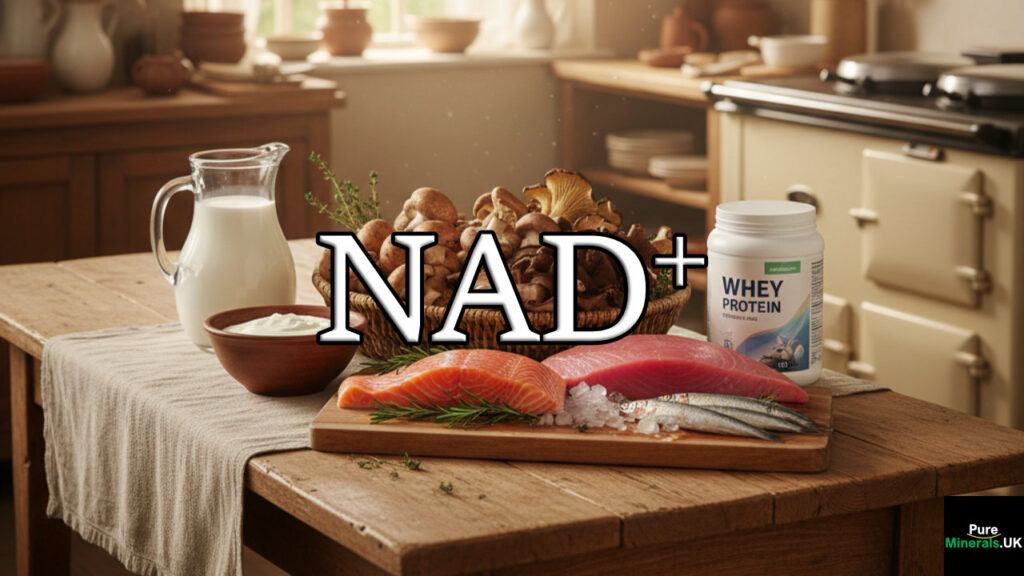
- Dietary sources, including milk, fish, and mushrooms, contain natural NAD+ precursors that support your body’s energy pathways
- Simple lifestyle changes, including exercise and intermittent fasting, can naturally boost your NAD+ production
- Cellular health optimization with NAD+ precursors shows promising benefits for energy, metabolism, and cellular repair mechanisms
Why Your Cells Need NAD⁺ for Energy and Health
Feeling tired isn’t always about lack of sleep – sometimes it’s happening at the cellular level. Your cells rely on a critical molecule called NAD+ (nicotinamide adenine dinucleotide) to convert food into usable energy. This remarkable coenzyme serves as the primary “currency” for cellular energy transfer, enabling the mitochondria – your cellular power plants – to produce ATP, the energy molecule that powers virtually every cellular function in your body. Without sufficient NAD+, your cells simply cannot generate enough energy to function optimally, leading to that persistent fatigue that won’t go away no matter how much you rest.
Beyond energy production, NAD+ plays crucial roles in DNA repair, immune function, and activating proteins called sirtuins that regulate cellular health and longevity. These sirtuin proteins act as cellular guardians, helping to maintain genomic stability and regulate metabolic processes that keep your body functioning properly. The research from NADH Research Institute shows that NAD+ essentially serves as the bridge between your lifestyle choices and your cellular function, influencing everything from how quickly you recover from exercise to how well your body manages blood sugar.
Unfortunately, NAD+ levels naturally decline as we age – dropping by up to 50% between youth and middle age. This decline accelerates further in older adults, creating a cellular energy crisis that contributes to many hallmarks of aging. The good news is that you can influence your NAD+ levels through specific precursor molecules that your body can convert into this vital compound, effectively supporting your cellular energy production where it matters most.
The Science of NAD⁺: Your Cell’s Energy Currency
NAD+ serves as the master regulator of cellular metabolism, functioning as both a coenzyme in energy production and a substrate for enzymes involved in cellular maintenance. In its most fundamental role, NAD+ accepts electrons during metabolic reactions, converting between its oxidized form (NAD+) and its reduced form (NADH) to facilitate the energy transfer process that powers your cells. This conversion happens constantly throughout your body, with each cell recycling its NAD+ supply approximately 2-4 times per day – highlighting just how critical maintaining adequate levels becomes.
What NAD⁺ Does in Your Body
Inside your cells, NAD+ performs three primary functions that make it irreplaceable for health. First, it enables the conversion of nutrients (carbohydrates, fats, and proteins) into cellular energy through a series of biochemical reactions in the mitochondria. Second, it serves as a crucial substrate for sirtuins – a family of enzymes that regulate cellular health, stress resistance, and longevity. Third, NAD+ is essential for DNA repair mechanisms, particularly through an enzyme called PARP (poly ADP-ribose polymerase) that helps maintain genomic stability when DNA damage occurs.
This molecule’s involvement in these fundamental processes explains why NAD+ deficiency impacts nearly every system in the body. From cognitive function and muscle performance to metabolic health and immune response, optimal NAD+ levels support the body’s ability to maintain homeostasis and respond to physiological challenges. The interconnectedness of these pathways means that supporting your NAD+ levels has widespread benefits throughout your entire system.
How NAD⁺ Levels Drop as You Age
The decline in NAD+ levels with age has been well-documented across species, with research showing a steep drop beginning around age 40 in humans. This decrease occurs through multiple mechanisms. As we age, our bodies produce more CD38, an enzyme that consumes NAD+. Simultaneously, we experience a decline in NAMPT, the rate-limiting enzyme responsible for NAD+ production through the salvage pathway. Environmental factors, including chronic inflammation, oxidative stress, and DNA damage, further deplete NAD+ reserves as they activate PARP enzymes that utilize NAD+ for repair processes.
The metabolic consequences of this decline are far-reaching. Reduced NAD+ availability impairs mitochondrial function, leading to decreased energy production and increased reactive oxygen species. This creates a vicious cycle where energy deficiency and increased cellular damage further strain NAD+ resources. The sirtuins, which depend on NAD+ to function, become less active, compromising their ability to regulate metabolism, stress resistance, and cellular maintenance programs that protect against aging.
Signs Your NAD⁺ Levels Might Be Low
While there’s no simple home test to measure NAD+ levels, certain symptoms can signal potential deficiency. Persistent fatigue that doesn’t improve with rest often tops the list, as energy production at the cellular level becomes compromised. Cognitive functions may suffer, with many people reporting brain fog, difficulty concentrating, or memory issues when NAD+ levels are suboptimal. Metabolic changes, including reduced glucose tolerance and difficulty maintaining a healthy weight, can also emerge as cellular energy pathways become less efficient.
Physical performance indicators offer additional clues – decreased exercise tolerance, longer recovery times, and reduced muscle strength may all stem from insufficient NAD+. Sleep disturbances frequently accompany low NAD+ states, as the molecule plays important roles in circadian rhythm regulation. While these symptoms have multiple potential causes, their presence – especially when occurring together – warrants consideration of NAD+ status as a contributing factor.
Common Signs of Low NAD+ Levels:
• Persistent fatigue and low energy
• Cognitive decline or brain fog
• Slow recovery after exercise
• Metabolic issues like weight gain
• Sleep disturbances
• Accelerated visible aging
Supporting your NAD+ levels requires understanding the various precursor molecules that your body can convert into this essential compound. These precursors serve as building blocks, providing your cells with the raw materials needed to synthesize NAD+ through different metabolic pathways. The efficiency of this conversion varies between precursors, as does their bioavailability and cellular uptake – factors that significantly influence their effectiveness as NAD+-boosting supplements.
4 Powerful NAD⁺ Precursors to Restore Your Cellular Energy
Understanding the various NAD+ precursors is essential for anyone looking to optimize their cellular energy production. Each precursor offers unique benefits and conversion efficiencies, allowing your body to manufacture this critical coenzyme through different metabolic pathways. Choosing the right precursor can significantly impact how effectively your body can restore and maintain optimal NAD+ levels for energy production and cellular maintenance. Learn more about carnitine as a potential precursor in this process.
Nicotinamide Riboside (NR): The Efficient Converter
Nicotinamide riboside has emerged as one of the most promising NAD+ precursors, largely due to its efficient conversion pathway and impressive bioavailability. Unlike other precursors, NR can bypass several enzymatic steps in NAD+ synthesis, allowing for more direct conversion. This molecule is converted to NMN by the enzyme NRK (nicotinamide riboside kinase) and then quickly transformed into NAD+ inside the cell. Research published in scientific journals has demonstrated that NR supplementation can increase NAD+ levels by up to 2.7 times in human subjects, with minimal reported side effects even at higher doses.
The cellular absorption advantage of NR comes from its ability to enter cells through specific nucleoside transporters, making it highly bioavailable compared to other precursors. This efficient uptake allows NR to cross the blood-brain barrier more effectively, potentially offering enhanced neurological benefits. Many users report improvements in energy levels, cognitive function, and exercise recovery when supplementing with nicotinamide riboside, though individual responses can vary based on factors like age, baseline NAD+ status, and metabolic health.
Nicotinamide Mononucleotide (NMN): The Direct Approach
Nicotinamide mononucleotide stands just one step away from NAD+ in the biosynthetic pathway, making it one of the most direct precursors available. This proximity in the conversion process has led many researchers to investigate NMN’s potential for rapidly increasing cellular NAD+ levels. The conversion of NMN to NAD+ is catalyzed by the enzyme NMNAT (nicotinamide mononucleotide adenylyltransferase), with minimal intermediate steps required. Recent discoveries about NMN transport mechanisms have revealed that specific transporters called Slc12a8 facilitate its direct entry into cells, challenging earlier beliefs about its absorption limitations.
Animal studies have demonstrated that NMN supplementation can effectively restore declining NAD+ levels in aged mice, improving mitochondrial function, energy metabolism, and several biomarkers of aging. Human clinical trials with NMN, while fewer than those with NR, have shown promising safety profiles and preliminary efficacy for increasing NAD+ levels. The larger molecular size of NMN compared to NR initially raised questions about its bioavailability, but emerging research suggests that specific cellular transporters may enhance its uptake in certain tissues, particularly in the intestine and liver.
Nicotinamide (NAM): The Common Vitamin B3 Form
Nicotinamide represents the most widely consumed form of vitamin B3 in the modern diet and serves as an important NAD+ precursor through the salvage pathway. Found abundantly in foods like meat, fish, and many vegetables, NAM provides a readily available substrate for NAD+ synthesis. The conversion process requires the enzyme NAMPT (nicotinamide phosphoribosyltransferase), which converts NAM to NMN before its final transformation into NAD+. This pathway is particularly important because it allows for the recycling of nicotinamide generated during NAD+-consuming reactions, helping maintain the cellular NAD+ pool.
While NAM effectively raises NAD+ levels, it comes with a significant limitation compared to other precursors. At higher concentrations, nicotinamide acts as an inhibitor of sirtuins – the very enzymes that depend on NAD+ for their beneficial effects on metabolism and longevity. This inhibitory effect creates a ceiling for NAM’s usefulness as an NAD+-boosting strategy, potentially limiting some of the downstream benefits associated with increased NAD+ levels. Nevertheless, as a cost-effective and easily accessible option, NAM provides a practical starting point for those beginning to support their NAD+ metabolism.
Nicotinic Acid (NA): The Original Niacin
Nicotinic acid, commonly known as niacin, was the first form of vitamin B3 discovered and has a long history of use in nutritional supplementation and medical applications. It contributes to NAD+ synthesis through the Preiss-Handler pathway, requiring several enzymatic steps for conversion. This pathway begins with the conversion of NA to nicotinic acid mononucleotide (NAMN) by the enzyme NAPRT (nicotinic acid phosphoribosyltransferase), followed by additional reactions to form NAD+. While effective at raising NAD+ levels, NA has become less popular as a supplement due to its well-known side effect – the “niacin flush,” a temporary but often uncomfortable vasodilation response causing skin redness, warming, and itching.
Despite these limitations, nicotinic acid offers unique metabolic benefits that extend beyond NAD+ restoration. It has well-established effects on lipid profiles, including lowering LDL cholesterol and triglycerides while raising HDL cholesterol. These properties have made pharmaceutical forms of extended-release niacin important therapeutic options for certain cardiovascular conditions. For NAD+ support specifically, however, newer precursors like NR and NMN have largely superseded NA due to their more favorable side effect profiles and more efficient conversion pathways.
NR vs. NMN: Which Precursor Works Better?
The comparison between nicotinamide riboside and nicotinamide mononucleotide remains one of the most debated topics in NAD+ research. Both molecules effectively raise NAD+ levels but differ in their cellular uptake mechanisms and conversion efficiency. NR appears to have an advantage in crossing cellular membranes due to its smaller molecular size and dedicated nucleoside transporters, potentially making it more bioavailable in certain tissues. Meanwhile, NMN offers the advantage of requiring fewer conversion steps once inside the cell, potentially providing more direct NAD+ synthesis.
Current research suggests that the “better” precursor may depend on individual factors and specific therapeutic goals. Some studies indicate that NR may have superior effects on brain NAD+ levels due to enhanced blood-brain barrier penetration, while NMN might offer advantages for liver and muscle tissue. Age, metabolic health status, and existing NAD+ levels may all influence which precursor provides optimal results for a specific individual. Without direct comparative human trials using standardized protocols, definitive claims about superiority remain premature, and some researchers suggest that a combination approach might ultimately prove most beneficial.
Top Food Sources That Naturally Boost NAD⁺ Production
While supplements offer concentrated forms of NAD+ precursors, numerous foods naturally contain compounds that support NAD+ production through various pathways. Incorporating these foods into your daily diet provides a foundation for maintaining healthy NAD+ levels alongside any supplementation strategy. The natural precursors found in whole foods often come packaged with complementary nutrients that may enhance their effectiveness and provide additional health benefits.
1. Dairy Products: Surprising NAD⁺ Helpers

Milk and other dairy products contain significant amounts of nicotinamide riboside, making them valuable dietary sources of this advanced NAD+ precursor. Research has identified cow’s milk as one of the richest natural sources of NR, with concentrations varying based on processing methods and fat content. Whey protein, a common dairy derivative, also provides nicotinamide and other B vitamins that support NAD+ metabolism. Fermented dairy products like yogurt and kefir may offer additional benefits through their influence on gut microbiota, potentially enhancing the absorption and utilization of NAD+ precursors.
2. Fish and Seafood: Omega-3s and NAD⁺ Support

Fish and seafood provide excellent dietary sources of niacin (vitamin B3) in its various forms, supporting NAD+ synthesis through multiple pathways. Tuna, salmon, and sardines rank among the richest sources, with a single serving often providing a substantial percentage of the daily recommended intake of niacin. Beyond their NAD+ precursor content, these foods supply omega-3 fatty acids that help reduce inflammation and oxidative stress – factors that can deplete NAD+ levels when chronically elevated. This dual action makes fish particularly valuable for supporting optimal cellular energy production and metabolic health.
The synergistic effect between omega-3s and NAD+ metabolism extends to cellular membrane health, which influences how efficiently cells can transport and utilize NAD+ precursors. Regular consumption of fatty fish has been associated with improved mitochondrial function and metabolic flexibility, both indicators of healthy NAD+ metabolism. For those unable to consume fish regularly, focused supplementation with both omega-3s and NAD+ precursors may help replicate some of these beneficial effects.
3. Mushrooms: Cellular Energy Boosters

Various mushroom species contain significant amounts of niacin and riboflavin, both important contributors to NAD+ metabolism. Cremini, portobello, and shiitake mushrooms are particularly rich sources, with concentrations that can help meet daily requirements for these B vitamins. Some medicinal mushrooms like cordyceps have been traditionally used to enhance energy levels, with modern research suggesting mechanisms that may involve support for mitochondrial function and NAD+ metabolism. The unique polysaccharides and beta-glucans found in mushrooms may provide additional benefits by supporting immune function and reducing inflammatory processes that can deplete NAD+ resources.
4. Green Vegetables: NAD⁺ Cofactors and More

Leafy greens and cruciferous vegetables provide important cofactors that support efficient NAD+ synthesis and utilization. While not direct precursors, these foods supply minerals like magnesium and zinc that serve as essential cofactors for enzymes involved in NAD+ metabolism. Vegetables like broccoli, kale, and spinach also contain compounds that activate NRF2, a transcription factor that upregulates NAMPT expression – the rate-limiting enzyme in the NAD+ salvage pathway. This indirect support for NAD+ production makes green vegetables an important component of any diet aimed at optimizing cellular energy.
The chlorophyll in green vegetables may offer additional benefits through its structural similarity to molecules involved in electron transport chains, potentially enhancing mitochondrial energy production that depends on NAD+/NADH cycling. The fiber content of these vegetables supports gut health, which emerging research suggests may influence NAD+ metabolism through microbiome-mediated effects on inflammation and nutrient absorption. For optimal results, aim to include a variety of green vegetables daily, emphasizing those with the deepest colors, which typically contain the highest concentrations of beneficial compounds.
NAD⁺ Production Pathways: How Your Body Makes Cellular Fuel
Your body creates NAD+ through several distinct metabolic pathways, each beginning with different precursor molecules but ultimately converging to produce this essential coenzyme. Understanding these pathways reveals why certain precursors may work more effectively for different individuals and how targeted supplementation, such as carnitine, can support your body’s natural NAD+ production mechanisms. These biochemical routes represent your body’s remarkable ability to maintain energy homeostasis under varying conditions.
The Salvage Pathway: Your Body’s Recycling System
The salvage pathway stands as the most energy-efficient method for maintaining NAD+ levels, accounting for over 80% of NAD+ production in most human tissues. This recycling process begins when NAD+-consuming enzymes like sirtuins and PARPs break down NAD+ into nicotinamide (NAM) as a byproduct. The enzyme NAMPT (nicotinamide phosphoribosyltransferase) then converts NAM to nicotinamide mononucleotide (NMN), which NMNAT enzymes transform into NAD+, completing the recycling loop. The salvage pathway’s efficiency makes it particularly important during periods of metabolic stress when energy conservation becomes critical.
NAMPT activity represents the rate-limiting step in this pathway and tends to decline with age, creating a bottleneck in NAD+ regeneration as we grow older. Research has shown that boosting NAMPT expression or activity through exercise, caloric restriction, or certain compounds like resveratrol can enhance this recycling efficiency. Supplementation with precursors like NR or NMN effectively bypasses the NAMPT bottleneck, providing raw materials further along the pathway and supporting more direct NAD+ synthesis.
The de novo Pathway: Creating NAD⁺ from Tryptophan
The de novo pathway represents your body’s ability to synthesize NAD+ “from scratch” using the essential amino acid tryptophan as the starting material. This complex biochemical process involves multiple enzymatic reactions, beginning with the conversion of tryptophan to kynurenine and proceeding through several intermediates before ultimately producing nicotinic acid mononucleotide (NAMN), which is then converted to NAD+. While impressive in its capacity to create NAD+ from a protein building block, this pathway operates with relatively low efficiency, requiring approximately 60mg of tryptophan to generate 1mg of niacin equivalent.
Despite its inefficiency, the de novo pathway plays an important role in maintaining baseline NAD+ levels, particularly in the liver, where the necessary enzymes are most highly expressed. Interestingly, inflammatory conditions can alter tryptophan metabolism through this pathway, potentially reducing its contribution to NAD+ synthesis during illness or chronic inflammation. This connection between inflammation and NAD+ production helps explain why chronic inflammatory conditions often manifest with fatigue and energy depletion as core symptoms.
The Preiss-Handler Pathway: Using Nicotinic Acid
The Preiss-Handler pathway utilizes nicotinic acid (NA, also called niacin) to synthesize NAD+ through a series of enzymatic reactions. This pathway begins with the conversion of NA to nicotinic acid mononucleotide (NAMN) by the enzyme nicotinic acid phosphoribosyltransferase (NAPRT), followed by the formation of nicotinic acid adenine dinucleotide (NAAD), which is finally converted to NAD+. This route represents one of the original vitamin B3-dependent pathways for NAD+ production and has been extensively studied due to niacin’s long history as a dietary supplement and pharmaceutical agent.
While effective at raising NAD+ levels, the Preiss-Handler pathway has become less favored as a supplementation strategy due to the characteristic “niacin flush” side effect associated with NA intake. Nevertheless, this pathway remains important from a dietary perspective, as many foods contain nicotinic acid that contributes to maintaining NAD+ levels. Some tissues express high levels of NAPRT, making them particularly responsive to NA as a precursor, which explains why pharmaceutical niacin can have tissue-specific effects despite systemic side effects.
Daily Habits That Drain Your NAD⁺ Levels
While strategic supplementation and dietary choices can boost NAD+ levels, certain common habits and lifestyle factors actively deplete this vital molecule, creating an uphill battle for cellular energy production. Recognizing these NAD+-draining factors is the first step toward minimizing their impact and protecting your metabolic health. Many of these factors have cumulative effects, gradually reducing NAD+ availability over time and contributing to accelerated aging processes. Consider incorporating supplements such as carnitine to support energy production and combat these effects.
Alcohol Consumption
Alcohol metabolism places significant demands on NAD+, rapidly depleting cellular stores with even moderate consumption. When your body processes alcohol, it requires the enzyme alcohol dehydrogenase, which converts NAD+ to NADH during the detoxification process. This shifts your NAD+/NADH ratio unfavorably and reduces the pool of NAD+ available for other critical cellular functions. Regular alcohol consumption can chronically deplete NAD+ levels, contributing to mitochondrial dysfunction and accelerated aging. Research indicates that the NAD+ depletion from alcohol may contribute to many of alcohol’s negative health effects, including liver damage and neurological impairment.
Poor Sleep Patterns
Disrupted circadian rhythms and insufficient sleep quality directly impact NAD+ metabolism through multiple mechanisms. NAD+ plays a crucial role in regulating circadian genes through sirtuin activation, while circadian rhythms reciprocally influence NAD+ production – creating a bidirectional relationship that can easily become imbalanced. Sleep deprivation increases oxidative stress and inflammation, both of which activate NAD+-consuming enzymes like PARPs that deplete cellular NAD+ stores. Studies show that consistently poor sleep can reduce NAMPT expression, compromising the efficiency of the salvage pathway that maintains NAD+ levels.
Chronic Stress
Psychological and physiological stress triggers increased activity of PARP enzymes as part of the cellular stress response. These enzymes consume significant amounts of NAD+ while attempting to repair DNA damage caused by stress-induced oxidative processes. The resulting NAD+ depletion can create a vicious cycle where lower NAD+ levels reduce stress resilience, making cells more vulnerable to future stressors. The hormone cortisol, elevated during chronic stress, may also interfere with normal NAD+ metabolism by altering gene expression patterns related to energy production.
Processed Food Diets
Highly processed diets typically lack sufficient NAD+ precursors while simultaneously creating metabolic conditions that increase NAD+ consumption. The high sugar content in processed foods can lead to blood glucose spikes that require increased NAD+ utilization for metabolism, while providing minimal nutritional support for NAD+ production. Additionally, processed foods often trigger inflammatory responses that activate NAD+-consuming enzymes, further depleting cellular levels. The absence of complex B vitamins in refined foods means these diets fail to provide the raw materials needed for optimal NAD+ synthesis through various pathways.
5 Simple Lifestyle Changes to Boost Your Natural NAD⁺ Production
Beyond supplementation, specific lifestyle modifications can significantly enhance your body’s intrinsic ability to produce and maintain optimal NAD+ levels. These natural approaches work by activating the genetic and enzymatic machinery involved in NAD+ metabolism, often providing synergistic benefits when combined with targeted precursor supplementation. The beauty of these strategies lies in their holistic impact – they not only boost NAD+ but improve overall health through multiple parallel mechanisms.
1. Exercise: The Natural NAD⁺ Stimulator
Physical activity stands as perhaps the most powerful natural intervention for boosting NAD+ levels, with both immediate and long-term benefits. During exercise, your muscles increase their NAD+/NADH ratio to support heightened energy demands, while simultaneously upregulating NAMPT expression to enhance NAD+ production through the salvage pathway. Research demonstrates that even a single exercise session can increase NAD+ levels in muscle tissue, with regular training creating sustained improvements in NAD+ metabolism. Different exercise modalities appear to influence NAD+ through slightly different mechanisms – endurance training enhances mitochondrial efficiency and NAD+ turnover, while resistance training may stimulate acute increases in NAD+ to support muscle recovery and growth.
2. Intermittent Fasting: Activate Your NAD⁺ Genes
Periods of caloric restriction trigger a powerful cellular response that includes upregulation of NAMPT expression and enhanced sirtuin activity, both crucial elements of NAD+ metabolism. Intermittent fasting creates mild metabolic stress that activates these pathways, effectively boosting NAD+ production while simultaneously enhancing its utilization for beneficial cellular maintenance processes. Clinical studies have demonstrated that fasting periods of 16-24 hours can significantly increase NAD+ levels in various tissues, with the liver showing particularly robust responses. The flexibility of intermittent fasting protocols makes this approach accessible to most people – even time-restricted eating within an 8-10 hour window can provide meaningful benefits for NAD+ metabolism while being sustainable for long-term practice.
3. Sun Exposure: The Circadian Connection
Natural light exposure, particularly morning sunlight, helps synchronize your circadian rhythm with powerful effects on NAD+ metabolism. This light-driven synchronization activates CLOCK genes that regulate NAMPT expression, effectively scheduling your body’s NAD+ production to align with daily activity patterns. Research shows that consistent exposure to natural light cycles can increase NAMPT activity by up to 40%, substantially improving NAD+ production efficiency. Beyond just timing, the specific wavelengths in natural sunlight appear to influence mitochondrial function through non-visual photoreceptors, potentially enhancing the NAD+/NADH cycling that powers cellular energy production.
4. Heat and Cold Therapy: Stress Your Cells in a Good Way
Hormetic stressors like sauna sessions or cold exposure activate cellular stress response pathways that ultimately enhance NAD+ metabolism. These controlled stressors increase the expression of heat shock proteins and cold shock proteins, which protect cellular components while stimulating mitochondrial biogenesis and NAD+ production. Regular sauna use has been shown to increase NAMPT activity and NAD+ levels, with studies indicating 20-30 minute sessions several times weekly provide optimal benefits. Similarly, cold exposure through practices like cold showers or ice baths activates brown adipose tissue, which relies heavily on NAD+ for thermogenic energy production, potentially creating a beneficial adaptive response in NAD+ metabolism throughout the body.
5. Quality Sleep: Your NAD⁺ Recovery Time
Sleep represents a critical recovery period for NAD+ metabolism, allowing for restoration of optimal levels and efficient cycling between NAD+ and NADH. During deep sleep stages, your body upregulates specific repair processes that depend on NAD+, while simultaneously preparing for the next day’s NAD+ production by optimizing enzyme expression. Research indicates that disrupted sleep reduces NAD+ levels by up to 30%, while improving sleep quality can restore optimal production within just a few days. Creating consistent sleep routines, minimizing blue light exposure before bedtime, and maintaining a cool sleeping environment all contribute to the quality sleep that supports robust NAD+ metabolism.
How to Choose the Right NAD⁺ Precursor Supplement
With the growing market for NAD+ precursors, selecting the right supplement requires careful consideration of several factors beyond just the specific molecule. Quality, bioavailability, dosage precision, and manufacturing standards all significantly influence a supplement’s effectiveness. Making an informed choice involves understanding both the science behind these precursors and the practical aspects of supplement production and formulation that determine how well they’ll work in your body.
Quality Markers to Look For
Third-party testing represents the gold standard for supplement quality verification, providing independent confirmation of purity and potency. Look for products tested by organizations like NSF International, USP, or ConsumerLab, which verify that supplements contain their stated ingredients at the claimed potency without harmful contaminants. For precursors like NR, patented forms such as Niagen® have undergone specific clinical testing and maintain consistent manufacturing standards that ensure reliable quality. The stability of NAD+ precursors can vary significantly between products, so choosing manufacturers who use stabilized forms and appropriate packaging (like blister packs for moisture-sensitive compounds) helps ensure the supplement maintains its potency until consumption.
Effective Dosage Guidelines
Clinical research provides important guidance for effective dosing of different NAD+ precursors, though optimal amounts may vary based on individual factors. For nicotinamide riboside, human studies show beneficial effects beginning at 250mg daily, with many clinical trials using 500-1000mg for therapeutic benefits. Nicotinamide mononucleotide appears to require slightly higher doses, with research typically using 250-1200mg daily to achieve significant increases in NAD+ levels. The appropriate dose may depend on your age, baseline NAD+ status, health conditions, and specific goals – generally, older individuals or those with conditions associated with NAD+ depletion may benefit from higher doses within the studied range.
It’s worth noting that more isn’t always better when it comes to NAD+ precursors. Some research suggests that extremely high doses may activate negative feedback mechanisms that can actually reduce the efficiency of NAD+ production. Starting with lower doses and gradually increasing while monitoring your response provides a prudent approach to finding your optimal dosage. For those beginning supplementation, a “loading phase” of several weeks at a moderate dose often helps restore baseline levels before potentially adjusting to a maintenance dose for long-term support.
Timing and Absorption Tips
The timing of NAD+ precursor supplementation can significantly influence its effectiveness due to both circadian fluctuations in NAD+ metabolism and practical absorption considerations. Morning supplementation aligns with natural peaks in NAMPT activity for many individuals, potentially enhancing the utilization of precursors through the salvage pathway. Taking precursors with a small amount of healthy fat may improve absorption for some forms, particularly nicotinamide riboside, which demonstrates enhanced bioavailability when consumed with meals containing moderate fat content.
Certain combinations may enhance the effectiveness of NAD+ precursors through synergistic mechanisms. Compounds like resveratrol, quercetin, and apigenin can activate sirtuins and inhibit CD38 (an NAD+-consuming enzyme), potentially amplifying the benefits of increased NAD+ availability. Similarly, methylated B vitamins like B12 and folate support methylation processes that intersect with NAD+ metabolism, making them valuable complementary nutrients. For those using multiple supplement types, spacing NAD+ precursors apart from zinc supplements is advisable, as zinc can influence the activity of certain NAD+-related enzymes when taken simultaneously in high doses.
Real Benefits You Can Expect From Boosting NAD⁺ Levels
The effects of successfully raising NAD+ levels extend throughout your body, influencing multiple systems and providing benefits that often become noticeable within weeks of beginning appropriate supplementation or lifestyle modifications. While individual responses vary based on age, baseline NAD+ status, and overall health, clinical research and user experiences have identified several consistent benefits.
These improvements reflect the fundamental role NAD+ plays in cellular energy production and maintenance processes throughout your body. Enhanced energy metabolism typically appears as one of the earliest noticeable effects, with many people reporting improved physical energy, reduced afternoon fatigue, and greater exercise capacity within 2-4 weeks of beginning NAD+ support. This energy boost reflects improved mitochondrial function as NAD+ availability increases, allowing for more efficient conversion of nutrients into ATP, particularly in high-energy tissues like muscles and the brain.
Frequently Asked Questions
As interest in NAD+ precursors continues to grow, certain questions consistently arise from those considering these supplements for their health regimen. Addressing these common concerns can help you make more informed decisions about incorporating NAD+ support into your wellness strategy. The answers provided reflect current scientific understanding, though research in this field continues to evolve rapidly as more clinical studies examine these compounds in diverse populations.
How long does it take to notice effects from NAD⁺ precursor supplements?
The timeline for experiencing noticeable benefits from NAD+ precursors typically ranges from 2-8 weeks, depending on your baseline NAD+ status, age, dosage, and specific symptoms. Initial improvements in energy levels and mental clarity often emerge within the first 2-3 weeks as cellular energy production begins to optimize. More substantial benefits related to exercise recovery, sleep quality, and stress resilience typically develop over 4-8 weeks of consistent supplementation as tissues throughout your body adapt to improved NAD+ availability. Some metabolic parameters like glucose regulation and inflammatory markers may take 8-12 weeks to show measurable improvements, reflecting the more gradual systemic changes that occur with long-term NAD+ optimization.
Can I take multiple NAD⁺ precursors at the same time?
Combining NAD+ precursors is scientifically sound and may offer complementary benefits through their different conversion pathways. Research indicates that precursors like NR and NMN can work through slightly different mechanisms and may preferentially target different tissues, potentially providing more comprehensive NAD+ support when used together. A common approach involves using NR for its superior bioavailability and transport properties, alongside smaller amounts of NMN for its direct conversion advantage once inside cells. However, total dosage management becomes important with combination strategies – the total precursor amount should stay within research-supported ranges, typically adjusting individual precursor doses downward when using multiple types together.
Are there any side effects of NAD⁺ precursor supplements?
NAD+ precursors demonstrate excellent safety profiles in clinical studies, with side effects typically mild and transient when they do occur. The most commonly reported effects include occasional flushing (primarily with nicotinic acid), temporary changes in energy levels during initial adaptation, and mild gastrointestinal symptoms at higher doses. These effects often resolve within the first few weeks of supplementation as the body adapts to enhanced NAD+ metabolism. Unlike many supplements, NAD+ precursors have undergone substantial safety testing, with multiple human trials showing no serious adverse effects at doses up to 2000mg daily for compounds like nicotinamide riboside. Starting with lower doses and gradually increasing can minimize the likelihood and intensity of any adaptive symptoms during the initial supplementation period.
Do NAD⁺ levels affect weight loss?
NAD+ plays several crucial roles in metabolic regulation that can influence weight management and body composition. As a critical cofactor for sirtuins, adequate NAD+ levels support proper mitochondrial function and metabolic flexibility – the ability to efficiently switch between carbohydrate and fat metabolism based on nutrient availability. Research indicates that declining NAD+ levels can contribute to reduced metabolic rate and altered fat storage patterns, particularly with age. While NAD+ precursors alone aren’t weight loss supplements per se, clinical studies suggest they may enhance the effectiveness of other weight management strategies by improving metabolic efficiency. The most promising results appear when NAD+ support combines with exercise and caloric moderation, creating synergistic effects on mitochondrial function and metabolic health.
Can NAD⁺ boosters help with brain fog and mental clarity?
Cognitive function depends heavily on optimal energy metabolism in neurons, making the brain particularly sensitive to NAD+ availability. Multiple clinical studies have demonstrated improvements in concentration, mental clarity, and cognitive processing with NAD+ precursor supplementation, particularly in older adults or those experiencing stress-related cognitive symptoms. These benefits likely stem from several mechanisms, including enhanced mitochondrial energy production in neurons, improved neurotransmitter synthesis, and activation of neuroprotective pathways through sirtuin enzymes that depend on NAD+. Subjective reports from supplement users frequently highlight reduced brain fog and improved mental endurance as among the most noticeable benefits, often appearing within the first month of consistent supplementation.
For those dealing with cognitive challenges, combining NAD+ precursors with other neuro-supportive nutrients like omega-3 fatty acids, phosphatidylserine, and acetyl-L-carnitine may provide synergistic benefits by addressing multiple aspects of brain health simultaneously.