

Published: 20 November 2025
Last Updated: 3 April 2026
This article is periodically reviewed and updated to reflect current scientific understanding by Vic George.
Fact-Checked: 1 other authoritative medical/scientific reference. See our Editorial Policy.

What Is Boron and Why Is This Trace Mineral Important for Bone Strength, Hormone Activity, and Cognitive Health?
Boron is a trace mineral found naturally in plant foods, where it supports bone strength, hormone metabolism, and cognitive performance. Although the body requires only small amounts, boron influences vitamin D utilization, calcium and magnesium balance, and neural function. Plant-derived ionic boron is highly bioavailable, making it a meaningful contributor to overall nutritional wellness.
Definition:
Boron is a non-metallic trace mineral present in fruits, leafy greens, nuts, and legumes. It participates in metabolic pathways that regulate bone mineralization, steroid hormone balance, and neural communication. Because it occurs in plant-based ionic forms, boron is generally well absorbed and efficiently used within physiological systems.
Boron plays a regulatory role in several nutrient-dependent pathways. It helps modulate the activity of vitamin D, calcium, and magnesium—three key factors in maintaining bone integrity. It also influences estrogen and testosterone balance, supports antioxidant defences, and has been linked to improved attention and cognitive processing. In foods, boron appears as borate ions and organic boron complexes that the body absorbs effectively, making dietary intake far more relevant than supplemental forms.
Key Facts:
- Chemical symbol: B
- Mineral class: Trace mineral
- Typical ionic form in food: Borate ions (e.g., B(OH)₄⁻) and organic boron complexes
- Key physiological roles: Bone metabolism, hormone regulation, cognitive function
- Systems supported: Skeletal, endocrine, nervous
- Preferred sources: Fruits, nuts, seeds, legumes, leafy greens
- Deficiency considerations: May affect bone density, hormone balance, or cognitive clarity
- Interactions: Works closely with vitamin D, calcium, magnesium, and antioxidant systems
Key Takeaways
- Boron is an essential trace mineral that supports bone health by enhancing calcium absorption and vitamin D metabolism, potentially reducing osteoporosis risk.
- Regular boron consumption has been linked to improved brain function, including better memory, focus, and cognitive performance in aging adults.
- This mineral plays a crucial role in hormone regulation, supporting healthy estrogen levels in women and testosterone production in men.
- Foods rich in boron include fruits (apples, grapes), nuts, legumes, and leafy greens, with soil quality significantly affecting boron content.
- While most people obtain sufficient boron through a balanced diet, supplements may benefit those with specific health concerns like arthritis or bone density issues.
Why Boron Matters: The Essential Trace Mineral You’ve Never Heard Of
Boron might be the most important mineral you’ve never thought about. This trace element, while only needed in small amounts, plays a surprisingly critical role in numerous bodily functions that directly impact your daily health and long-term wellbeing. Found naturally in plant-based foods and soil, boron has been quietly supporting human health for centuries, yet its significance remains largely underappreciated in mainstream nutrition conversations.
What makes boron truly remarkable is its versatility within human physiology. From strengthening your skeletal system to optimizing hormone production and enhancing brain function, this mineral works at the cellular level to maintain balance across multiple body systems. Research shows that populations consuming higher levels of boron through their diets typically experience better bone health, improved cognitive function, and more balanced hormonal profiles than those with limited intake.
Despite its importance, no official Recommended Daily Allowance (RDA) has been established for boron, though research suggests an intake of 1-3 mg daily provides significant health benefits. Modern agricultural practices and processed food consumption have potentially reduced our natural boron intake compared to our ancestors. Understanding how to incorporate boron-rich foods into your diet can be a simple yet effective strategy for supporting overall health and preventing numerous chronic conditions.
How Boron Supports Bone Health and Prevents Osteoporosis
One of boron’s most well-documented benefits is its profound impact on skeletal health. This trace mineral serves as a key player in maintaining bone density and strength throughout life. Studies have consistently shown that individuals with higher boron intake typically maintain better bone mineral density as they age, which directly translates to reduced fracture risk and lower rates of osteoporosis. This relationship is particularly significant for postmenopausal women, who face accelerated bone loss due to hormonal changes.
Calcium Absorption Enhancement
Boron doesn’t work in isolation—it functions as a metabolic regulator that improves how your body utilizes other essential bone-building nutrients. The mineral significantly enhances calcium absorption and retention, ensuring that this critical bone mineral actually reaches and remains in your skeletal tissue where it’s needed most. Research indicates that boron reduces urinary calcium excretion by as much as 44%, effectively keeping calcium in the body where it can strengthen bone matrix rather than being lost through elimination. For more on how natural elements can support your health, explore the benefits of turmeric.
Beyond just calcium, boron also improves magnesium absorption and utilization—another mineral vital for bone formation and density. This synergistic effect between minerals exemplifies why isolated supplements often don’t work as effectively as nutrients obtained through whole foods, where these beneficial interactions occur naturally. The presence of adequate boron essentially optimizes your body’s ability to build and maintain bone tissue using available minerals, functioning as a metabolic facilitator rather than a structural component itself.
Vitamin D Metabolism Regulation
Vitamin D stands as a cornerstone of bone health, and boron plays a surprisingly important role in how your body processes and utilizes this critical nutrient. Research has demonstrated that boron significantly improves the biological activity and half-life of vitamin D, essentially making this bone-building vitamin more effective and longer-lasting in the body. This relationship becomes particularly important during winter months or for individuals with limited sun exposure, when natural vitamin D production may already be compromised.
The boron-vitamin D connection helps explain why this trace mineral has such outsized effects on bone health despite being needed in relatively small amounts. By enhancing both calcium absorption and vitamin D function, boron creates a metabolic environment that strongly favors bone preservation and rebuilding. This dual-action approach makes adequate boron intake particularly valuable for those at elevated risk for bone density issues, including older adults, women approaching menopause, and individuals with limited mobility or chronic inflammatory conditions.
Research on Boron for Arthritis Relief
The relationship between boron and joint health extends beyond just bone density to include significant effects on arthritis symptoms and progression. Clinical research has found that populations living in regions with higher environmental boron levels typically experience lower rates of arthritis compared to those in boron-deficient areas. This epidemiological connection has been supported by intervention studies showing that boron supplementation can reduce joint pain and improve mobility in people suffering from osteoarthritis.
The mechanism behind boron’s anti-arthritis effects appears to be multifaceted. First, it helps integrate calcium into cartilage, strengthening the structural integrity of joint tissues. Second, boron reduces inflammatory markers that contribute to joint degradation and pain. A landmark study published in the Journal of Trace Elements in Medicine and Biology demonstrated that patients receiving 6mg of boron daily experienced significant reductions in arthritis pain and improved joint mobility within just 8 weeks, with no adverse effects reported.
Boron’s Impact on Brain Function and Cognitive Health
Beyond skeletal benefits, boron demonstrates remarkable effects on brain health and cognitive function. This trace mineral influences electrical activity in the brain, affecting everything from alertness to information processing speed. Multiple human studies have documented improved performance on attention tasks, manual dexterity, short-term memory, and hand-eye coordination with increased boron intake. For more information on how natural elements like boron can influence health, explore the benefits of turmeric.
The neuroprotective effects of boron may be particularly beneficial during aging, when cognitive decline becomes a concern. Research indicates that adequate boron levels help maintain proper brain function by supporting cell membrane integrity and facilitating the transmission of messages between neurons. This helps explain why some studies have found correlations between higher dietary boron intake and reduced risk of cognitive impairment in older adults.
Memory and Concentration Benefits
One of boron’s most compelling cognitive effects relates to memory formation and retention. Controlled studies have demonstrated that when participants increased their boron intake to approximately 3-4mg daily, they showed measurable improvements in both short-term memory and attention span. These benefits were particularly pronounced for tasks requiring hand-eye coordination and fine motor skills, suggesting boron plays a role in integrating cognitive processing with physical response. For more information on boron’s role in nutrition, you might find the details on aluminum nutrition interesting, as it provides insights into trace minerals.
The mechanism behind these memory benefits appears to involve boron’s influence on neurotransmitter production and activity. Research suggests this mineral helps regulate the availability of key neurotransmitters including serotonin and dopamine, which are critical for focus, motivation, and information processing. Additionally, boron appears to enhance brain electrical activity in regions associated with memory formation and retrieval, creating more efficient neural pathways for learning and recall.
Cognitive Performance in Older Adults
As we age, maintaining cognitive function becomes increasingly important, and boron may offer significant protective benefits. Epidemiological studies have identified correlations between higher dietary boron intake and better performance on cognitive assessments in older populations. These findings suggest that consistent, adequate boron consumption throughout life may help preserve brain function and potentially slow age-related cognitive decline.
Particularly noteworthy is boron’s apparent effect on executive function—the higher-order cognitive skills that allow for planning, problem-solving, and self-regulation. A study published in the Journal of Environmental Health found that adults with higher boron levels demonstrated better performance on tests measuring these complex cognitive abilities. For aging individuals, maintaining these capabilities can significantly impact quality of life and independence, making boron’s cognitive benefits potentially quite valuable from a practical standpoint. Learn more about boron’s role in nutrition and its trace mineral roles.
Hormonal Benefits of Adequate Boron Intake
One of boron’s most significant yet underappreciated roles in human physiology is its influence on hormone production and regulation. This trace mineral serves as a critical cofactor in the synthesis and metabolism of several key hormones, including sex hormones and vitamin D (which functions as both a vitamin and hormone in the body). Through these interactions, boron helps maintain hormonal balance that affects everything from reproductive health to energy levels and mood stability. For more detailed information on boron’s uses, visit Dr. Axe’s article on boron uses.
The hormone-modulating effects of boron are particularly relevant in today’s environment, where endocrine disruption from environmental chemicals has become increasingly common. By supporting natural hormone production pathways, adequate boron intake may help counteract some of these external influences and maintain more optimal hormonal function. This regulatory role makes boron especially important during hormonal transition periods like puberty, pregnancy, and menopause.
Estrogen Regulation in Women
For women, boron plays a particularly important role in estrogen metabolism. Research shows that boron helps maintain healthy estrogen levels by supporting the body’s natural production mechanisms and optimizing how estrogen is utilized at the cellular level. This relationship becomes especially significant during menopause, when natural estrogen production declines. Studies indicate that adequate boron intake may help moderate some menopausal symptoms by supporting the body’s remaining estrogen activity.
Beyond symptom management, boron’s influence on estrogen metabolism has broader implications for women’s health. Healthy estrogen function is crucial for maintaining bone density, cardiovascular protection, cognitive function, and skin elasticity. By supporting optimal estrogen activity, adequate boron intake may contribute to better aging outcomes across multiple body systems. This hormonal support function represents one of the most compelling reasons for women to ensure sufficient boron in their diets, particularly after age 40.
Testosterone Production in Men
For men, boron demonstrates significant effects on testosterone production and free testosterone levels. Clinical research has shown that boron supplementation can increase free testosterone—the biologically active form of this hormone—by reducing sex hormone binding globulin (SHBG), which otherwise would bind testosterone and make it unavailable for use. One study found that just 10mg of boron daily increased free testosterone levels by 28% after just one week of supplementation.
The implications of boron’s testosterone-boosting effects extend to multiple aspects of men’s health. Healthy testosterone levels support muscle mass preservation, bone density, energy levels, and cognitive function. Additionally, optimal testosterone is associated with improved mood, motivation, and sexual health. These wide-ranging benefits make adequate boron intake particularly valuable for men over 40, when natural testosterone production typically begins to decline by approximately 1-2% annually.
Thyroid Function Support
The thyroid gland serves as the body’s metabolic control center, and boron appears to play a supportive role in maintaining optimal thyroid function. Research indicates that boron helps regulate the conversion of T4 (the storage form of thyroid hormone) to T3 (the active form that cells can use), potentially improving metabolic efficiency. This relationship may partly explain why adequate boron levels have been associated with improved energy levels and metabolic health.
Thyroid health affects virtually every system in the body, from metabolism and weight management to cognitive function and mood regulation. By supporting healthy thyroid hormone activity, boron contributes to whole-body homeostasis and efficient cellular energy production. For individuals with subclinical thyroid issues—which are increasingly common but often undiagnosed—ensuring adequate boron intake may help optimize thyroid function and alleviate related symptoms like fatigue, weight management difficulties, and temperature sensitivity.
Anti-Inflammatory Properties of Boron
Chronic, low-grade inflammation underlies many modern health conditions, from arthritis and heart disease to cognitive decline and metabolic disorders. Boron demonstrates significant anti-inflammatory properties that may help mitigate this damaging process. Research shows that adequate boron status helps regulate the body’s inflammatory response, potentially reducing the risk and severity of numerous inflammation-driven conditions.
The anti-inflammatory effects of boron appear to work through multiple pathways, making it particularly valuable as a natural inflammation modulator. Rather than simply blocking inflammatory processes (like many medications), boron helps normalize the body’s inflammatory response, allowing for appropriate inflammation when needed (such as during infection) while preventing excessive or chronic inflammation that damages tissues. This balanced approach supports the body’s natural healing processes while protecting against inflammatory damage.
Reduction of Inflammatory Markers
Laboratory studies have consistently demonstrated boron’s ability to decrease levels of key inflammatory markers that drive tissue damage. Specifically, boron has been shown to reduce C-reactive protein (CRP), tumor necrosis factor-alpha (TNF-α), and interleukin-6 (IL-6)—all biomarkers strongly associated with chronic inflammation and disease progression. These reductions occur at the molecular level, where boron influences enzyme activity and cellular signaling pathways that regulate inflammatory responses.
The anti-inflammatory effects of boron appear particularly potent in joint tissues, which may explain its significant benefits for arthritis sufferers. Research indicates that adequate boron levels help maintain the structural integrity of cartilage while simultaneously reducing inflammatory processes that lead to joint degradation. This dual-action approach—supporting tissue health while reducing damaging inflammation—represents one of boron’s most valuable contributions to long-term joint function and mobility.
Potential Benefits for Inflammatory Conditions
Beyond arthritis, boron’s anti-inflammatory properties may offer benefits for numerous other inflammation-driven conditions. Emerging research suggests potential applications for conditions including inflammatory bowel disease, asthma, and even certain inflammatory skin disorders. While more clinical studies are needed to establish definitive protocols, the underlying mechanisms suggest that maintaining optimal boron status may help moderate inflammatory processes throughout the body, similar to the effects observed with turmeric.
Of particular interest is boron’s potential role in cardiovascular health. Chronic inflammation contributes significantly to atherosclerosis development and progression, and preliminary research suggests boron may help reduce this inflammatory burden. Population studies have identified correlations between higher dietary boron intake and reduced markers of cardiovascular inflammation, suggesting this mineral may contribute to heart health through its anti-inflammatory effects. These findings align with broader observations that diets rich in plant foods—which naturally contain more boron—are associated with reduced cardiovascular risk.
Top Food Sources of Boron
Ensuring adequate boron intake primarily involves consuming a variety of plant foods, as this mineral is concentrated in the plant kingdom rather than animal products. The boron content of foods varies widely based on growing conditions, soil quality, and plant species. However, certain food categories consistently emerge as superior sources of this vital trace mineral. Incorporating these boron-rich foods into your regular diet provides the most bioavailable form of this nutrient while simultaneously delivering numerous other health-promoting compounds.
1. Fruits: Apples, Grapes, and Berries

Fruits represent one of the most accessible and delicious sources of dietary boron. Apples contain approximately 0.5mg per medium fruit, while a cup of grapes delivers around 0.4mg. Berries, particularly blackberries and strawberries, also provide significant amounts, with a cup offering between 0.2-0.3mg. The bioavailability of boron from these fruit sources appears particularly high, making them efficient delivery vehicles for this nutrient. Additionally, herbs like tarragon can complement these fruits in a balanced diet.
Dried fruits offer even more concentrated boron content due to water removal. Prunes, raisins, and dried apricots stand out as exceptional sources, with just 1/4 cup of raisins providing approximately 0.8-0.9mg of boron. Including a small serving of dried fruit as a daily snack represents one of the simplest strategies for boosting boron intake, though portion control is advisable due to the concentrated sugar content in dried fruits.
2. Vegetables: Leafy Greens and Root Vegetables

Various vegetables provide excellent boron content, with leafy greens and certain root vegetables standing out as particularly rich sources. Broccoli, spinach, and kale all contain meaningful amounts of boron, typically providing 0.2-0.3mg per cup. Root vegetables like carrots, potatoes, and especially beets also contribute significantly to dietary boron intake, with the added benefit of providing sustainable energy and numerous other nutrients.
Avocados deserve special mention for their outstanding boron content, with one medium fruit providing approximately 1.0-1.2mg—one of the highest concentrations found in commonly consumed foods. This makes avocados a particularly valuable addition to plant-based diets focused on optimizing boron intake. The healthy fats in avocados may also enhance the absorption and utilization of boron, creating a synergistic nutritional effect.
3. Nuts: Almonds and Walnuts

Tree nuts represent one of the most concentrated dietary sources of boron, with almonds leading the category at approximately 1.0-1.5mg per ounce (about 23 almonds). Walnuts, hazelnuts, and Brazil nuts also provide significant amounts, typically in the range of 0.3-0.8mg per ounce serving. The combination of boron with healthy fats, protein, and fiber makes nuts an exceptionally nutritious way to increase intake of this mineral.
Beyond their boron content, nuts provide synergistic nutrients that enhance overall bone and hormonal health. The vitamin E, magnesium, and plant sterols found in nuts complement boron’s effects on bone metabolism and hormonal function. A daily serving of mixed nuts (about one ounce) can significantly contribute to optimal boron status while delivering numerous other health benefits, making them a nutritional powerhouse worth including regularly.
4. Legumes: Beans and Lentils

Legumes provide steady, reliable amounts of boron, with most varieties offering 0.3-0.6mg per cup cooked. Chickpeas, lentils, and kidney beans stand out as particularly good sources within this food group. The combination of boron with plant protein and fiber makes legumes an especially valuable dietary component for those seeking to optimize bone and hormonal health.
The boron in legumes appears to work synergistically with other nutrients present in these foods, particularly magnesium and various B vitamins. This nutritional teamwork enhances the body’s utilization of all these nutrients, potentially magnifying their beneficial effects. Regular legume consumption (aiming for 3-4 servings weekly) represents a simple dietary strategy for supporting optimal boron status while simultaneously improving overall nutrition quality.
5. Whole Grains and Seeds

Whole grains, particularly oats, barley, and quinoa, provide meaningful amounts of boron ranging from 0.2-0.5mg per cooked cup. The outer bran layer of grains contains the highest concentration of this mineral, which is why whole, unrefined grains offer significantly more boron than their refined counterparts. Similarly, seeds like chia, flax, and pumpkin seeds contribute approximately 0.2-0.4mg per ounce, making them valuable boron sources when consumed regularly.
Coffee and wine deserve mention as somewhat unexpected sources of dietary boron. Regular coffee consumption can contribute significantly to daily boron intake, with studies suggesting that for some populations, coffee represents one of the top sources of this nutrient. Similarly, red wine contains measurable amounts of boron. While neither should be consumed specifically for their boron content, this helps explain the positive health associations observed with moderate consumption of these beverages in some research.
Daily Boron Requirements and Signs of Deficiency
Despite extensive research demonstrating boron’s importance, no official Recommended Daily Allowance (RDA) has been established for this mineral. However, based on population studies and clinical research, most experts suggest an optimal intake range of approximately 1-3mg daily for adults, with some researchers advocating for slightly higher amounts (3-6mg) for therapeutic purposes related to bone health and arthritis management. Most people consuming diverse, plant-rich diets naturally achieve the lower end of this range, though many fall short of optimal intake levels.
Recommended Intake Levels
The absence of an official RDA for boron reflects ongoing scientific debate about precise requirements rather than a lack of importance. Research consistently shows benefits at intake levels of 3mg daily, with additional benefits for certain conditions at 6mg daily, and upper tolerable limits established around 20mg for adults. For practical purposes, aiming for 3mg daily through food sources represents a reasonable target that aligns with observed benefits while maintaining a substantial safety margin.
Life stage appears to influence optimal boron requirements, with potentially higher needs during periods of growth, pregnancy, and older age when bone metabolism concerns increase. Women may also benefit from slightly higher boron intake than men due to this mineral’s supportive effects on estrogen metabolism and bone preservation. While these nuanced recommendations await further validation through clinical research, they reflect our current understanding of how boron functions within different physiological contexts.
Populations at Risk for Low Boron Status
Several population groups face elevated risk for suboptimal boron status. Those consuming highly processed diets with limited plant foods typically ingest less than 1mg daily—an amount that may be insufficient for optimal health. Similarly, individuals with malabsorption conditions like celiac disease or inflammatory bowel disorders may absorb less boron from their diet, potentially requiring more intentional intake of boron-rich foods.
Older adults represent another group at potential risk for low boron status. Declining dietary intake, reduced absorption efficiency, and increased excretion can all contribute to lower boron levels with advancing age. This is particularly concerning given that older adults may simultaneously benefit most from boron’s supportive effects on bone health, brain function, and inflammatory modulation. For these individuals, special attention to including multiple boron-rich foods daily becomes increasingly important for maintaining optimal health.
Recognizing Potential Deficiency Signs
Unlike some nutrients with clear, acute deficiency symptoms, boron insufficiency typically manifests as subtle, gradual effects that may be difficult to attribute specifically to this mineral. Potential indicators of suboptimal boron status include poor wound healing, decreased bone mineral density, reduced cognitive performance, worsening arthritis symptoms, and decreased hormone levels (particularly steroid hormones). These effects develop gradually and may be mistakenly attributed solely to aging rather than nutritional factors.
The insidious nature of suboptimal boron status underscores the importance of preventive nutrition rather than waiting for obvious deficiency signs. By consistently including boron-rich foods in your regular diet, you can maintain optimal levels of this mineral before subtle deficiency effects accumulate into noticeable health problems. This proactive approach aligns with the broader principle that nutrition works best as a preventive strategy rather than an intervention after problems have developed.
Boron Supplements: When They’re Needed
While obtaining nutrients from whole foods represents the ideal approach, certain circumstances may warrant consideration of boron supplementation. Individuals with documented low boron status, those with conditions that may benefit from therapeutic boron levels (particularly osteoarthritis and osteoporosis), and people consuming limited plant foods may benefit from supplemental boron. Additionally, those living in regions with low soil boron levels might consider supplements to compensate for reduced content in locally grown foods.
Types of Boron Supplements Available
Boron supplements come in several forms, with varying bioavailability and potential benefits. Boric acid, sodium borate, and calcium fructoborate represent the most common supplemental forms, with calcium fructoborate showing particularly promising results in clinical studies for arthritis and bone health applications. This form appears to most closely mimic the natural boron compounds found in fruits and vegetables, potentially explaining its superior performance in some research contexts.
Proper Dosing Guidelines
For general health maintenance, supplemental boron dosing typically ranges from 3-6mg daily, which aligns with amounts obtainable from boron-rich diets. For therapeutic purposes related to arthritis management or bone health concerns, some clinical studies have utilized higher doses of 6-10mg daily, though such amounts should only be used with appropriate healthcare supervision. Timing appears less critical than consistency, with daily supplementation preferable to intermittent use for maintaining steady physiological levels.
Boron absorption appears enhanced when taken with food, particularly meals containing fat, which may improve the utilization of this mineral. For those using multiple supplements, boron works synergistically with vitamin D, magnesium, and vitamin K—all nutrients involved in bone metabolism—suggesting potential benefits from coordinated supplementation strategies. However, spreading different minerals throughout the day may reduce competition for absorption pathways, particularly for those taking larger amounts or multiple mineral supplements.
Potential Interactions with Medications
While generally considered safe at recommended doses, boron supplements may interact with certain medications and should be discussed with healthcare providers. Particular caution is warranted for individuals taking estrogen-containing medications (including hormone replacement therapy and some contraceptives), as boron may enhance estrogen activity. Similarly, those taking medications metabolized through the liver should consult healthcare providers before starting boron supplements, as this mineral may influence certain detoxification pathways.
Individuals with kidney disease require special consideration regarding boron supplementation, as compromised kidney function can potentially alter boron excretion. In these cases, obtaining boron through food sources rather than supplements generally provides a safer approach with natural upper limits on consumption. As with any supplement, the risk-benefit ratio should be carefully evaluated within the context of individual health status, existing medications, and specific health goals.
Maximizing Boron in Your Diet: Practical Tips
Integrating more boron-rich foods into your daily eating pattern need not require drastic dietary overhauls. Simple strategies like including a handful of nuts as a daily snack, incorporating more berries into breakfast routines, adding leafy greens to meals regularly, and using avocados as a sandwich spread or salad addition can significantly increase your boron intake. The diversity of boron-rich foods allows for flexible approaches that can accommodate various dietary preferences, cultural traditions, and personal taste preferences while still optimizing intake of this important mineral.
Boron-Rich Meal Planning Ideas
Creating meals that deliver substantial boron content can be both delicious and straightforward. Breakfast options might include oatmeal topped with almonds, dried fruits, and berries, or avocado toast on whole grain bread with a side of prunes. Lunch possibilities include leafy green salads topped with chickpeas, pumpkin seeds, and dried fruits, or bean-based soups with whole grain bread. Dinner strategies might feature broccoli stir-fries with nuts, grain bowls topped with roasted root vegetables, or Mediterranean-style meals incorporating olive oil, vegetables, and legumes.
Snacking presents additional opportunities for boosting boron intake through options like mixed nuts, apple slices with almond butter, or hummus with vegetable sticks. Creating a habit of including at least one significant boron source at each meal and one in daily snacks can help ensure optimal intake without requiring complicated tracking or dietary calculations. This food-first approach aligns with broader healthy eating patterns while specifically supporting optimal boron status.
Food Preparation Methods That Preserve Boron Content
Like many minerals, boron can be partially lost during certain food preparation methods, particularly those involving extensive water exposure. Boiling vegetables and discarding the cooking water may remove some boron content, making steaming, roasting, or light sautéing potentially better options for preserving this mineral. Similarly, soaking and discarding the soaking water for beans and grains may reduce their boron content, suggesting benefits to cooking methods that incorporate the soaking liquid when possible and safe to do so.
Future Directions in Boron Research
The scientific understanding of boron continues to evolve, with several promising research directions emerging. Current investigations are exploring boron’s potential applications for prostate health, cognitive protection during aging, immune system regulation, and metabolic function. Preliminary evidence suggests this mineral may have even broader biological significance than currently established, potentially influencing cellular energy production, DNA repair mechanisms, and antioxidant defense systems. As analytical techniques improve and research methodologies become more sophisticated, our understanding of boron’s full biological significance will likely expand significantly in coming years.
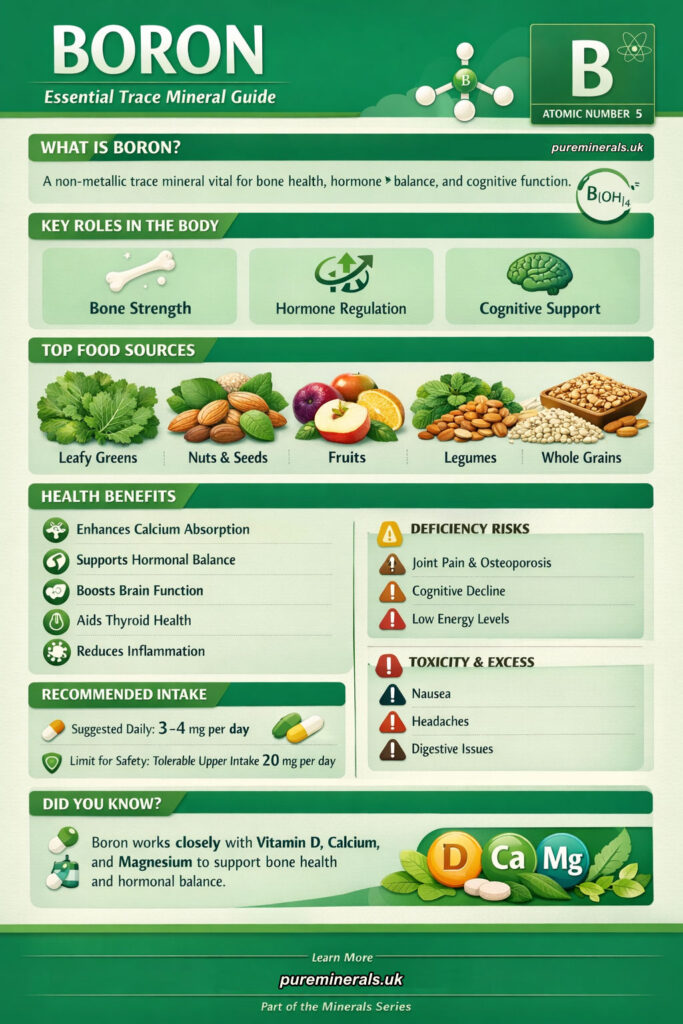
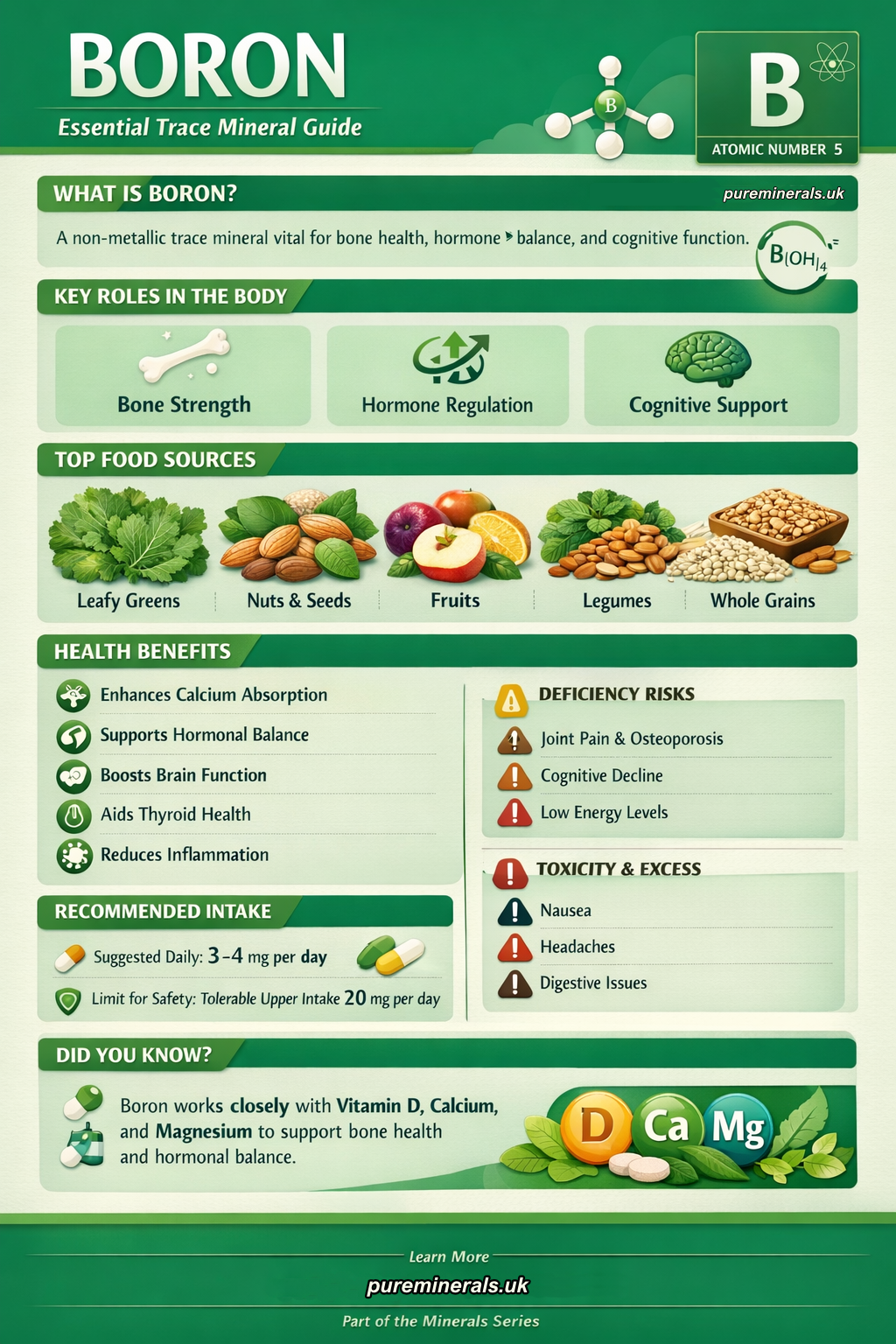
Download the full high-resolution Boron infographic for offline reference.
Explore more minerals in the full Minerals Hub
Frequently Asked Questions (FAQ)
As interest in boron’s health benefits grows, several common questions emerge from consumers seeking to optimize their nutrition. The following questions address the most frequent concerns and confusions surrounding this important but often overlooked trace mineral. Understanding these practical aspects of boron nutrition can help individuals make informed decisions about their diet and potential supplementation strategies.
Is boron safe to take as a supplement?
Boron supplements are generally considered safe when taken within recommended dosage ranges (typically 3-10mg daily for adults). The Institute of Medicine has established an upper tolerable intake level of 20mg daily for adults, providing a substantial safety margin above typical supplemental doses. Research consistently shows minimal side effects with boron supplementation at these levels, with most studies reporting excellent tolerability and safety profiles comparable to placebo treatments.
Boron Safety Profile
Recommended dietary intake: 1-3mg daily
Common supplemental range: 3-10mg daily
Upper tolerable limit (adults): 20mg daily
Risk of toxicity: Very low at recommended doses
Most common side effects: Mild digestive discomfort (rare)
As with any supplement, quality matters significantly. Choosing products from reputable manufacturers that undergo third-party testing helps ensure you’re receiving accurate doses without harmful contaminants. Additionally, starting with lower doses and gradually increasing as needed allows for assessment of individual tolerance and response. While generally safe, supplements should be discussed with healthcare providers, particularly for pregnant women, those with kidney disorders, or individuals taking multiple medications.
Can boron help with arthritis pain?
Clinical evidence increasingly supports boron’s potential benefits for arthritis sufferers. Multiple studies have demonstrated improvements in joint pain, stiffness, and mobility among individuals with osteoarthritis who increased their boron intake. The most compelling research shows that supplementation with 6mg of boron daily (often as calcium fructoborate) significantly reduced pain scores and inflammatory markers while improving joint function compared to placebo treatments. These benefits typically emerge within 4-8 weeks of consistent use and appear to continue improving with ongoing supplementation.
How much boron do I need daily?
While no official Recommended Daily Allowance exists for boron, research suggests adults generally benefit from consuming 1-3mg daily for basic health maintenance, with potentially greater benefits at the upper end of this range. For therapeutic purposes related to specific conditions like arthritis or bone health concerns, amounts of 3-6mg daily have shown benefits in clinical studies. Most people consuming diverse diets with plenty of fruits, vegetables, nuts and legumes naturally achieve intake levels of approximately 1-2mg daily, though this can vary significantly based on food choices and the regional soil content where foods are grown.
Are there any side effects from consuming too much boron?
At normal dietary intake levels and standard supplemental doses (under 10mg daily), side effects from boron are rare and typically mild when they do occur. The most commonly reported issues include temporary digestive discomfort, headache, or skin flushing, which usually resolve with continued use or slight dose reduction. Toxicity concerns only emerge at extremely high doses far exceeding recommended intake levels—typically above 50-100mg daily consumed over extended periods—which would be virtually impossible to achieve through dietary sources alone.
Special populations requiring extra caution with boron supplements include pregnant women (due to limited research in this population), individuals with significant kidney impairment (which may affect boron excretion), and those taking medications that interact with boron’s hormonal effects. For these groups, obtaining boron primarily through food sources rather than supplements provides natural upper limits on consumption and generally represents the safest approach to ensuring adequate intake.
Does soil quality affect the boron content in foods?
Soil boron content significantly impacts the mineral concentration in foods grown in that soil, creating substantial regional and seasonal variations in the boron content of otherwise identical foods. Research has documented variations exceeding 300% in the boron content of the same fruit or vegetable varieties grown in different regions with varying soil mineral profiles. This variability makes precise estimation of dietary boron intake challenging and explains why some populations may achieve adequate levels more easily than others based solely on regional agricultural conditions.
Modern intensive agricultural practices, including continuous cropping without adequate mineral replenishment, have potentially reduced the boron content of many commercially grown foods compared to historical levels. This nutritional dilution effect extends beyond boron to numerous trace minerals, potentially contributing to suboptimal intake levels despite seemingly adequate food consumption. For those concerned about optimal boron status, emphasizing organically grown produce from diverse sources, including local small-scale farms practicing soil-building techniques, may provide foods with naturally higher mineral content.
Ultimately, boron represents a perfect example of why nutritional diversity matters so profoundly. By consuming plants grown in different soil conditions, we help ensure adequate intake of this vital mineral despite regional variations. This principle of nutritional diversity—eating a wide variety of whole foods from different sources—provides the most reliable strategy for achieving optimal boron status while simultaneously supporting broader nutritional adequacy. For instance, incorporating herbs like thyme can contribute to this diversity.